

What are the top junior golf tour alternatives to FJT?
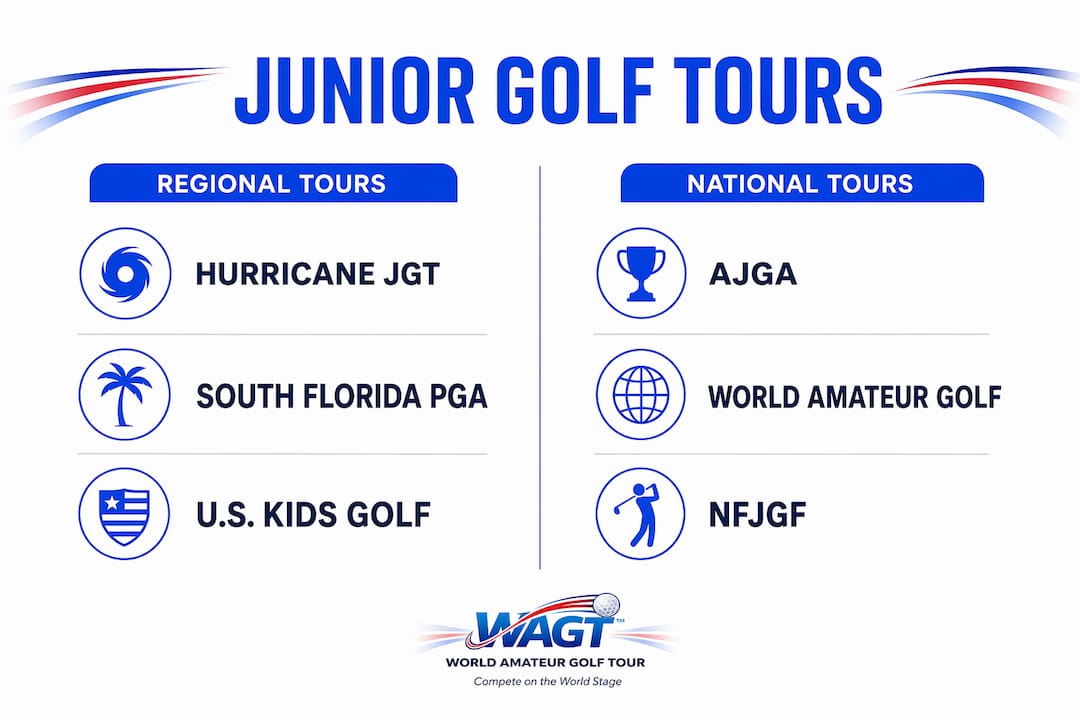
The strongest FJT.org alternatives for competitive junior golfers in the US are the American Junior Golf Association (AJGA), Hurricane Junior Golf Tour, U.S. Kids Golf Teen Series, South Florida PGA Junior Tour, North Florida Junior Golf Foundation (NFJGF) tours, and the World Amateur Golf Tour (WAGT). Each serves a distinct competitive tier, age range, and development goal.
The Florida Junior Tour is a premier championship series run by the Florida State Golf Association (FSGA) for boys and girls within the junior age range, with no Florida residency required. It sets a high bar for regional competition. But for players who need more volume, different geographic reach, or a specific ranking pathway, these alternatives deliver real options.
Top FJT alternatives at a glance:
- AJGA — National-level, performance-based entry, college scout exposure
- Hurricane Junior Golf Tour — Regional Southeast focus, accessible entry
- U.S. Kids Golf Teen Series — Age-grouped, beginner-to-intermediate friendly
- South Florida PGA Junior Tour — Low-cost, first-class local play
- NFJGF Tours — Five tiered levels, affiliated with FSGA, AJGA, and JAGA
- World Amateur Golf Tour (WAGT) — WAGR-ranking tournaments, elite venues
| Tour | Focus Level | Age Range | Tournament Format | Pathway Opportunities | Cost Considerations |
|---|---|---|---|---|---|
| AJGA | National | Junior age range | Stroke play, multi-round events | College scouts, WAGR points | Higher entry fees, travel |
| Hurricane Junior Golf Tour | Regional | Appropriate junior age groups | Stroke play | Regional exposure | Moderate cost |
| U.S. Kids Golf Teen Series | Regional/National | Junior age groups | Stroke play | Development pathway | Moderate cost |
| South Florida PGA Junior Tour | Local/Regional | Junior age groups | Stroke play | Local development | Low cost |
| NFJGF Tours | Local/Regional | Age and skill levels vary by tier | Stroke play | FSGA/AJGA affiliation | Low to moderate cost |
| World Amateur Golf Tour | National | Junior and amateur players | Stroke play including WAGR events | WAGR ranking, college visibility | Competitive membership fees |
Table of Contents
- How do you choose the right junior golf tour for your player?
- Understanding the junior golf competitive landscape beyond FJT
- Why Worldamateurgolftour stands out for serious junior golfers
- Key Takeaways
How do you choose the right junior golf tour for your player?
Picking the right tour comes down to five factors that experienced families weigh together, not in isolation.

1. Geographic accessibility. Travel costs add up fast. Local tours like the South Florida PGA Junior Tour keep expenses manageable while still delivering first-class playing options. If your player is ready for national competition, the AJGA is worth the investment, but it should not be the only tour on the schedule.
2. Age and skill level. Not every tour fits every player. The NFJGF runs five distinct tiers specifically designed to match a junior's current game level, from beginner through elite. Entering a field that is too advanced too early can stall development rather than accelerate it.
3. Entry systems and exemptions. FJT events use tiered field determination systems that prioritize exempt players and ranking-based selection. Simply registering early does not guarantee a spot. The AJGA uses Performance Based Entry (PBE) for the same reason. Know the entry rules before you plan a travel schedule around a tournament.
4. Pathway benefits. If college recruitment is the goal, national exposure through the AJGA or WAGR-ranking events through Worldamateurgolftour carries real weight. For younger or developing players, regional tours build the competitive reps needed before stepping up.
5. Cost and sustainability. Membership fees, entry costs, coaching, and travel compound quickly. Families who sustain long-term junior golf careers typically combine local and national tours to balance competitive quality with financial reality. Relying on a single tour, no matter how prestigious, rarely gives a player enough rounds or enough variety to develop fully.
Pro Tip: Before committing to any tournament, pull up the individual event's player information page. Details like practice round availability, dress codes, and parental play options are often buried there and can significantly affect your total trip cost and preparation plan.
For gear that keeps costs in check without sacrificing quality, affordable options under $100 from Jaguar Golf are worth a look when outfitting a junior for a full tournament season.
Understanding the junior golf competitive landscape beyond FJT
The US junior golf ecosystem is genuinely tiered, and understanding where each tour sits in that structure helps you build a smart schedule rather than just chasing the most recognizable name.
Beginner and developmental tiers are where most players should start. The U.S. Kids Golf Teen Series and local PGA Junior League programs give younger players competitive experience without the pressure or cost of elite-level fields. The NFJGF's five-tour structure is a model worth studying: it matches players to the right competitive level rather than throwing everyone into the same field. Their tours are affiliated with FSGA, AJGA, the Jacksonville Area Golf Association (JAGA), and the Notah Begay Junior Golf National Championship, giving players a clear ladder to climb.
Regional tours like the Hurricane Junior Golf Tour and South Florida PGA Junior Tour occupy the middle tier. They offer consistent scheduling, accessible venues, and fields that reward developing players without requiring national travel. These tours are where many college-bound juniors build their stroke average and competitive confidence before stepping into AJGA or WAGR events.
National and elite tours demand more. The AJGA is the gold standard for national junior exposure, with college coaches actively tracking its leaderboards. But the AJGA's performance-based entry system means players need a track record before they can access top-tier fields. That is exactly why experienced families use multiple tours strategically.
Logistical and financial barriers are real at every level. Organizations like the IRGF's Players On-Tour program assist families with entry fees, transportation, and coaching costs, recognizing that sustained participation is what actually produces elite players. Sponsorship and travel coordination support can make the difference between a player getting 10 competitive rounds a year and 30.
Here is how the tiers typically break down by purpose:
- Beginner/developmental: U.S. Kids Golf Teen Series, local PGA Junior League, NFJGF entry-level tours
- Regional competitive: Hurricane Junior Golf Tour, South Florida PGA Junior Tour, NFJGF upper tiers
- National/elite: AJGA, FJT Tour Championship, WAGR-counting events through Worldamateurgolftour
For a deeper look at age-appropriate golf competitions and how to match your player to the right tier, the selection process matters as much as the tour itself. Families who treat the schedule as a development plan, not just a calendar of events, consistently produce players who advance further.
Why Worldamateurgolftour stands out for serious junior golfers
If your player is ready to compete at a level where rankings actually matter for college recruitment or amateur status, Worldamateurgolftour delivers something most regional tours cannot: WAGR-counting tournaments at championship-caliber venues, run with the professional event management that elite junior competition demands.

Every Worldamateurgolftour event is built around transparency, competitive integrity, and a player experience that matches the quality of the course. Junior golfers earn ranking points toward WAGR status, which directly increases their visibility to college scouts and amateur selectors. The venues are respected, the fields are competitive, and the events are managed with the consistency that serious players and their families can plan around.
What sets Worldamateurgolftour apart from the regional alternatives discussed above is the combination of WAGR certification and professional event standards. You are not just getting competitive rounds; you are building a ranking profile that travels with your player wherever the game takes them next. Visit WorldAmateurGolfTour.com to check current tournament schedules and membership options.
Key Takeaways
The most effective approach to finding fjt.org alternatives is matching each tour's competitive tier, entry system, and ranking pathway to your player's current skill level and long-term goals.
| Point | Details |
|---|---|
| FJT context | FJT is an FSGA-run series for ages 13–18; alternatives serve players needing different tiers or geographic reach. |
| Multi-tour strategy | Combining local, regional, and national tours builds competitive volume and manages cost more sustainably than one tour alone. |
| Entry systems matter | AJGA and FJT both use performance-based or exemption-priority entry; plan your schedule around eligibility, not just registration dates. |
| WAGR ranking access | WAGR-counting events like those run by Worldamateurgolftour directly support college recruitment and amateur advancement. |
| Worldamateurgolftour | Offers WAGR-ranking tournaments at respected venues with professional event management for junior and amateur golfers. |