

Amateur golf is defined as playing golf purely for the love of the sport, without receiving payment, financial compensation, or professional earnings of any kind. The USGA and The R&A jointly govern amateur status worldwide through their Rules of Amateur Status, which set clear boundaries on prize acceptance, coaching fees, and competitive conduct. Understanding what is amateur golf defined to mean in practice separates players who can freely compete in sanctioned events from those who risk losing their eligibility. Whether you are just picking up the game or preparing for your first tournament, knowing these rules protects your status and opens doors to competitive play.
What is amateur golf defined as under official rules?

Amateur golf status is the formal classification given to a golfer who competes without financial gain. The USGA and The R&A define an amateur golfer as someone who plays the game as a non-remunerative and non-vocational pursuit. That single phrase carries significant weight. It means you cannot accept money for playing, teaching, or endorsing products in your capacity as a golfer without crossing into professional territory.
The core prohibitions are straightforward:
- No payment for playing. You cannot accept money, appearance fees, or compensation tied to your performance in any golf event.
- No payment for teaching. Amateurs cannot accept payment for coaching or instruction, a foundational rule across all governing bodies. This means giving paid lessons, even informally, puts your status at risk.
- No prize money in handicap events. Amateurs in handicap competitions cannot accept prize money but may accept other prizes up to $1,000 in value.
- Limited prize acceptance in scratch events. Scratch competitions allow a broader range of prizes, including cash, up to the $1,000 limit.
- No endorsement income. Accepting payment for using or promoting golf equipment as an amateur violates status rules.
The consequences of breaching these rules are serious. A player who accepts prohibited compensation loses amateur status immediately and must apply for reinstatement before competing in amateur events again. The USGA does not treat these violations lightly, and ignorance of the rules is not a defense.
Pro Tip: Before entering any tournament, check whether it is classified as a scratch or handicap event. The prize eligibility rules differ significantly between the two formats, and knowing which applies protects you from an accidental violation.
How does amateur status affect tournament eligibility?
Your amateur status directly determines which competitions you can enter, what prizes you can accept, and how your handicap functions within the event structure. Most amateur tournaments fall into two broad categories: handicap competitions and scratch competitions. Each carries its own prize rules and entry requirements.
Here is how tournament participation typically works for amateur golfers:
- Verify your handicap index. Most amateur events require an official handicap through a recognized system like the World Handicap System. Your index determines your net score and, in many events, your starting flight or division.
- Confirm the event classification. Determine whether the event is a scratch or handicap competition before you register. This single step tells you exactly what prizes you can legally accept.
- Check prize limits. Many amateur tournaments allow players of any handicap with net scoring to level the playing field, making competition genuinely accessible regardless of skill level.
- Review the event's terms and conditions. Organizers of sanctioned events publish prize structures in advance. Read them. A $1,200 gift card in a handicap event exceeds the limit and accepting it costs you your status.
- Understand open amateur events. Some events are open to all amateurs regardless of club affiliation. Learning about open amateur formats helps you identify the widest range of competitive opportunities available to you.
The handicap system exists precisely to make amateur competition fair and inclusive. A 20-handicapper can compete meaningfully against a 5-handicapper in a net event because the scoring adjusts for the difference in ability. This is one of the most appealing aspects of amateur golf: the structure rewards improvement and keeps competition honest at every level.
What is the process for regaining amateur status?
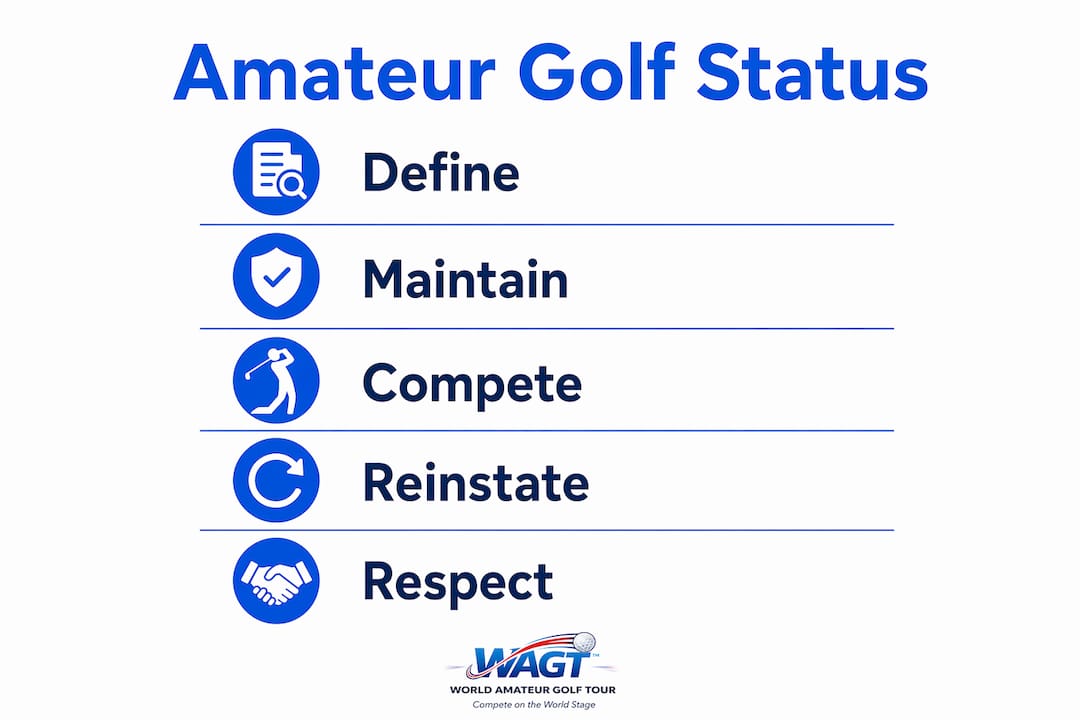
Former professional golfers can return to amateur competition, but the path back is structured and deliberate. The USGA processes roughly 800 reinstatement applications annually with high approval rates, which means the process is well-established and achievable for most applicants.
The key requirements include:
- Minimum six-month waiting period. A former professional faces a minimum six-month wait from their last professional action before amateur status can be restored.
- Longer waits for prominent players. The USGA's reinstatement process evaluates a candidate's professional history and applies longer cooling-off periods for more successful pros. A player who competed on the PGA Tour for five years faces a longer wait than someone who turned pro briefly and played one mini-tour event.
- Application fee. The USGA charges approximately $200 to process a reinstatement application.
- Accurate timeline documentation. The last professional action date is the critical starting point for the waiting period. Getting this date wrong delays the entire process unnecessarily.
- Cessation of all professional activity. You must stop accepting any form of professional compensation, including paid lessons, before the clock starts on your waiting period.
Pro Tip: If you are considering reinstatement, document your last paid lesson, last tournament start with prize money, and last appearance fee with exact dates. Missing the correct date of your last professional action is the most common reason reinstatement timelines get extended.
The reinstatement pathway reflects a core principle of amateurism: the rules exist to protect the integrity of amateur competition, not to permanently exclude anyone. If you played professionally for a season and want to return to the amateur game, the system accommodates that transition with clear, fair guidelines.
Common misconceptions about amateur golf rules
Beginners often carry incorrect assumptions about what amateur status actually prohibits. Clearing up these misconceptions prevents accidental violations and removes unnecessary anxiety about competing.
| Misconception | Reality |
|---|---|
| Amateurs cannot accept any prizes | Amateurs can accept non-cash prizes up to $1,000 in handicap events and cash prizes up to $1,000 in scratch events |
| Gambling is always prohibited | Participation in wagering where all money comes from participant contributions and is not required is permitted for amateurs |
| Playing for fun means no rules apply | Amateur status rules apply in any sanctioned competition regardless of how casual the event feels |
| Accepting a gift from a sponsor is fine | Gifts tied to golf performance or participation can constitute a prize and must fall within the applicable limit |
| Only elite players need to worry about status | Any golfer competing in a sanctioned event is subject to amateur status rules, regardless of skill level |
The gambling rule surprises many players. A friendly Nassau or a skins game where each player contributes their own money and participation is voluntary does not violate amateur status. The rule targets situations where a golfer profits from gambling in a way that resembles professional compensation, not casual wagers between friends.
Beginners often mistakenly think all cash prizes are forbidden for amateurs. The reality is more nuanced and more permissive than most people expect. The distinction between scratch and handicap events is the key variable, and understanding it removes most of the confusion around prize acceptance.
For players transitioning from college golf, the rules around amateur circuit participation carry specific considerations worth reviewing before you compete in your first post-collegiate event.
Key takeaways
Amateur golf status is defined by the absence of financial gain from playing or teaching, governed by USGA and The R&A rules that set specific prize limits based on competition type.
| Point | Details |
|---|---|
| Core definition | An amateur golfer plays without financial compensation, payment for teaching, or professional earnings of any kind. |
| Prize limits by event type | Scratch events allow cash prizes up to $1,000; handicap events limit prizes to non-cash items up to $1,000. |
| Reinstatement is achievable | Former pros can regain amateur status after a minimum six-month wait and a USGA application with an approximately $200 fee. |
| Gambling nuance | Voluntary wagering from participant contributions is permitted; profit-driven gambling that resembles professional income is not. |
| Verify before you compete | Always confirm whether an event is scratch or handicap classified before accepting any prize to protect your status. |
Why understanding amateur status early changes everything
I have watched talented players lose their amateur status over a $50 gift card they did not realize was prohibited. That kind of mistake is entirely avoidable, and it stings because it comes from enthusiasm, not dishonesty. Someone enters a local tournament, wins a category, accepts a prize without checking the rules, and suddenly faces a reinstatement process that takes months.
The players who thrive in amateur golf long-term are the ones who treat the rules as a framework for opportunity rather than a list of restrictions. When you understand what you can and cannot accept, you compete with confidence. You stop second-guessing every trophy presentation and start focusing on your game.
What I find genuinely underappreciated is how the amateur structure creates a level of community that professional golf simply cannot replicate. You are competing against people who love the game as much as you do, with no financial stakes distorting the experience. The scratch event prize limit exists not to punish winners but to keep the focus on performance rather than payout.
My honest advice: read the USGA Rules of Amateur Status once, front to back. It takes about 20 minutes. That single investment protects years of competitive eligibility and gives you the confidence to enter events, accept prizes correctly, and build a competitive record without anxiety.
— Gene
Compete with confidence through Worldamateurgolftour
Ready to put your amateur status to work in a real competitive environment? Worldamateurgolftour runs WAGR-certified tournaments designed specifically for junior, collegiate, and amateur golfers who want serious competition on championship-caliber courses.

Every event on the Worldamateurgolftour schedule is professionally run, fully sanctioned, and structured to protect your amateur status while building your World Amateur Golf Ranking. Whether you are chasing WAGR points for college recruiting or simply want to test your game against elite competition, WAGR amateur tournaments in Florida give you the platform to compete, grow, and earn recognition. Register now and take your amateur game to the next level.
FAQ
What is the definition of amateur golf status?
Amateur golf status is the classification given to a golfer who plays without receiving financial compensation for playing, teaching, or competing. The USGA and The R&A jointly govern this status through their Rules of Amateur Status.
Can amateur golfers accept prize money?
Amateurs can accept cash prizes up to $1,000 in scratch competitions but cannot accept prize money in handicap competitions, though non-cash prizes up to $1,000 are permitted in those events.
How long does it take to regain amateur status after turning professional?
The minimum waiting period is six months from the last professional action, though the USGA applies longer periods for players with more prominent professional careers.
Does playing in a casual round affect amateur status?
Casual recreational play does not affect amateur status. The rules apply specifically to sanctioned competitions and situations involving payment for playing or teaching golf.
What happens if an amateur accidentally violates the rules?
Violating amateur status rules results in the loss of that status, requiring a formal reinstatement application through the USGA before the player can compete in amateur events again.