
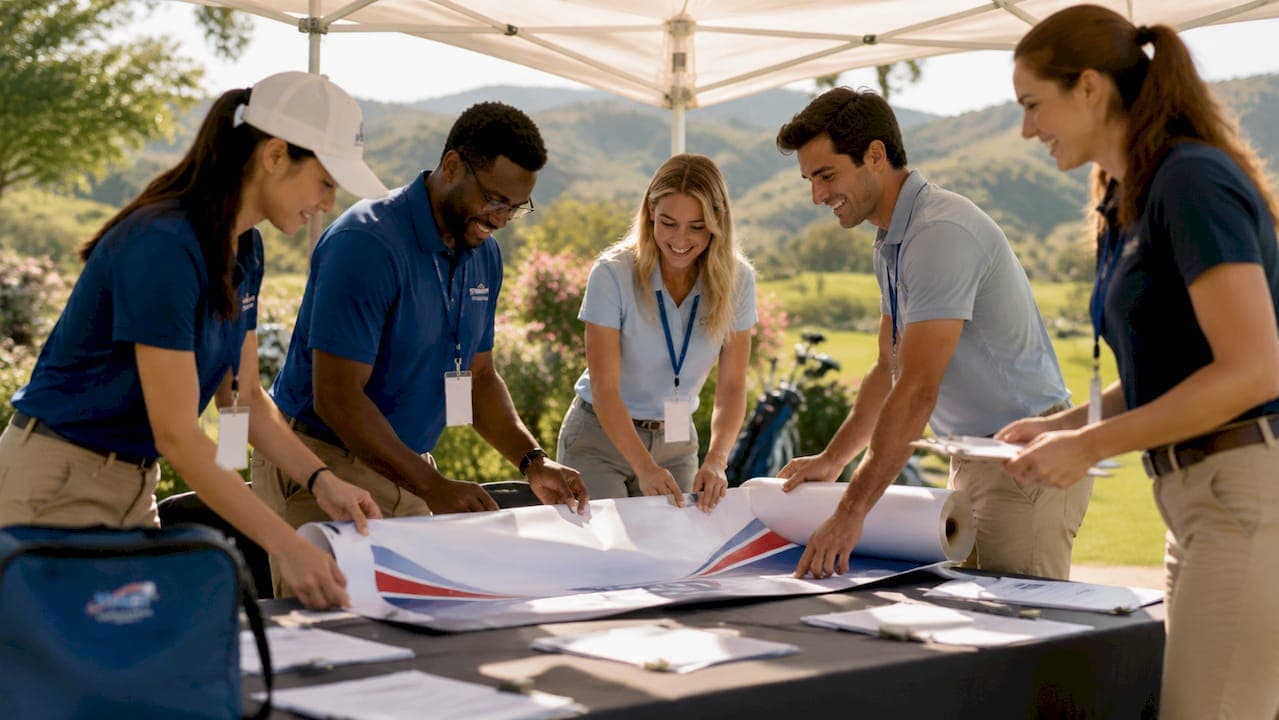
A successful hosted golf tournament is defined by three measurable outcomes: strong participant satisfaction, effective sponsor activation, and repeatable operational systems. The best examples of successful hosted golf tournaments span charity fundraisers, corporate networking events, and major championship productions. Tee It Up for the Troops, the GamesBeat x Aghanim Golf Tournament, and the 2026 PGA Championship at Aronimink each demonstrate that format, logistics, and sponsor strategy determine whether an event becomes a one-time effort or a lasting institution. Understanding what separates these events gives organizers and sponsors a concrete playbook to build from.
Examples of successful hosted golf tournaments: what they all share
The most instructive golf tournament success stories share four core pillars: participant experience, sponsor engagement, operational discipline, and monetization structure. Strip away the venue and the cause, and the underlying architecture is nearly identical across events of every size.
Participant experience starts before the first tee shot. Registration setup at least two hours before the first tee time, a structured player briefing, and clear pace-of-play communication prevent the friction that turns first-time attendees into last-time attendees. Golfers who feel informed and respected return the following year and bring others.
Sponsor engagement is a placement science. Sponsor activations at high-stoppage zones such as the hole 10 tee box, par-3 tees, and the clubhouse entrance maximize player interaction because golfers naturally pause in those locations. Sponsors placed at low-traffic holes between shots receive a fraction of the exposure.
Monetization follows a tiered structure that most successful events use consistently. Registration fees of $400 to $800 per team, hole sponsorships from $250 to $1,500, presenting sponsorships from $2,500 to $10,000, and dinner tickets from $50 to $150 form the revenue backbone. Auctions contribute 20 to 40 percent of total event revenue at well-run charity tournaments. Knowing these numbers lets you model projections before you sell a single registration.
Pro Tip: Build your sponsorship tiers before you open registration. Sponsors commit earlier when they see clearly defined packages with specific placement benefits attached.
1. Tee It Up for the Troops: scaling charity golf to national reach
Tee It Up for the Troops is the clearest proof that a charity golf model can scale without losing quality. The organization operates 47 events in 2025 with approximately 818 volunteers and has raised over $19 million for veterans since its founding. Several of its largest events gross over $100,000 individually, with an average revenue per event near $64,000.
The key to that scale is standardization. Every location runs the same sponsorship packages, the same on-course contests, and the same volunteer role definitions. That consistency means a new chapter can launch without reinventing the event from scratch. Repeatable systems across locations require standardized packages, consistent contests, and clear volunteer assignments to deliver the same quality in year one as in year ten.
For organizers building a multi-location or annual event, Tee It Up for the Troops proves that the format itself is the product. Participants return because the experience is predictable and high-quality, not because the venue changes.
2. Fairways for Families: sponsor integration done right
Fairways for Families, hosted by Beazer Homes, netted nearly $70,000 from 36 teams and 35 sponsors in its second annual event, grossing over $100,000 total. The event used closest-to-the-pin contests, hole-in-one challenges, and cornhole games to keep participants engaged between holes and drive additional donations.
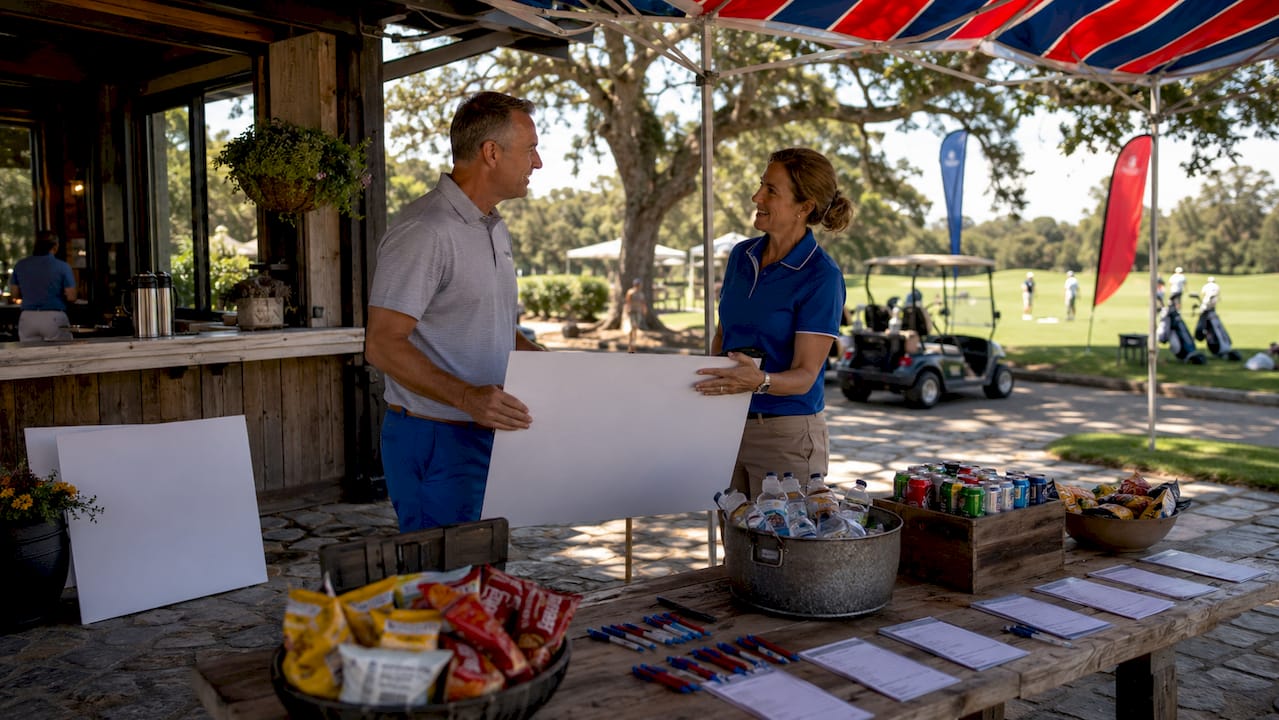
The sponsor count of 35 at a single event is the detail most organizers overlook. That density is achievable when you sell sponsors on experiential placement rather than logo space. A sponsor who owns the hole-in-one contest gets a crowd, a story, and a photo opportunity. A sponsor whose logo appears on a banner gets none of those things.
Fundraising growth from year one to year two at Fairways for Families came directly from adding engagement mechanics. More contests meant more moments where participants spent money and sponsors received attention. This is the model for any organizer who wants to grow revenue without growing the field size.
3. GamesBeat x Aghanim: the corporate networking format
The GamesBeat x Aghanim Golf Tournament attracted 30-plus gaming executives using a 10-hole team format at The Lakes in El Segundo, California, ahead of the GamesBeat Summit 2026. The format was deliberate: 10 holes keeps the event under three hours, which suits executives who want networking time without a full-day commitment.
Corporate golf events succeed or fail on format fit. A scramble or team net format reduces the pressure on individual skill levels, which matters when your field includes executives who play twice a year alongside those who play twice a week. Branded swag, casual scoring, and a post-round social component shift the event's purpose from competition to connection.
For organizers planning corporate golf events, the GamesBeat model offers a clear template:
- Schedule the event immediately before or after a larger conference to capture an already-assembled audience
- Use a shortened format (9 to 10 holes) to respect time constraints
- Prioritize branded touchpoints: bag tags, ball markers, and custom scorecards reinforce sponsor identity throughout the round
- Build the post-round social into the event schedule, not as an afterthought
4. Vegas Baby Spring Shootout: technology as a competitive advantage
The Vegas Baby Spring Shootout used AM GOLF technology to score nearly 600 golfers across three rounds at three courses using a team net Stableford format. That scale is operationally impossible without purpose-built scoring technology. Manual scorecards across 600 players and three venues would produce errors, delays, and disputes that undermine the entire event.
Technology that simplifies scoring enhances both participant and sponsor experience. Participants trust results they can verify in real time. Sponsors see their investment reflected in a polished, professional event rather than a chaotic one. The tournament formats you choose must match the technology you have available to support them.
The Vegas Baby model is instructive for any organizer planning a multi-course or multi-round event. Invest in scoring infrastructure before you sell registrations. The technology cost is recoverable through higher registration fees and sponsor confidence. The reputational cost of a scoring failure is not.
5. The 2026 PGA Championship at Aronimink: operational excellence at scale
The 2026 PGA Championship at Aronimink achieved a fourth consecutive sellout with 200,000-plus attendees and minimal reported misbehavior. Nine years of planning, months of course preparation, and thousands of volunteers and contractors made that outcome possible. The event did not succeed because of luck. It succeeded because every operational variable was identified, assigned, and rehearsed.
The crowd behavior outcome is the metric most organizers ignore. Minimal misbehavior at a 200,000-person event reflects proactive logistics: clear signage, adequate staffing at pinch points, and defined response protocols for every foreseeable problem. Proactive monitoring and predefined response plans prevent operational failures before they reach participants.
| Scale factor | Aronimink approach | Lesson for organizers |
|---|---|---|
| Attendance | 200,000+ over the week | Plan volunteer ratios per 500 attendees, not per event |
| Planning timeline | Nine years of venue preparation | Book venues and vendors at least 12 months out |
| Crowd management | Minimal misbehavior reported | Define behavioral protocols and brief all staff before doors open |
| Volunteer mobilization | Thousands of volunteers and contractors | Assign specific roles with written responsibilities, not general duties |
6. Best practices for participant and sponsor experience
The most effective hosting golf tournaments tips come directly from what successful events do consistently, not from theory. These practices apply whether your field is 40 players or 400.
- Open registration early. Starting setup two hours before the first tee time prevents bottlenecks and gives players time to warm up, which improves their mood before they reach the first hole.
- Verify every scorecard. Checking signatures and scores before finalizing results eliminates disputes and builds credibility with both participants and sponsors. Collect cards at a single centralized point and spot-check the top finishers.
- Place sponsors at attention windows. Holes where players naturally wait, such as par-3 tees and the turn, give sponsors quality face time. A sponsor at hole 10 receives more meaningful engagement than one at hole 6 between shots.
- Give sponsors a ready-to-use asset kit. Providing sponsors with pre-built social media assets and encouraging pre-event posts amplifies your event's reach without adding work to your team. Sponsors who promote the event become marketing partners, not just check writers.
- Use technology for scoring and communication. Real-time leaderboards keep participants engaged throughout the round and give sponsors a visible, branded platform to attach to.
Pro Tip: Send sponsors a one-page activation guide two weeks before the event. Include their booth location on a course map, suggested social post copy, and the schedule for their sponsored contest. Sponsors who know exactly what to do show up prepared and deliver better experiences for your participants.
For organizers who want to understand how media coverage amplifies these efforts, golf event media strategy is a direct extension of the sponsor activation work you do on course.
Key takeaways
Successful hosted golf tournaments are built on standardized systems, strategic sponsor placement, and participant-focused operations that are repeatable across events of any size.
| Point | Details |
|---|---|
| Standardize for scale | Use consistent sponsorship packages and volunteer roles to replicate quality across multiple events or years. |
| Place sponsors at attention windows | High-stoppage zones like par-3 tees and the turn deliver more sponsor ROI than mid-fairway placements. |
| Verify scores formally | Centralized scorecard collection and spot-checking protect tournament credibility and prevent disputes. |
| Use technology early | Scoring platforms like AM GOLF reduce errors and increase participant and sponsor confidence at scale. |
| Activate sponsors as partners | Asset kits and pre-event social posts turn sponsors into promoters, multiplying your event's marketing reach. |
What I've learned from studying these tournaments closely
The pattern that stands out across every case in this article is that the best events are engineered, not improvised. Tee It Up for the Troops did not raise $19 million by running 47 unique events. It raised $19 million by running the same event 47 times with discipline.
Most organizers I speak with spend the majority of their planning energy on the venue and the format, then scramble on logistics in the final two weeks. The events that consistently outperform expectations do the opposite. They lock in operational details months out and treat the venue as a backdrop to a system that already works.
Sponsor integration is the area where I see the most unrealized potential. Sponsors are not just funding sources. They are experiential partners who can make your event feel bigger and more memorable when they are placed and briefed correctly. A sponsor who owns the hole-in-one contest and shows up with a team, a banner, and a social media plan adds energy to your event. A sponsor who drops off a check and a logo file does not.
The other lesson is that participant satisfaction drives long-term event health more than any single fundraising tactic. Players who leave satisfied tell three people. Players who leave frustrated tell ten. Registration flow, pace of play, and scorecard integrity are not administrative details. They are the product.
— Gene
Take your tournament to the next level with Worldamateurgolftour
If the examples in this article have you thinking about what your next event could look like, Worldamateurgolftour offers a platform built specifically for organizers who want professionally run, high-quality golf competitions.
Worldamateurgolftour provides WAGR-counting tournament infrastructure, participant management tools, and access to championship-caliber venues that give your event immediate credibility. Whether you are building a new event or scaling an existing one, the World Amateur Golf Tour platform connects organizers and sponsors with a competitive, transparent environment that serious golfers trust. Explore what a partnership with Worldamateurgolftour can do for your next event.
FAQ
What makes a charity golf tournament financially successful?
Charity golf tournaments that gross over $100,000 typically combine tiered sponsorships, on-course contests, and post-round auctions. Auctions alone contribute 20 to 40 percent of total event revenue at well-run events.
How many sponsors should a hosted golf tournament target?
Fairways for Families secured 35 sponsors for a 36-team event, which is a strong benchmark. Aim for at least one sponsor per hole plus presenting and title sponsors for maximum coverage and revenue.
What technology do large golf tournaments use for scoring?
Events like the Vegas Baby Spring Shootout use platforms such as AM GOLF to manage real-time scoring across multiple courses and hundreds of players. Digital scoring reduces errors and gives participants live leaderboard access.
How far in advance should you plan a hosted golf tournament?
The 2026 PGA Championship at Aronimink involved nine years of venue preparation. For amateur and charity events, a 12-month planning window covers venue booking, sponsor sales, registration setup, and volunteer coordination comfortably.
Where should sponsors be placed for maximum impact?
Sponsor activations at high-stoppage zones such as par-3 tees, the hole 10 tee box, and the clubhouse entrance deliver the highest quality engagement because players naturally pause and gather in those locations.