
Golf event media coverage is defined as the coordinated creation and distribution of tournament content across broadcast, written journalism, photography, and digital and social media channels. It is the organized system that brings a golf tournament's players, stories, and moments to audiences far beyond the gallery ropes. At events like the U.S. Open and the 2026 PGA Championship, this system involves dedicated media centers, scheduled press conferences, broadcast partnerships with CBS and ESPN, and thousands of individual content pieces published across every major platform. Understanding how this system works gives tournament organizers, sponsors, and journalists a real competitive advantage in shaping event visibility.
What is golf event media coverage and how does it work?
Golf event media coverage involves the coordinated creation and distribution of tournament content via broadcast, written journalism, photography, and digital and social media. The industry term for the broader discipline is sports media operations, and golf applies it with particular precision given the sport's unique pace, geography, and audience demographics. Coverage is not a single broadcast feed. It is a parallel ecosystem of editorial lanes running simultaneously, each targeting a different audience segment with a different story.
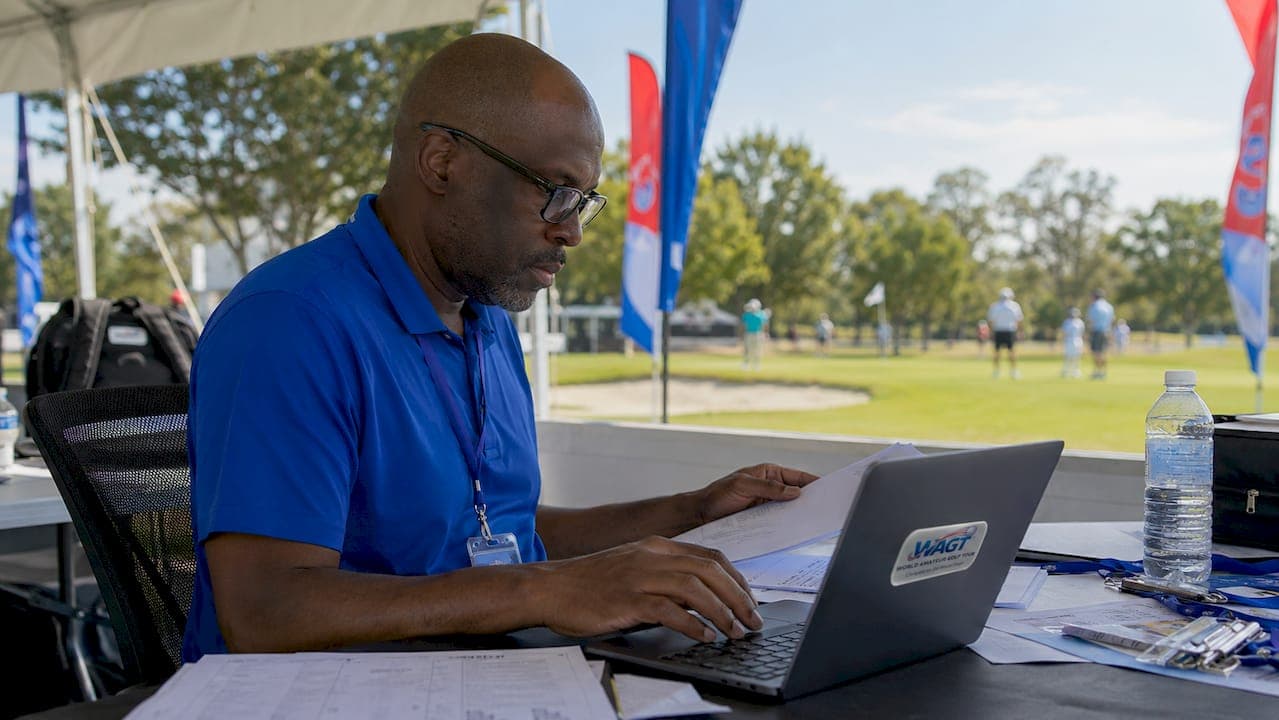
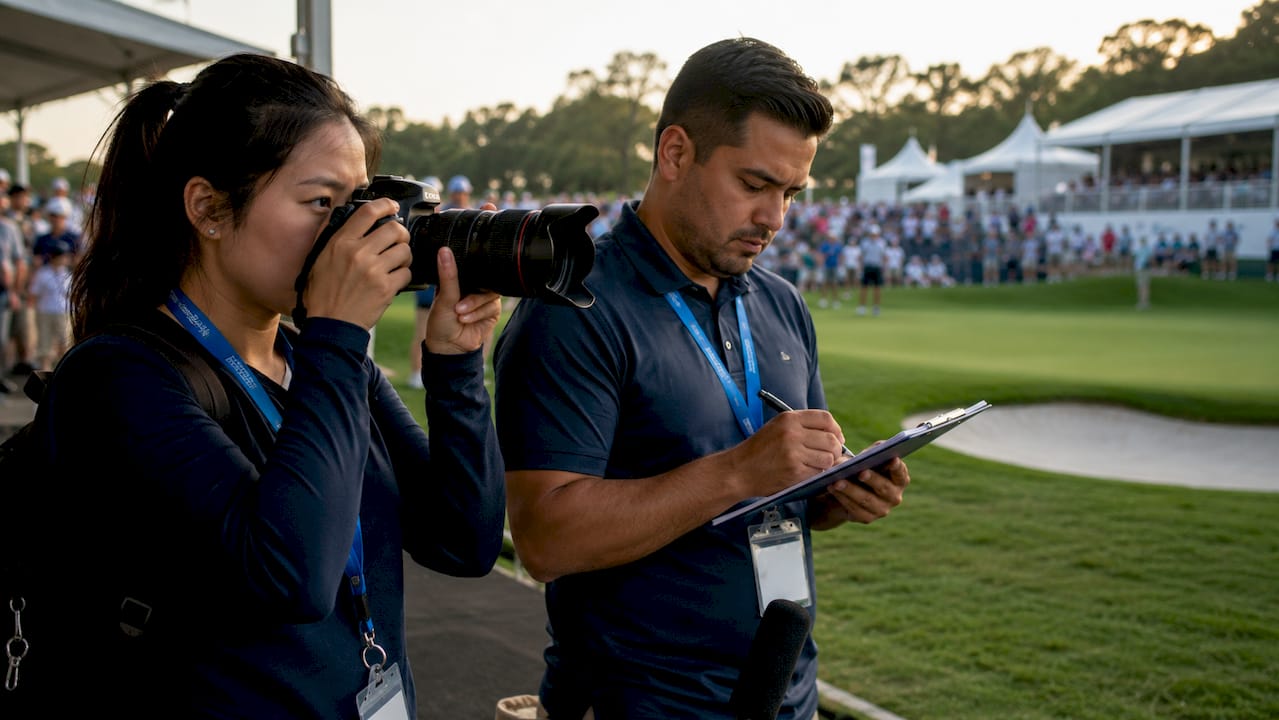
At the U.S. Open, the media center functions as the operational nerve center for hundreds of credentialed journalists. Reporters work separate desks covering course conditions, equipment trends, player profiles, historical context, and breaking news. Press conferences and mixed zone interviews provide the raw material. Photographers position themselves at signature holes. Social media editors publish player-generated content in real time. Every one of these functions requires coordination, and none of them operates in isolation.
The importance of golf event coverage extends well beyond fan entertainment. Sponsors rely on media impressions to justify investment. Organizers use coverage to build event reputation year over year. Broadcasters need compelling storylines to retain viewership. When these interests align through a well-run media operation, the entire event benefits.
How is media coverage structured at major golf tournaments?
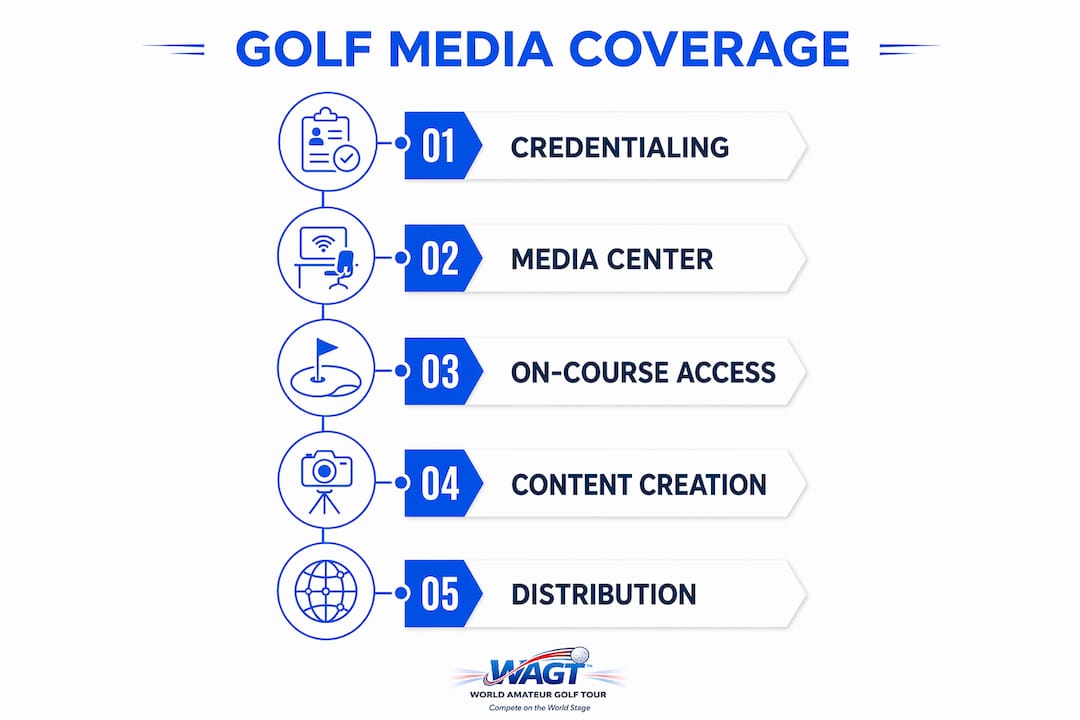
The operational structure of tournament media coverage centers on three physical and logistical elements: the media center, scheduled news moments, and on-course access protocols.
The media center at a major like the U.S. Open accommodates several hundred credentialed media personnel at any given time. Seating is organized by outlet type, with wire services, broadcast producers, print journalists, and digital editors working in close proximity but on entirely separate deadlines. The center provides high-speed internet, live scoring feeds, video monitors, and direct access to the interview room. This infrastructure makes it possible for a journalist to watch a player finish on the 18th hole, receive a transcript of the post-round press conference, and publish a story within minutes.
Scheduled news moments are equally critical to the structure. These include:
- Pre-tournament press conferences featuring marquee players and tournament officials
- Daily post-round interviews in the official interview room
- Mixed zone access where media can approach players informally near the scoring tent
- Pre-event media conference calls with broadcast analysts, as NBC Sports demonstrated with its U.S. Women's Open preview call that shaped broadcast storylines before a single shot was played
On-course access is governed by credentialing tiers. Photographers receive designated positions at specific holes. Reporters may walk the course during practice rounds but face restrictions during competition. Video crews operate under strict broadcast rights agreements. Each tier has defined rules that protect both the integrity of competition and the exclusivity of rights holders.
Pro Tip: If you are organizing a tournament and want to maximize media output, schedule your most compelling player interviews for the 90-minute window immediately after the final group finishes each round. That is when broadcast producers and digital editors are most actively publishing, and your event gets the most real-time amplification.
What platforms and content types define coverage in 2026?
Modern golf event media coverage operates across a content ecosystem that would be unrecognizable to a journalist from even a decade ago. Traditional broadcast on CBS and ESPN remains the anchor, but it now represents only one layer of a much larger distribution system.
The 2026 PGA Championship at Aronimink Golf Club demonstrated the current scale. The event published over 1,000 content pieces across X, Facebook, Instagram, TikTok, and YouTube during tournament week. That volume reflects a deliberate content strategy, not organic activity. Rights holders now treat media coverage as a comprehensive content distribution system involving studios, apps, and social platforms alongside traditional TV.
The platform breakdown at a major event in 2026 looks like this:
| Platform | Primary Content Type | Key Audience |
|---|---|---|
| CBS / ESPN | Live broadcast, highlight packages | General sports audience |
| YouTube | Long-form recaps, behind-the-scenes | Golf enthusiasts, 25 to 45 age range |
| Player lifestyle, course photography | Younger fans, sponsors | |
| TikTok | Short-form highlights, personality clips | Gen Z, casual fans |
| X (formerly Twitter) | Real-time scoring, news, commentary | Media professionals, engaged fans |
| Official App | 3D shot trails, real-time player locations | Fantasy players, stat-focused fans |
The app layer deserves particular attention. The 2026 PGA Championship introduced features like 3D shot trails and real-time player location tracking, giving fans a data-driven experience that broadcast alone cannot replicate. This kind of interactivity converts passive viewers into active participants, which directly increases the time fans spend engaging with event content. For sponsors, that extended engagement translates into more impression opportunities per viewer.
How do media policies shape what coverage is possible?
Media access at golf tournaments is not open by default. Every piece of content created on-site operates within a policy framework set by the tour, the event organizer, and the broadcast rights holder. Understanding these policies is non-negotiable for any journalist, sponsor, or organizer working in this space.
The most significant policy shift in recent years involves player-generated content. In 2026, the PGA Tour updated its social media content policy to allow players to create and share more on-site content during tournament week. PGA Tour CEO Brian Rolapp framed this explicitly as a strategy to highlight more players' stories and engage younger audiences on platforms like YouTube and Instagram. The move mirrors what the NFL has done with its own content policies, prioritizing reach over restriction.
For organizers and sponsors, these policy changes create real opportunities:
- Players can now post practice round content, equipment walkthroughs, and behind-the-scenes moments directly to their own channels
- Sponsors whose logos appear in player-generated content gain organic exposure that traditional media placements cannot replicate
- Smaller tournaments can benefit from player content even when broadcast coverage is limited
The flip side is that policy violations carry consequences. Unauthorized video of competition play, posting content that conflicts with broadcast exclusivity windows, or sharing scoring data before official release can result in credential revocation. Journalists covering sanctioned golf tournaments need to review the specific media guide for each event before publishing anything captured on-site.
Pro Tip: Request the official media guide from the tournament's press office at least two weeks before the event. Policy details on video length limits, embargo windows, and social media restrictions vary by tour and event, and discovering them on-site is too late.
Why does coordinated media coverage matter for sponsors and organizers?
For sponsors and organizers, media coverage is not a background function. It is the primary mechanism through which event investment generates return. A well-covered tournament builds brand equity, attracts future sponsors, and creates a media archive that extends the event's reach long after the final putt drops.
The strategic value of coordinated coverage works through four specific channels:
-
Narrative control. Pre-event conference calls and press conferences allow organizers to set the storyline before journalists arrive on-site. The NBC Sports U.S. Women's Open preview call is a direct example of how broadcast partners and organizers align on venue promotion and course setup narratives before coverage begins.
-
Multi-angle storytelling. Coverage runs as parallel editorial lanes across equipment, history, player profiles, and competition results simultaneously. Sponsors whose products appear across multiple lanes receive disproportionately more exposure than those tied to a single storyline.
-
Digital content volume. The 2026 PGA Championship's 1,000-plus content pieces across social platforms represent thousands of individual sponsor impression opportunities. Each piece of content is a discrete distribution event, not just a moment in a broadcast window.
-
Audience differentiation. Events with strong media operations attract credentialed journalists from national outlets, which signals legitimacy to future sponsors. Events without structured media access struggle to generate coverage beyond local news, limiting their sponsorship value significantly.
Understanding the importance of golf event coverage from a sponsor's perspective means recognizing that every media touchpoint is a brand touchpoint. The two are inseparable in a well-run tournament.
Key takeaways
Golf event media coverage succeeds when broadcast, digital, and on-site operations are coordinated around multiple storylines rather than a single narrative feed.
| Point | Details |
|---|---|
| Coverage is a parallel ecosystem | Multiple editorial lanes run simultaneously, covering equipment, players, history, and competition at once. |
| Digital volume defines modern reach | The 2026 PGA Championship published over 1,000 content pieces across five platforms, setting the benchmark for event visibility. |
| Policy knowledge is non-negotiable | Media and social content policies govern what can be published, and violations carry credential consequences. |
| Sponsors benefit from multi-lane coverage | Products appearing across broadcast, social, and player-generated content receive compounding impression value. |
| Pre-event coordination shapes narratives | Conference calls and press conferences set storylines before journalists arrive, giving organizers real influence over coverage tone. |
What I've learned covering golf events that most guides won't tell you
The part of golf event media coverage that rarely gets discussed is the gap between what the official schedule says and what actually produces compelling content. I have watched press officers distribute meticulously timed interview schedules that fall apart the moment a player shoots 65 and the entire media room pivots. Logistics coordination between press officers and media teams is the real skill, and it requires constant communication, not just a printed schedule.
The second thing most guides miss is that the best coverage rarely comes from the leaderboard. The most-shared content from major events tends to feature mid-field players with compelling backstories, equipment innovations, or unusual preparation routines. Brian Rolapp's push to expand player storytelling beyond marquee stars reflects what experienced media professionals have known for years. Audiences connect with people, not scoreboards.
For organizers specifically, the single most underutilized tool is the pre-event media call. A 30-minute call with credentialed journalists before tournament week sets the narrative frame, surfaces the storylines you want covered, and builds relationships with the reporters who will be writing about your event for years. Most amateur and regional events skip this entirely and then wonder why their coverage feels thin.
— Gene
How Worldamateurgolftour supports your event's media visibility
If you are organizing competitive amateur golf events and want the kind of structured visibility that attracts serious players, credentialed media, and sponsors, Worldamateurgolftour is built for exactly that.
The World Amateur Golf Tour runs WAGR-certified tournaments at championship-caliber venues across Florida, giving junior and amateur golfers the competitive environment they need to earn ranking points and gain real exposure. Every event is professionally managed with the media and promotional infrastructure that makes coverage possible. For sponsors and organizers looking to connect with the elite junior golf community, explore WAGT's tournament platform and see how structured event management translates directly into event visibility and player development outcomes.
FAQ
What does golf event media coverage include?
Golf event media coverage includes broadcast production, written journalism, photography, and digital and social media content creation, all coordinated through on-site media centers, press conferences, and credentialed access systems.
How many media personnel cover a major golf tournament?
Major events like the U.S. Open accommodate several hundred credentialed media personnel, covering diverse editorial angles including course conditions, player profiles, equipment, and competition results simultaneously.
What platforms are used for golf event broadcasting in 2026?
Golf event broadcasting in 2026 spans CBS, ESPN, YouTube, Instagram, TikTok, X, and official tournament apps, with the 2026 PGA Championship publishing over 1,000 content pieces across these platforms during a single tournament week.
How do social media policies affect golf event coverage?
PGA Tour's 2026 social media policy updates allow players to create and share more on-site content, expanding storytelling reach beyond traditional broadcast and giving sponsors organic exposure through player-generated posts.
Why does media coverage matter for amateur golf event organizers?
Structured media coverage builds event reputation, attracts sponsors, and creates a content archive that extends visibility beyond tournament week, making it a direct driver of long-term event growth and credibility.