

Losing amateur status in golf is defined as the point when a player engages in professional conduct that violates the Rules of Amateur Status governed by the USGA and The R&A, ending their eligibility to compete as an amateur. For college golfers, this matters more than most realize. The consequences reach beyond a title change. They include forfeiting invitations to the Masters, the U.S. Open, and other major events that reserve spots specifically for amateurs. Understanding why college golfers lose amateur status, and when it happens, is the difference between a planned career move and an accidental one that costs you a once-in-a-lifetime opportunity.
Why college golfers lose amateur status
The USGA and The R&A modernized the Rules of Amateur Status effective January 1, 2022, simplifying many old restrictions while keeping firm limits on the behaviors that define professional conduct. Three triggers cause immediate loss of amateur status: playing as a declared professional, accepting prohibited payments, and exceeding prize money limits.
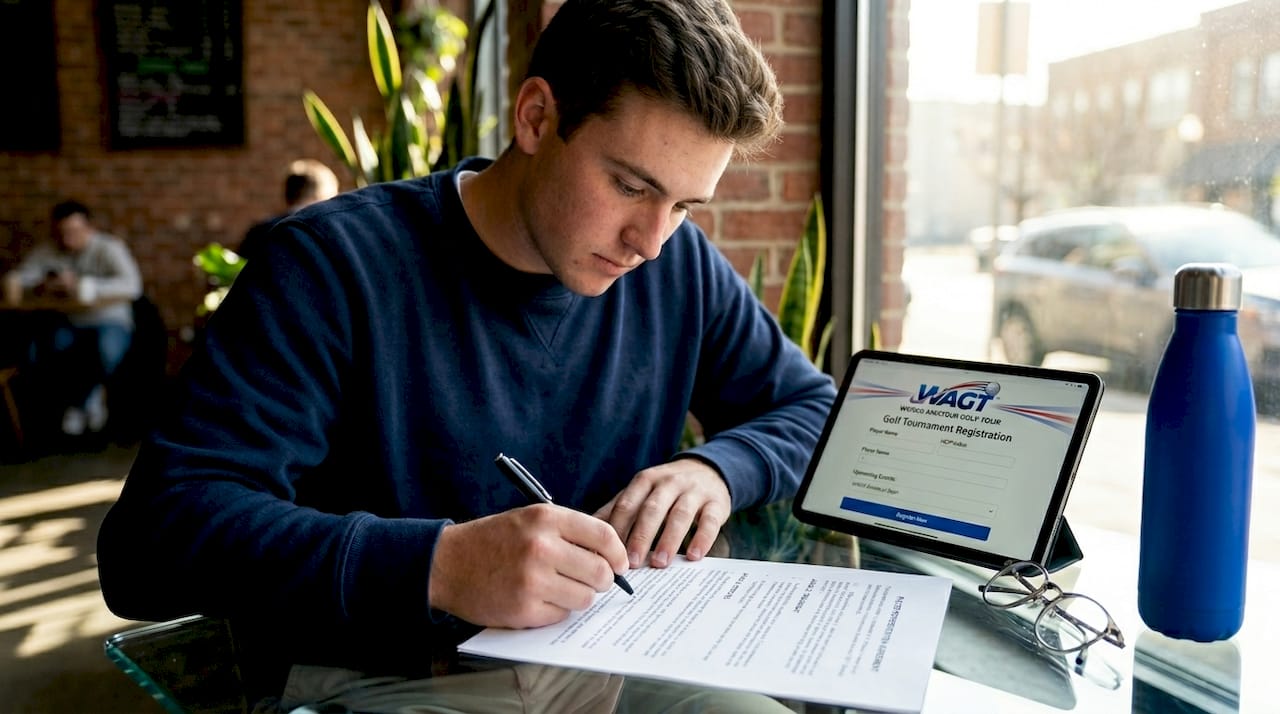
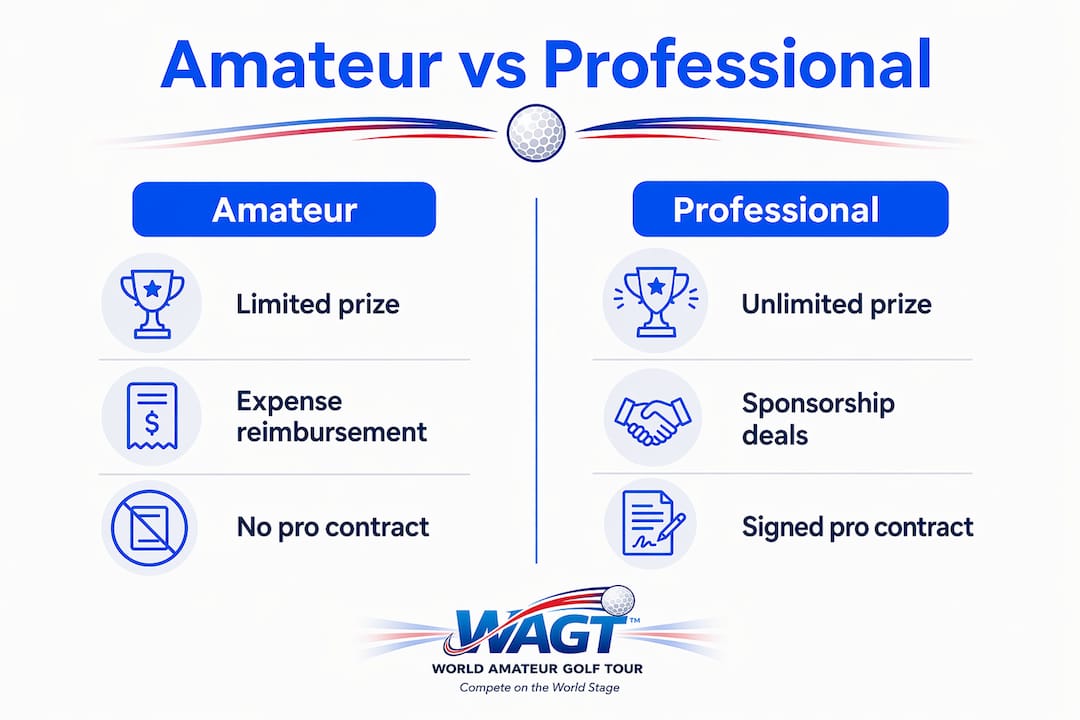
Prize money is the most commonly misunderstood trigger. In scratch-only competitions, the limit is $1,000. Accepting anything above that threshold, whether in cash, gift cards, merchandise, or equivalent value, constitutes an amateur status violation. This means a well-intentioned tournament win can strip your eligibility if the prize structure crosses that line.
The following actions cause loss of amateur status under the current rules:
- Declaring yourself a professional or entering an event as a professional
- Signing a professional contract, including team-based deals like LIV Golf
- Accepting prize money above the permitted limit in scratch competitions
- Receiving payment for teaching or giving golf instruction outside approved educational settings
- Accepting sponsorship payments that go beyond actual and necessary expenses
One important distinction: the 2022 updates do allow amateurs to receive expenses for travel and accommodation when competing, and coaching in formal educational settings is permitted. The rules removed several outdated restrictions, but the core financial boundaries remain firm.
Pro Tip: Before accepting any prize, sponsorship offer, or paid appearance, check the current USGA Rules of Amateur Status directly. A single uninformed decision can end your eligibility before your career has started.
How does losing amateur status affect tournament eligibility?
The practical consequences of losing amateur status hit hardest at the major championship level. Amateur-gated exemptions at events like the Masters, the U.S. Open, and The Open Championship are reserved for players who hold current amateur standing. Once you turn pro or violate the rules, those invitations disappear.
The 2026 Masters provided a clear example of this dynamic. Three amateurs declined their Augusta invitations to pursue professional careers, including Michael La Sasso, who turned pro in January 2026. That decision is irreversible. Once the invitation is forfeited, there is no path back to that specific opportunity.
Here is how amateur status loss affects eligibility across different competitive levels:
| Competition type | Impact of losing amateur status |
|---|---|
| Masters Tournament | Amateur exemption forfeited immediately upon turning pro |
| U.S. Open (amateur exemption) | Must hold amateur status through the event start date |
| NCAA collegiate events | Governed separately by NCAA eligibility rules, not USGA amateur rules |
| WAGR-ranked amateur events | Ineligible to compete or earn ranking points as a professional |
| State and regional amateur championships | Barred from entry under USGA amateur status rules |
The NCAA layer adds confusion here. NCAA eligibility and golf governing body amateur status are two separate systems. A college golfer can remain enrolled and NCAA-eligible while simultaneously losing their amateur status under USGA rules if they accept prohibited payments. Golf Digest's 2026 coverage of Auburn's Jackson Koivun made this distinction explicit. Koivun could compete in NCAA events as an enrolled student while his USGA amateur status determined his eligibility for major exemptions. These are not the same thing, and treating them as interchangeable is a costly mistake.
How does timing affect the decision to turn pro?
Timing the transition from amateur to professional is one of the most strategic decisions a college golfer makes. Most amateur-gated exemptions require a player to hold amateur status through the tournament's start date, not just at the time of qualification. This creates a narrow window where the sequence of events matters enormously.
Jackson Koivun's situation in 2026 illustrated this perfectly. As one of the top college prospects in years, Koivun held exemptions into both the U.S. Open and The Open Championship as an amateur. Turning pro before those start dates would have voided both exemptions. Staying amateur through those events, then declaring professional status, would allow him to compete in both majors before entering the professional ranks. That is not a loophole. That is smart planning.
Here is a practical framework for timing your pro transition:
- List every amateur-gated exemption you currently hold or are likely to earn.
- Identify the start date for each event, since that is the eligibility cutoff.
- Map your intended pro declaration date against those start dates.
- Confirm whether any NCAA events fall within that window and whether NCAA eligibility is affected separately.
- Consult a sports attorney or compliance advisor before signing any professional agreement.
The NCAA eligibility layer deserves its own attention. NCAA rules on professional team participation and payment acceptance differ from USGA rules, and violating one does not automatically violate the other. However, accepting payment from a professional team beyond actual and necessary expenses can trigger NCAA consequences that end your college eligibility entirely, separate from any USGA ruling.
Pro Tip: Never sign a professional contract, even a letter of intent or a preliminary agreement, without confirming the exact date it takes effect. Some agreements are retroactive, which can void exemptions you thought you had secured.
What motivates college golfers to give up amateur status?
The financial pull of professional golf is the primary driver behind early transitions, and the numbers make the logic hard to argue with. LIV Golf contracts and guaranteed professional opportunities offer financial security that no amateur invitation can match. Michael La Sasso's signing with LIV Golf in early 2026 is the clearest recent example of this calculus. He traded a Masters invitation for a guaranteed professional contract. As Jay Haas noted in coverage of the 2026 Masters, "money talks."
The motivations driving early pro transitions include:
- Guaranteed contracts: LIV Golf and other team-based tours offer upfront financial security that PGA Tour card earnings cannot guarantee.
- Sponsor deals: Professional status unlocks equipment deals, apparel contracts, and appearance fees that are prohibited under amateur rules.
- Career momentum: Some players believe early professional exposure accelerates development faster than extended amateur competition.
- Scholarship completion: Many college golfers wait until their final semester or season ends to avoid forfeiting scholarship benefits, then turn pro immediately.
The shifting professional landscape, driven by newer tours and team structures, has genuinely changed the traditional amateur-to-pro timeline. A decade ago, the standard path ran through college golf, then Q-School or the Korn Ferry Tour. Today, a top-ranked amateur can receive a direct professional contract offer before their junior season ends. That changes everything about how you weigh prestige against financial security.
How can college golfers protect their amateur status?
Protecting your amateur status requires active monitoring, not passive assumption. The rules are clear, but the situations that trigger violations are often subtle. Understanding the distinction between NCAA eligibility and USGA amateur status is the first step every college golfer must take.
Key compliance practices to follow:
- Track every prize you receive and confirm its value stays within the $1,000 limit for scratch competitions.
- Decline any payment for golf instruction outside a formal educational setting, since paid lessons constitute professional conduct.
- Review all sponsorship offers against the USGA's expense reimbursement guidelines before accepting.
- Keep documentation of any payments received, including travel reimbursements, to demonstrate compliance if questioned.
- If a violation occurs, contact the USGA directly about reinstatement options. Reinstatement is possible in some cases, particularly for unintentional violations.
The college golf to amateur circuit transition is a real pathway that many players use to extend competitive careers without triggering professional status. Competing in WAGR-ranked amateur events, for example, keeps your ranking active and your eligibility intact while you build the resume needed to attract professional opportunities on your own terms.
Pro Tip: If you receive a sponsorship offer, ask the sponsor to structure it as expense reimbursement with receipts rather than a flat payment. This keeps the arrangement within USGA guidelines and protects your amateur standing.
Key takeaways
College golfers lose amateur status the moment they accept prohibited payments, sign professional contracts, or exceed prize money limits, making proactive rule knowledge the most important tool in any competitive golfer's career plan.
| Point | Details |
|---|---|
| Three core triggers | Playing professionally, exceeding prize limits, or signing pro contracts ends amateur status immediately. |
| Timing is strategic | Staying amateur through major event start dates preserves exemptions before a planned pro transition. |
| NCAA vs. USGA rules | These are separate systems; violating one does not automatically affect the other. |
| Financial incentives are real | LIV Golf contracts and guaranteed deals are reshaping when and why top amateurs turn pro. |
| Reinstatement is possible | Unintentional violations may qualify for reinstatement through the USGA if addressed promptly. |
My take on the amateur status conversation
I have watched the amateur-to-pro transition debate intensify every year, and the 2026 Masters situation crystallized something I have believed for a long time. The confusion is not about the rules themselves. The rules are actually clearer now than they were before the 2022 modernization. The confusion is about which rulebook applies to which situation.
College golfers routinely conflate NCAA eligibility with USGA amateur status, and that conflation costs them. I have seen players accept what they thought was a compliant sponsorship arrangement, only to discover it violated USGA guidelines even though their NCAA compliance office signed off. These are two different systems with two different standards, and assuming one covers the other is the most common mistake I see.
The LIV Golf dynamic adds a layer that did not exist five years ago. Guaranteed contracts at the professional level now arrive before some players finish their sophomore year. That changes the math on staying amateur. The prestige of a Masters invitation is real. The financial security of a guaranteed professional contract is also real. Neither answer is wrong. The mistake is making the decision without fully understanding what you are giving up and what you are gaining.
My advice: treat your amateur status like a competitive asset with an expiration date you control. Plan the expiration deliberately. Do not let it expire by accident.
— Gene
Compete at the highest amateur level before you turn pro
If you are a college golfer or elite junior working through your timeline, the competitive environment you train in matters as much as the rules you follow. Worldamateurgolftour offers WAGR-counting tournaments at championship-caliber courses, giving you the ranking points, competitive experience, and visibility that serious programs and professional scouts look for.
Competing in WAGR amateur tournaments keeps your status intact while building the resume that makes your pro transition on your terms, not someone else's. Worldamateurgolftour events are professionally run, transparently managed, and designed specifically for junior, collegiate, and elite amateur golfers who want serious competition before making the biggest career decision of their lives. Explore the 2026 season planning strategies and find the events that fit your timeline.
FAQ
What causes a college golfer to lose amateur status?
A college golfer loses amateur status by playing as a professional, accepting prize money above $1,000 in scratch competitions, or signing a professional contract. These triggers apply under USGA and R&A rules regardless of NCAA enrollment status.
Does losing amateur status affect NCAA eligibility?
Not automatically. NCAA eligibility and USGA amateur status are governed by separate rule sets. A player can lose USGA amateur status while remaining NCAA-eligible, though accepting payments from professional teams can trigger NCAA violations independently.
Can you regain amateur status after losing it?
Yes, reinstatement is possible in some cases, particularly for unintentional violations. The USGA reviews reinstatement requests individually, and the outcome depends on the nature and duration of the violation.
Why did some amateurs skip the 2026 Masters?
Three amateurs declined their Masters invitations in 2026 to pursue professional contracts, including Michael La Sasso, who signed with LIV Golf. The financial security of a guaranteed pro deal outweighed the prestige of competing at Augusta National.
How does timing a pro declaration protect major exemptions?
Amateur-gated exemptions require a player to hold amateur status through the tournament's start date. Declaring professional status after those dates, but before other events, allows a golfer to compete in secured majors while still entering the professional ranks on schedule.