

Start your college golf recruiting effort by building a stats-first profile: current handicap index, your last six to twelve months of tournament finishes, GPA, and graduation year. This works because coaches filter fast and rules limit when they can contact you directly, so Division I coaches can't call or email until June 15 after your sophomore year. Playing WAGR-counting events builds a ranking history coaches trust before that window even opens.
This week, do four things:
- Update your Junior Golf Scoreboard or AJGA profile with recent scores.
- Record a 60 to 90 second on-course video, not just a range swing.
- Build a one-page recruiting resume with handicap, GPA, and graduation year.
- Draft a short intro email and send it to 10 target coaches.
Key Takeaways
Recruiting success comes down to building a data-first profile early, playing events that produce standardized results, and timing outreach to NCAA contact windows.
| Point | Details |
|---|---|
| Lead with data, not narrative | Handicap index, recent results, and a profile link get read faster than a long personal story. |
| Know your contact window | D1 coaches can't make personal contact until June 15 after sophomore year, per NCAA rules. |
| Match division to profile | D1 rewards scoring and exposure, D3 rewards academics, NAIA/JUCO often offer faster playing time. |
| Expect partial aid, not a full ride | Scholarship pools are typically split across five to seven players per roster. |
| Choose events for standardized visibility | WAGR-counting tournaments through Worldamateurgolftour give coaches comparable, trackable results. |
Table of Contents
- College Golf Recruiting Guide: Your Six-Step Monthly Checklist
- What Are the NCAA Recruiting Rules and 2025-26 Calendar?
- What Do Coaches Look For by Division?
- How Do Golf Scholarships and Financial Aid Actually Work?
- How Do You Get on a College Coach's Radar?
- Which Tournaments and Camps Actually Build Recruiting Exposure?
- Why WAGR-Counting Events Matter for Recruiting Visibility
- What Coaches Actually Notice in a Recruit
- Give Your Recruiting Profile a Ranking Advantage
- Where to Verify Rules, Rankings, and Events
- Frequently Asked Questions
- Sources
College Golf Recruiting Guide: Your Six-Step Monthly Checklist
Recruiting rewards players who work a plan, not players who wait for a call. Use this checklist as your recurring monthly loop through the rest of the season.
- Audit your profile (this week, 30 minutes): confirm handicap, scores, and contact info are current on your recruiting profile.
- Pick your target list (this month): 15 to 20 schools across two or three divisions, matched to your current scoring average.
- Send five coach emails weekly (ongoing): track opens and replies in a spreadsheet.
- Record fresh video after each tournament (this season): aim for one clip per month showing full holes, not highlight shots.
- Check academic eligibility (this month): confirm GPA and core courses meet NCAA Eligibility Center standards.
- Schedule at least one campus visit or camp (this season): treat it as evaluation for you, not just for the coach.
Each step has a measurable target: five emails a week, one video a month, a GPA above your target division's typical threshold.
What Are the NCAA Recruiting Rules and 2025-26 Calendar?
The single scheduling constraint to plan around: Division I coaches cannot make personal contact with a recruit until June 15 after that recruit's sophomore year. Everything before that date is about coaches watching from a distance, so your visibility has to do the talking.
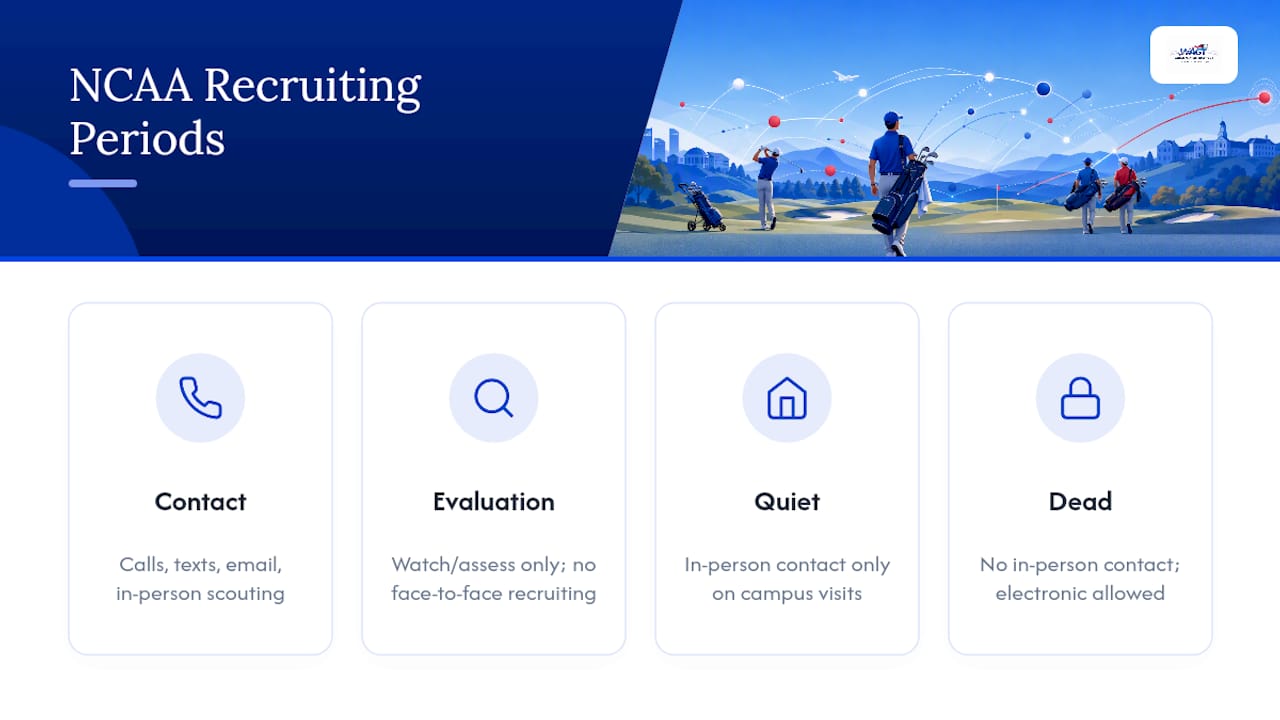
The NCAA's official recruiting pages break the calendar into four period types. Contact periods let coaches call, text, email, and watch you play in person. Evaluation periods allow coaches to watch and assess you at tournaments, but not talk recruiting with you face to face. Quiet periods restrict contact to campus visits only, no off-campus meetings. Dead periods shut down in-person contact entirely, though electronic communication generally continues.
Before June 15, coaches build shortlists using your Junior Golf Scoreboard results, AJGA finishes, and any WAGR-counting scores you've posted. That's why your online results have to be airtight well before contact even opens.
Pro Tip: Time your biggest email push to land right after a strong result at a nationally tracked event, and right as a contact period opens. Coaches remember names attached to a scoreboard they just checked.
What Do Coaches Look For by Division?
Each division filters recruits differently, and knowing which filter applies to you saves months of wasted outreach. More than 1,000 colleges across the NCAA, NAIA, and NJCAA sponsor men's golf, so realistic targeting matters more than chasing name-brand programs.
- Division I: scoring average and national exposure come first. Programs generally recruit players competing at a scratch or better level with results from AJGA or comparably ranked events.
- Division II: scoring still matters, but academic fit and the ability to help fund your own education through merit aid carry real weight.
- Division III: academics lead. No athletic scholarships exist here, so coaches lean on regional exposure and admissions fit.
- NAIA and junior college (JUCO): these programs often provide the clearest path to immediate playing time, especially for golfers still developing their scoring consistency.
A borderline athletic profile with a strong GPA, a demanding intended major, or standout test scores frequently opens doors that scoring average alone would close. Coaches screen prospects on three data points first: handicap index, tournament results, and the quality of events played. Handicap is usually the first filter applied, before a coach ever reads your academics.
How Do Golf Scholarships and Financial Aid Actually Work?
Full-ride golf scholarships are rare. Most programs split limited scholarship money across five to seven top performers on the roster, which means most aid offers arrive as partial awards, not full tuition.
- Division I and II: coaches distribute scholarship dollars at their discretion, often stretching a handful of full equivalencies across a dozen or more roster spots.
- NAIA: similar split-award structure, with more flexibility in how coaches allocate aid.
- Division III: no athletic scholarships, period, but merit aid and need-based financial aid can add up to a package comparable to a partial athletic scholarship elsewhere.
Pro Tip: Ask coaches directly how athletic aid stacks with academic scholarships and need-based financial aid before you commit. Many families leave money on the table by assuming athletic aid is the only number that matters.
Walk-on and preferred walk-on spots remain a real path onto a roster, especially at D1 programs, though they typically come with no athletic aid and less guaranteed playing time early on.
How Do You Get on a College Coach's Radar?
Coaches want quick, data-first outreach: handicap, recent results, a link to your profile, academics, and graduation year, in that order. The most effective outreach leads with measurable performance and one clean profile link rather than a long personal story.
Your one-page resume should include: handicap index, last six to twelve months of tournament results, GPA and standardized test scores, graduation year, and contact information for your coach or instructor. Your video should show full holes of play, tee shots, approach shots, putts under real conditions, not a polished range session.
- Send your first email in the fall of your sophomore or junior year, even if contact rules limit the coach's reply.
- Follow up once every four to six weeks with a fresh result, not a repeat of the same message.
- Lead your subject line with your name, graduation year, and current handicap.
- Open the email body with your two strongest facts before anything else.
Pro Tip: Email the head coach directly, and mention one specific detail about the program (a recent tournament finish, a course they play, a major they're known for). Generic mass emails get deleted fast.
Which Tournaments and Camps Actually Build Recruiting Exposure?
Prioritize AJGA events, nationally recognized junior tours, and WAGR-counting tournaments if you're targeting Division I visibility. Regional and state-level tours still carry real weight for D2, D3, and NAIA programs, where coaches recruit closer to home.
Coaches consistently watch a handful of named entities: AJGA, Junior Golf Scoreboard, HJGT, and events tracked through IMG Academy and USGA championships all shape how recruits get evaluated. Strong, consistent results at recognized events draw far more coach attention than scattered wins at unranked local rounds.
- National ranking-point events: raise your visibility in coach databases and national rankings.
- Coach-attended events: put you in front of recruiters in person, which matters heavily during evaluation periods.
- Video-friendly regional events: useful for building a track record when travel budgets are tight.
Pick two or three quality events per season rather than spreading entries thin across a dozen low-impact tournaments; cost and travel time add up fast, and coaches care more about your best results than your total entries.
Why WAGR-Counting Events Matter for Recruiting Visibility
Playing in WAGR-counting tournaments gives coaches standardized, easy-to-compare results, which matters because ranking-based filters are often the first pass a recruiting coordinator runs on a stack of names. A consistent WAGR record does the explaining before an email even lands in a coach's inbox.
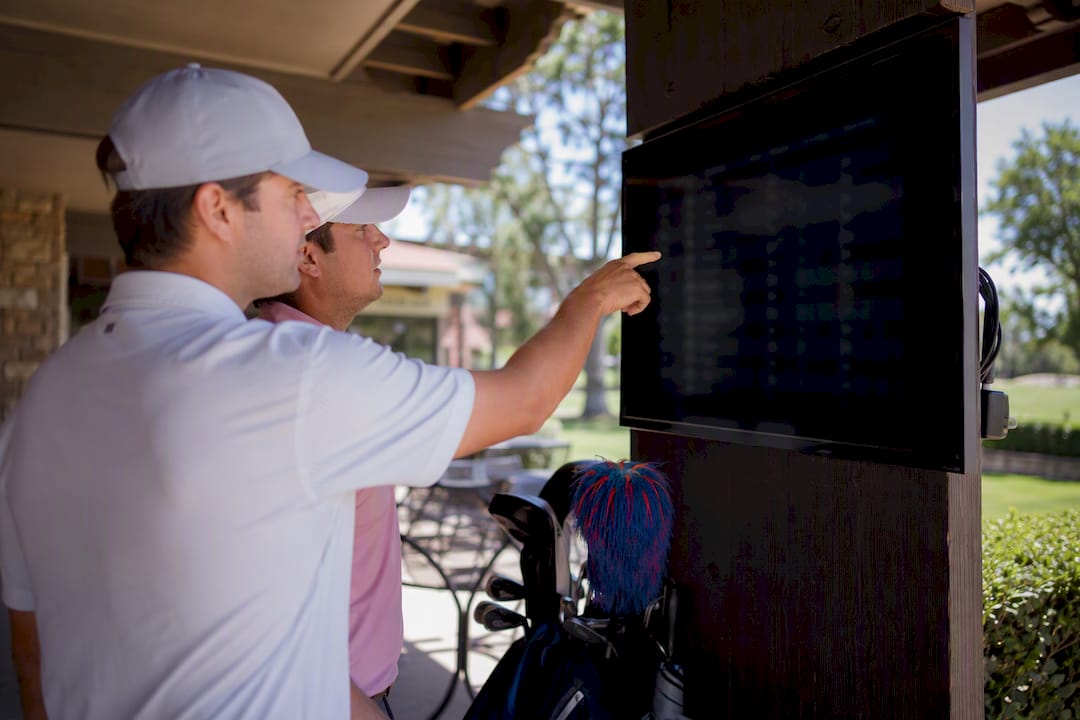
Pro Tip: When you email a coach, lead with your WAGR-counting results specifically, not just your overall scoring average. It signals you've competed in a standardized, nationally trackable format they already recognize.
What Coaches Actually Notice in a Recruit
What stands out to me isn't a single low round. It's the trajectory of scores across a season, proof a player trends downward under real pressure, not just on a good day. My tactical advice: submit your three most recent tournament results, not your career best, because that's the number coaches actually trust.
Give Your Recruiting Profile a Ranking Advantage
Building a stats-first profile only works if the results behind it carry weight, and that's exactly what WAGR-counting events give you. Worldamateurgolftour runs professionally managed tournaments where every round counts toward your World Amateur Golf Ranking, giving coaches a standardized result they can compare against national fields instead of a local scorecard they've never seen before.
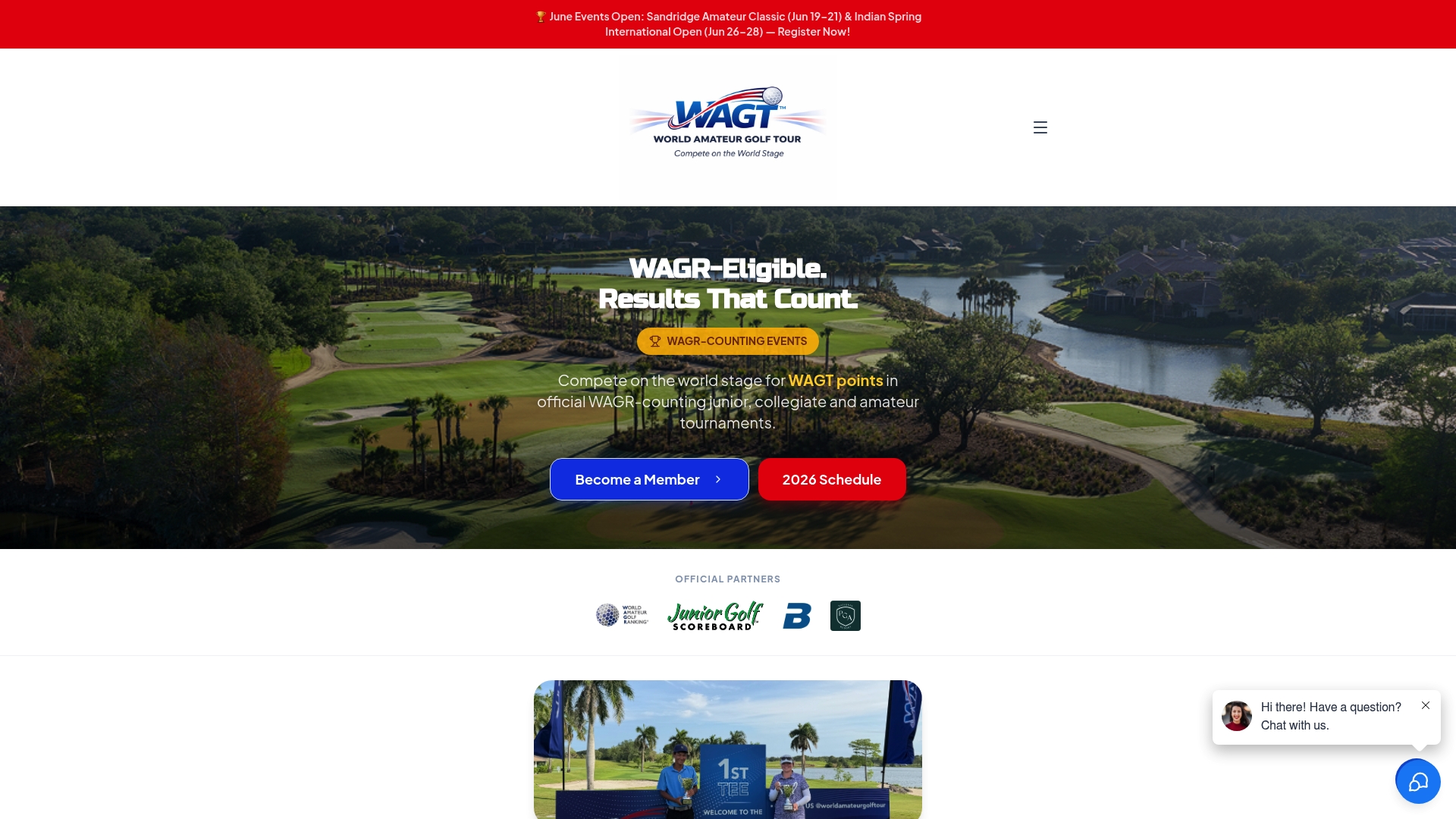
Membership gets you entry into ranked events, live scoring coaches can reference directly, a player profile built for recruiting outreach, and a rewards program that offsets entry costs as you compete more. Before you lock in your season, check the current WAGR event schedule and line it up against your academic calendar and target coaches' contact windows, then register for the events that fit your timeline.
Where to Verify Rules, Rankings, and Events
- NCAA Recruiting and Eligibility Center
- 2025-26 NCAA Golf Recruiting Calendar
- USGA
- Men's College Golf Recruiting Guide
Frequently Asked Questions
When should I start the college golf recruiting process? Most families begin building a profile and target list during freshman or sophomore year, since NCAA rules let Division I coaches make personal contact starting June 15 after sophomore year.
How many colleges offer men's golf? More than 1,000 colleges across the NCAA, NAIA, and NJCAA sponsor men's golf, which gives most serious junior golfers realistic options across multiple divisions.
Do most college golfers get full scholarships? No. Full rides are uncommon because scholarship money is typically split into partial awards across five to seven top performers on a roster.
What's the difference between a contact period and a dead period? During a contact period, coaches can call, email, and meet with recruits in person. During a dead period, in-person contact stops entirely, though electronic communication generally continues.
Do WAGR-counting events actually help with recruiting? Yes. They give coaches a standardized set of results they can compare directly against other prospects, which speeds up how quickly a recruit gets noticed in an initial screening pass.
Sources
- NCAA Recruiting and Eligibility Center — Recruiting
- 2025-26 NCAA Golf Recruiting Rules and Calendar
- Men's College Golf Recruiting and Scholarships Guide
- USGA