
Summer amateur golf events for college athletes are defined as multi-day, stroke-play tournaments that award World Amateur Golf Ranking (WAGR) points and attract competitive collegiate fields. These events are the single most effective tool for improving your ranking, gaining coach attention, and building a competitive resume before your next college season. Events like the Eagle Amateur, WPGA Amateur Championship, and Arnold Palmer Cup represent the gold standard for collegiate players who want results that actually move the needle. Your summer schedule is not just practice. It is a strategic asset.
1. what defines the best summer amateur golf events for college athletes
The best summer amateur golf events for college athletes share four defining traits: multi-day format, WAGR point eligibility, strong collegiate fields, and alignment with key ranking windows.
Multi-day events carry far more weight with coaches than single-round competitions. A 54-hole stroke play event tests your consistency, course management, and mental stamina in ways a one-day event simply cannot. Coaches recruiting at the Division I level look for scores across multiple rounds to assess whether a player can sustain performance under pressure.

WAGR eligibility is the second filter. WAGR is the official global amateur ranking system that converts results from counting tournaments into weekly-updated rankings. A strong finish at a WAGR-counting event can generate exemptions into major amateur championships and increase your visibility to scouts and coaches worldwide.
Field strength matters just as much as format. Competing against other ranked collegiate players gives your result context. A win or top-10 finish in a weak field tells coaches very little. The same result against a field of ranked amateurs tells them everything.
- Multi-day format: Prioritize 36-hole or 54-hole events over single-round competitions
- WAGR sanctioning: Confirm the event counts toward official rankings before registering
- Field quality: Look for events that attract Division I players and nationally ranked amateurs
- Timing: Schedule events within active ranking windows, including the PGA TOUR University period
Pro Tip: Check the WAGR website directly to confirm an event's counting status before you commit to travel and registration fees. Not every event that claims ranking relevance is officially sanctioned.
2. tampa bay amateur
The Tampa Bay Amateur at TPC Tampa Bay is one of the most respected WAGR-counting summer events on the East Coast. The course is a championship-caliber layout that tests every part of your game from tee to green. The field consistently draws strong collegiate and elite amateur participation, making a high finish genuinely meaningful.
TPC Tampa Bay's Bermuda fairways and fast greens replicate conditions you will face at high-level amateur and professional events. That familiarity with tour-quality conditions is a development benefit that goes beyond ranking points. You learn to score on courses that do not forgive mistakes.
For college players building a summer tournament schedule, the Tampa Bay Amateur belongs near the top of the list. It combines WAGR points, a respected venue, and a competitive field in a single package.
3. eagle amateur at BanBury golf course
The Eagle Amateur at BanBury Golf Course in Eagle, Idaho offers over $15,500 in added money alongside WAGR points for a 54-hole gross stroke play championship. Separate men's and women's divisions run simultaneously, giving collegiate players of both genders a legitimate ranking opportunity in a single trip.
The added money component is unusual for an amateur event. It signals that the organizers are serious about attracting elite talent and rewarding competitive performance. That financial incentive draws stronger fields, which in turn makes your ranking points more valuable.
BanBury Golf Course is a respected venue in the Pacific Northwest. If you are a college player based on the West Coast or Mountain West, the Eagle Amateur is one of the most efficient ways to earn WAGR points without cross-country travel costs.
4. WPGA amateur championship
The WPGA Amateur Championship is a historic 54-hole WAGR-counting event held in Pennsylvania. It is one of the oldest and most respected amateur championships in the Mid-Atlantic region, drawing elite collegiate and open amateur players each summer.
The event's history adds weight to a strong finish. Coaches and scouts recognize the WPGA Amateur as a legitimate proving ground. Winning or placing in the top five here carries a different kind of credibility than finishing well at a newer or less established event.
Pennsylvania's parkland courses present a different challenge than the Bermuda-grass layouts common in the South and Southwest. Playing well in varied conditions across different course styles is exactly the kind of versatility that Division I coaches want to see in a recruit.
5. sizzler amateur
The Sizzler Amateur runs june 8–9 in California as a 54-hole stroke play event with a field capped at 84 players. That limited field size is a deliberate choice. It keeps the competition elite and the pace of play manageable across three rounds.
A field of 84 means you are competing against the best players who applied, not a large open draw. Your ranking points carry more weight when the field is selective. For college players who want a West Coast WAGR event with a genuine competitive atmosphere, the Sizzler Amateur delivers.
The California setting also makes it a natural fit for players at Pac-12 and West Coast Conference programs. Staying close to home reduces travel costs while still earning meaningful ranking points.
Pro Tip: Limited-field events like the Sizzler Amateur fill quickly. Submit your application as early as possible. Field caps are enforced strictly, and late applicants are often waitlisted.
6. arnold palmer cup
The Arnold Palmer Cup is a Ryder Cup-style international team competition featuring the top collegiate players in the world. The 2026 edition runs july 3–5 at Tralee Golf Links in Ireland. Selection is by invitation only, based on collegiate rankings.
This event is the pinnacle of summer collegiate amateur competition. Being named to the Arnold Palmer Cup team is itself a recruiting signal. It tells every coach in the country that you are among the best college players in the world right now.
The team format also develops a skill set that stroke play events cannot. Match play under international pressure, representing your country alongside elite teammates, builds competitive character in a way that individual tournaments do not replicate.
7. how summer events influence college golf recruiting and rankings
WAGR's function goes well beyond a number next to your name. It generates exemptions into USGA championships, influences scholarship conversations, and determines whether coaches take your phone call seriously.
The PGA TOUR University ranking window for the 2026 class ended june 1, 2026. That means summer events after that date count toward the 2027 class ranking. Understanding this timing is critical. Playing the right events at the wrong time in the ranking cycle produces far less impact than a focused, well-timed schedule.
Here is how to think about your summer schedule strategically:
- Identify your ranking window. Know exactly which events count toward your current class year and which roll into the next cycle.
- Prioritize WAGR-counting events. Scattered single rounds rarely move rankings. Concentrated multi-day results do.
- Target strong fields. A top-10 finish against ranked players is worth more than a win in a weak field.
- Apply early. Elite events with field caps fill months in advance.
- Balance volume with quality. Three well-chosen WAGR events beat ten single-round invitationals every time.
"Coaches weight multi-day tournament scores more heavily for college golf recruiting and visibility." — NCSA Recruiting Guidelines
8. comparing amateur golf tours and series for college players
Not every amateur tour serves college athletes equally. Here is a direct comparison of the most relevant options for collegiate players in 2026.
| Tour / Series | WAGR Points | Field Level | NCAA D-I Eligible | Geographic Focus |
|---|---|---|---|---|
| Worldamateurgolftour | Yes | Elite amateur and collegiate | Yes | Florida and Southeast US |
| Future Champions Golf Tour | Varies by event | Junior and collegiate | Yes | National US |
| Amateur Players Tour | No | Open amateur | Yes | National US |
| DP World Tour Global Amateur | Yes | Elite international | No for NCAA D-I | International |
The most important row in that table is the last one. The DP World Tour's Global Amateur Pathway excludes current NCAA Division I players. If you are enrolled at a Division I program, this pathway is not available to you regardless of your ranking. Verify eligibility before pursuing any international amateur series.
Worldamateurgolftour stands out for college athletes because it combines WAGR sanctioning with professionally run events at respected venues. The tour membership benefits include access to a full event calendar, which simplifies the scheduling process considerably.
For players at programs in the Southeast, Worldamateurgolftour events offer the most efficient path to WAGR points without significant travel costs. That geographic efficiency matters when you are balancing summer training, academic commitments, and a competitive event schedule.
The Amateur Players Tour is a solid option for open amateurs who want competitive rounds, but the absence of WAGR points limits its recruiting impact. Use it for competitive reps, not ranking strategy.
Key takeaways
The most effective summer strategy for college golfers is a focused schedule of multi-day, WAGR-sanctioned events aligned with active ranking windows.
| Point | Details |
|---|---|
| Prioritize WAGR-counting events | Only counting tournaments move your official ranking and generate exemptions. |
| Multi-day format is non-negotiable | Coaches weight 54-hole results far more heavily than single-round scores. |
| Timing within ranking windows matters | Know your class year's ranking period before committing to a summer schedule. |
| Field strength amplifies your result | A top finish against ranked amateurs is worth more than a win in a weak field. |
| Verify NCAA eligibility for international tours | NCAA Division I players are excluded from pathways like the DP World Tour Global Amateur. |
What i've learned about building a summer schedule that actually works
I have watched a lot of college golfers make the same mistake every summer. They play too many events, spread across too many formats, and end up with a long list of results that coaches cannot interpret and WAGR cannot use. Volume feels productive. It rarely is.
The players who make real progress in the summer are the ones who treat their schedule like a coach treats a game plan. They identify three or four WAGR-counting events with strong fields, apply early, and commit fully to each one. They understand that ranking window alignment is not a technicality. It is the difference between a summer that moves your ranking and one that does not.
One thing most players overlook is the eligibility check for international pathways. The DP World Tour Global Amateur is genuinely prestigious, but it is off-limits for NCAA Division I athletes. I have seen talented players waste time pursuing an application they were never going to receive. Read the eligibility rules before you get excited about an event.
The Arnold Palmer Cup is the ceiling of summer collegiate competition, but most players are not there yet. For the majority of college golfers, the right answer is a combination of one or two regional WAGR events close to home and one event with a nationally competitive field. That combination builds your ranking and your resume without burning out your body or your budget.
Balancing summer tournaments with academic obligations is also real. The college athlete academic checklist is worth reviewing before you finalize your schedule. A summer that costs you academic standing is not a successful summer, no matter how well you played.
— Gene
Start earning WAGR points this summer with Worldamateurgolftour
If you are a college golfer looking for WAGR-sanctioned events with competitive fields and professionally run formats, Worldamateurgolftour is built for you.
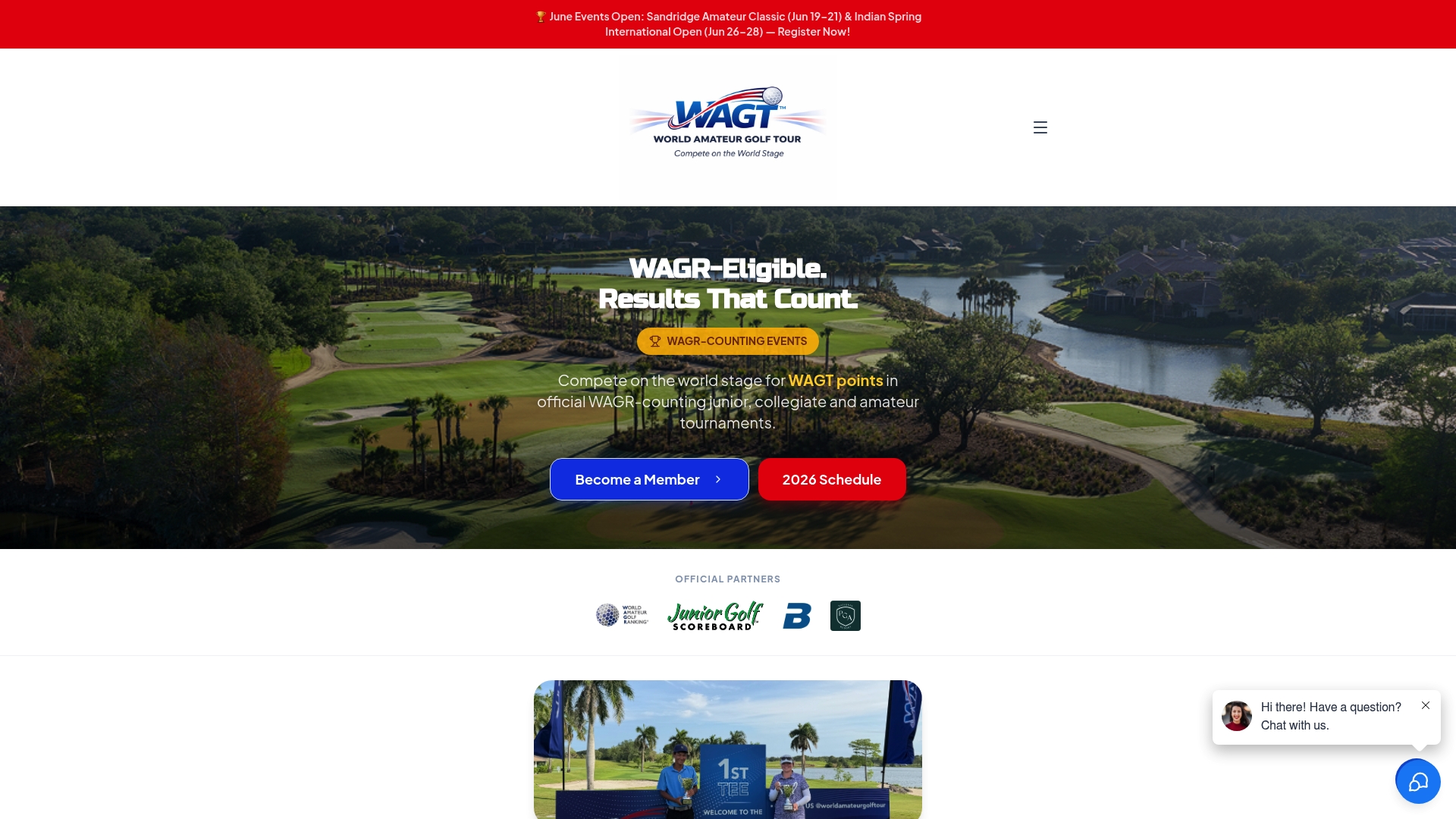
Worldamateurgolftour hosts WAGR-counting amateur tournaments at championship-caliber courses, primarily in Florida and the Southeast. Every event is designed to give collegiate and elite amateur players the competitive environment they need to improve rankings and gain visibility. Registration is straightforward, the event calendar is updated regularly, and the fields are serious. Visit Worldamateurgolftour to view the 2026 event schedule and secure your spot. Fields fill fast, and your summer ranking window will not wait.
FAQ
What are WAGR points and why do they matter?
WAGR is the official global amateur ranking system that converts results from counting tournaments into weekly-updated rankings. Strong WAGR rankings generate exemptions into major amateur championships and increase visibility with college coaches and professional scouts.
How many summer events should a college golfer play?
Three to four multi-day WAGR-counting events produce more ranking impact than ten single-round competitions. Quality and field strength matter far more than volume.
Can NCAA division i players join international amateur tours?
No. The DP World Tour's Global Amateur Pathway explicitly excludes current NCAA Division I players. Verify eligibility rules before applying to any international amateur series.
What is the PGA TOUR university ranking window?
The PGA TOUR University ranking window is a defined period during which tournament results count toward a player's class year ranking. The 2026 class window ended june 1, 2026, so summer events now count toward the 2027 class.
Which summer event is best for west coast college players?
The Sizzler Amateur in California and the Eagle Amateur in Idaho are the top options for West Coast collegiate players. Both are 54-hole WAGR-counting events with competitive fields and manageable travel costs for players at West Coast programs.