

A golf club marketing tournament checklist is a structured, phased plan that organizes every promotional and operational task needed to run a successful competitive golf tournament. Without it, club managers miss critical deadlines, underallocate budgets, and lose sponsorship revenue that funds future events. The National Golf Foundation reports that about 80% of U.S. golf facilities hold at least one charity event annually. That volume of activity demands a repeatable system, not a one-time to-do list. This guide gives golf club managers and tournament directors a complete, phase-by-phase checklist built on industry best practices for 2026.
1. What key phases should your golf club marketing tournament checklist include?
A well-built club promotional checklist runs in four phases: foundation, awareness, momentum, and urgency. Each phase has distinct tasks and channels. Skipping a phase or compressing the timeline is the single most common reason tournaments underperform on registrations.
Planning should begin 6–9 months before the event, with marketing outreach launching 4–6 months out. That window gives you time to secure the venue, lock in sponsors, and build an audience before registration opens.
The four phases break down like this:
- Foundation (6–9 months out): Confirm venue and date, set your format, define your audience, and build your sponsor prospect list. Your tournament schedule anchors every downstream marketing decision.
- Awareness (4–6 months out): Send save-the-date communications to past players, sponsors, and partners. Launch your event website or registration page. Post on social media and begin email list building.
- Momentum (2–4 months out): Open registration publicly. Run sequenced email campaigns to segmented lists. Activate sponsor cross-promotion and partner outreach. Use paid social ads to reach new audiences.
- Urgency (final 4–6 weeks): Send last-chance registration emails. Highlight field size limits or early-bird pricing deadlines. Push social proof, such as player testimonials or course photos, to drive final sign-ups.
Segment your messaging from the start. Sponsors need ROI data and package details. Players want format information, course quality, and competitive stakes. Partners respond to co-promotion opportunities. One generic email blast serves none of them well.
2. How to build and allocate your golf tournament marketing budget
Your budget is your most important planning document. A realistic allocation prevents overspending on the course and underspending on promotion, which is the mistake that kills registration momentum.
Standard budget allocations for competitive golf tournaments follow this breakdown:
- Course fees: 35–50% of total budget
- Food and beverage: 20–30%
- Prizes and awards: 10–15%
- Marketing, signage, and custom items: 5–10%
- Contingency fund: 5–8% for unplanned costs
The marketing line item is small relative to total spend, so every dollar must work hard. Prioritize channels with measurable conversion, such as email registration campaigns and targeted social ads, over broad awareness spending with no clear return.
Sponsorship revenue should be modeled into your budget before you finalize spend. If you project $10,000 in sponsorship income, you can afford to invest more in signage quality and sponsor activation, which in turn improves renewal rates. For a deeper look at golf club revenue streams from hosted events, the relationship between marketing spend and sponsor ROI is well documented.

Pro Tip: Build your contingency fund before you allocate to marketing. Unplanned costs hit operations first, and cutting your marketing budget mid-campaign is far more damaging than starting with a leaner promotional plan.
3. What are the essential sponsorship strategies on your tournament marketing checklist?
Sponsorship is not a fundraising add-on. It is a core revenue function that requires its own checklist within your event marketing plan. Treat it as such from day one.
Hole sponsorships are typically priced between $500 and $2,000 per hole, depending on market and event prestige. Use that range as your baseline when building tiered packages.
A strong sponsorship checklist includes:
- Tiered packages: Create at least three levels (presenting, gold, hole) with clearly differentiated benefits. Presenting sponsors get naming rights and premium signage. Hole sponsors get on-course visibility and post-event recognition.
- Prospect outreach: Contact local businesses, past sponsors, and industry partners at least 4–5 months before the event. Give them time to budget and approve.
- Fulfillment documentation: Photograph every sponsor sign before and during the event. Sponsor fulfillment is a distinct marketing function. Delivering photo evidence of signage placement builds trust and simplifies renewal conversations.
- Post-event reporting: Send each sponsor a one-page summary showing their logo placements, estimated player reach, and any digital impressions from social coverage.
For detailed sponsorship criteria and best practices, the structure of your packages matters as much as your pricing.
Pro Tip: Assign one person to own sponsor fulfillment. When fulfillment is everyone's job, it becomes no one's job. A dedicated owner catches missed signage placements before the event starts, not after.
4. How to leverage technology and multi-channel marketing to promote your tournament
Technology separates well-run tournaments from great ones. The right tools reduce administrative burden, improve the player experience, and generate marketing content in real time.
Online registration systems with secure credit card payment and simple sign-up flows increase conversion rates and cut admin time significantly. Players expect frictionless registration. A clunky form or a check-only payment option costs you entries.
Your multi-channel marketing mix should include:
- Sequenced email campaigns: Send a save-the-date, a registration-open announcement, a mid-campaign update with field highlights, and a last-chance reminder. Sequenced email strategies build compounding momentum rather than isolated spikes.
- Social media: Post course photos, sponsor spotlights, and player highlights consistently in the 8 weeks before the event. Use Instagram and Facebook for visual content and LinkedIn for sponsor and corporate outreach.
- Live scoring apps: Live scoring technology gives your tournament a pro-tour feel and drives social sharing during the event itself. Players post leaderboard screenshots. That organic reach is free marketing.
- Partner cross-promotion: Ask sponsors and local businesses to share your event to their audiences. A single email from a well-known local sponsor can reach hundreds of qualified prospects.
Personal outreach and peer-driven sharing generate 3–5 times more trusted impressions per dollar than paid digital ads. Paid ads build awareness. Personal invitations close registrations.
Pro Tip: Send a "field update" email two weeks before registration closes. Tell your list how many spots remain. Scarcity is the most honest urgency trigger you have, and it works.
5. What are the critical day-of and post-event checklist items?
Day-of execution is where your marketing investment either pays off or falls apart. A smooth event creates the social proof and sponsor satisfaction that funds your next tournament.
- Arrive early and set up completely: Have all sponsor banners, registration signage, and contest markers in place before the first player arrives. First impressions set the tone for the entire day.
- Run a clear registration process: Assign staff to check in players, distribute scorecards, and answer format questions. A bottleneck at registration creates frustration that colors the entire player experience.
- Brief players before tee-off: Cover the format, local rules, scoring procedures, and any on-course contests. A five-minute briefing prevents scoring disputes and keeps play moving.
- Verify scoring in real time: Use your live scoring app to catch errors during play, not after. Accurate, prompt scoring is a competitive integrity issue and a marketing asset. Players share leaderboards when the data is trustworthy.
- Announce winners promptly and publicly: Post results on your event page and social channels within two hours of the final group finishing. Delayed results lose the social sharing window.
- Send sponsor reports within one week: Deliver photo documentation, player attendance numbers, and any digital reach metrics. Sponsors who receive a professional post-event report are far more likely to renew.
- Follow up with players: Send a thank-you email within 48 hours. Include a short feedback survey. Player input shapes your next event and keeps your list warm for future registration campaigns.
Post-event communication is the most underused item on any checklist for golf tournaments. The players and sponsors who just experienced your event are your warmest audience for the next one.
Key takeaways
A golf club marketing tournament checklist works only when it is phased, budgeted, and executed with dedicated ownership at every stage.
| Point | Details |
|---|---|
| Start planning early | Begin 6–9 months out and launch marketing outreach 4–6 months before the event. |
| Budget marketing intentionally | Allocate 5–10% of total budget to marketing and prioritize channels with measurable conversion. |
| Treat sponsorship as a function | Assign dedicated ownership to fulfillment, documentation, and post-event reporting. |
| Use technology to drive engagement | Online registration and live scoring apps increase conversions and generate organic social sharing. |
| Post-event follow-up drives future revenue | Sponsor reports and player thank-you emails are the highest-ROI tasks after the final putt drops. |
What I've learned about checklists that actually move the needle
Most tournament directors treat their marketing checklist as a static document. They build it once, check boxes as they go, and wonder why results plateau year after year. The checklists that actually produce growth are living documents tied to trigger-based timelines, not calendar dates.
High-performing organizers map every action to a relative milestone, such as "12 weeks before event" rather than "March 15." That flexibility means the same checklist scales whether you are planning a 72-player charity scramble or a 144-player WAGR-certified event.
The other thing most articles skip is the relationship between sponsorship fulfillment and future revenue. I have seen clubs invest heavily in recruiting sponsors and then deliver sloppy signage with no follow-up report. Those sponsors do not come back. The clubs that photograph every banner, send a professional summary, and call sponsors by name in their post-event communications retain sponsors at dramatically higher rates. That retention compounds over time into a revenue base that funds better courses, better prizes, and better marketing.
Technology is the third lever most clubs underuse. Live scoring is not just a player experience feature. It is a marketing engine. When players share leaderboard screenshots mid-round, your event reaches an audience you never paid to acquire. That organic reach is worth more than most paid ad campaigns at the club level.
My honest recommendation: treat your checklist as a system, not a list. Assign ownership to every phase, build in a review checkpoint at 90 days and 30 days out, and measure outcomes that matter, such as registration conversion rates and sponsor renewal rates, rather than social media likes.
— Gene
Worldamateurgolftour: built for competitive amateur golf events
Running a competitive amateur golf tournament at the highest level requires more than a checklist. It requires a platform built for the sport.
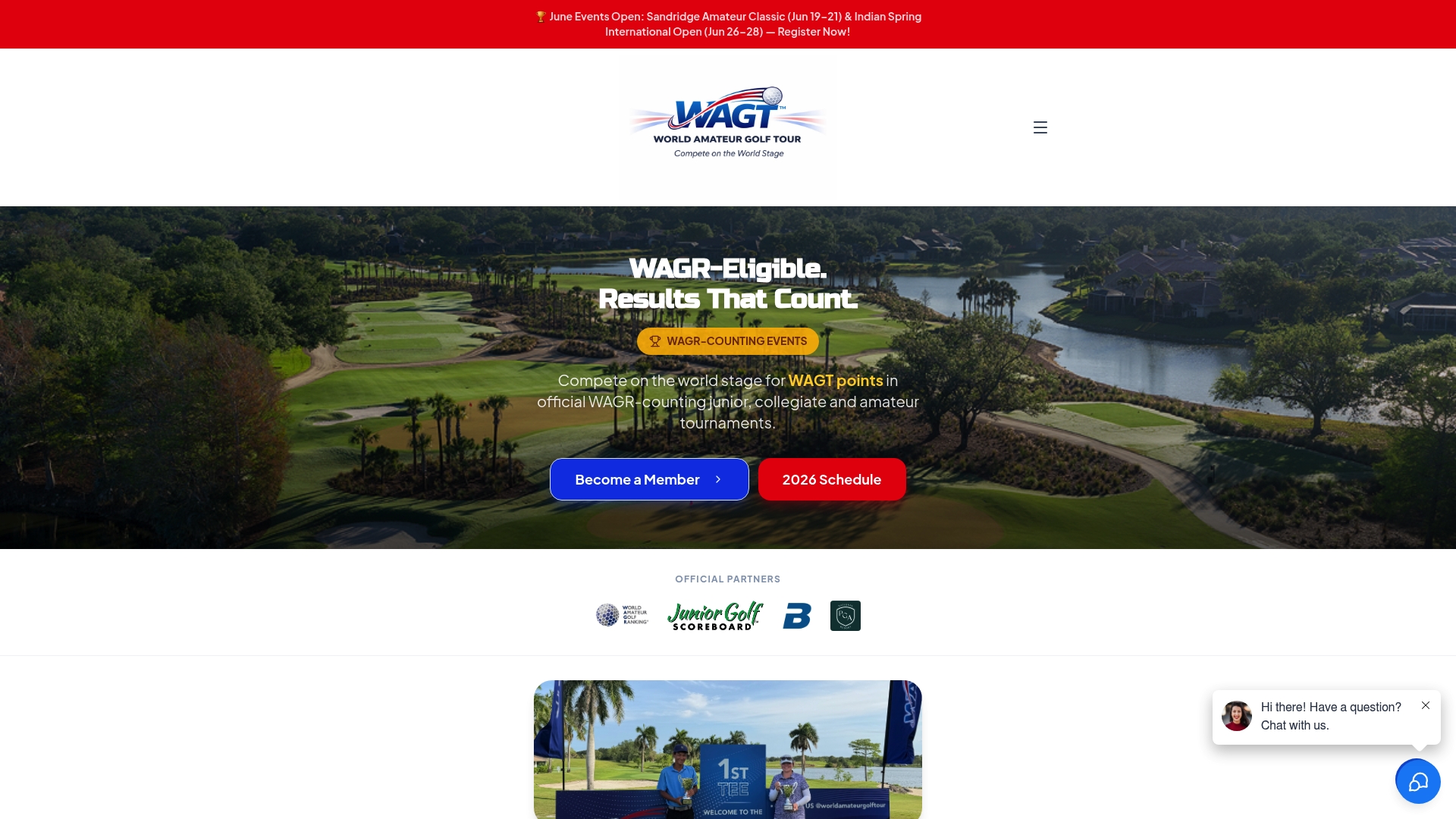
Worldamateurgolftour provides golf club managers and tournament directors with access to professionally run, WAGR-certified events at championship-caliber courses. The platform handles player registration, digital scoring integration, and event promotion, so your team focuses on the competitive experience rather than administrative logistics. Sponsors gain visible, documented exposure at events that attract serious junior, collegiate, and amateur golfers. If you are ready to host or participate in elite amateur competition, visit Worldamateurgolftour to see the full schedule and registration options for 2026.
FAQ
What is a golf club marketing tournament checklist?
A golf club marketing tournament checklist is a phased plan that organizes all promotional, operational, and sponsorship tasks needed to run a successful competitive golf tournament from planning through post-event follow-up.
How far in advance should tournament marketing begin?
Planning should start 6–9 months before the event, with active marketing outreach launching 4–6 months out via save-the-date communications and registration campaigns.
What percentage of a tournament budget should go to marketing?
Standard budget allocations place marketing, signage, and custom items at 5–10% of total tournament spend, with course fees taking the largest share at 35–50%.
How do you price hole sponsorships for a golf tournament?
Hole sponsorships are typically priced between $500 and $2,000 per hole based on market conditions, event prestige, and the benefits included in the package.
What post-event tasks matter most for sponsor retention?
Delivering photo documentation of signage placements and a one-page performance summary within one week of the event are the two tasks most directly tied to sponsor renewal rates.