

Traveling to away golf tournaments is defined as the full process of planning, booking, and executing travel to compete or spectate at golf events held outside your home region. Done well, it rewards you with competitive experience, memorable rounds, and access to championship-caliber courses you would never play otherwise. Done poorly, it costs you money, energy, and focus before you even reach the first tee. This guide covers the exact steps serious amateur golfers need: advance booking timelines, travel windows, accommodation choices, ticketing strategies, and on-site preparation. Whether you are heading to a WAGR-certified event or a major spectator tournament, the logistics are manageable when you plan with purpose.
How far in advance should you plan for away golf tournaments?
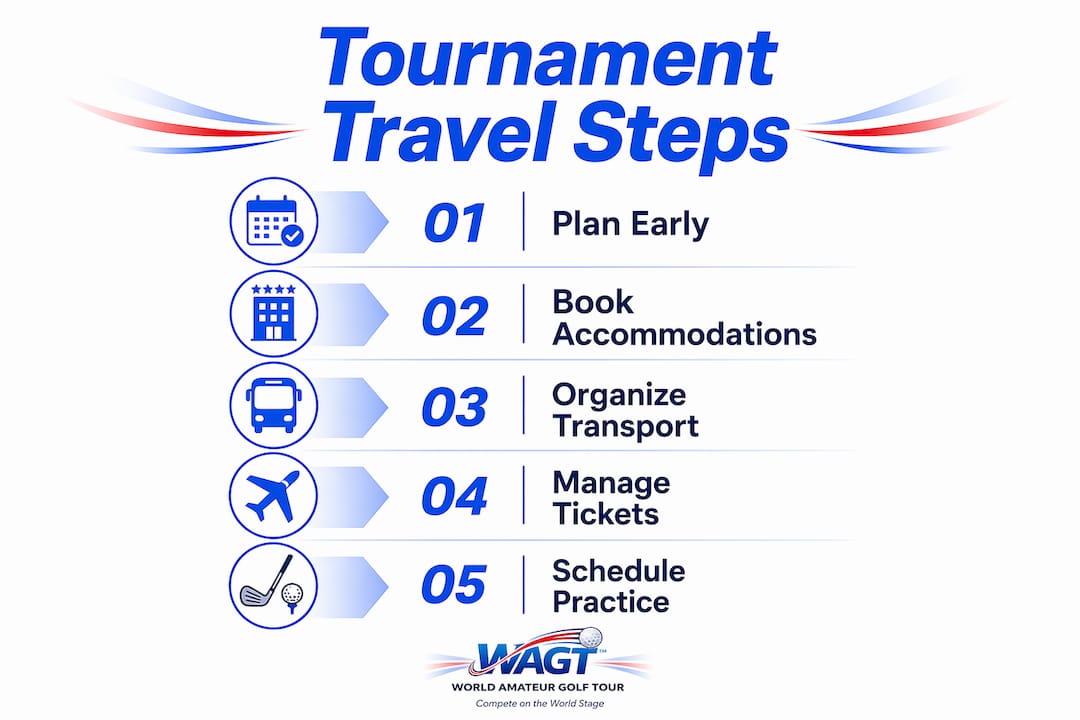
Booking 6–9 months in advance is the single most important move you can make for major tournament travel. Local inventory sells out entirely during event weeks in host cities, leaving last-minute travelers with overpriced hotels far from the course or no options at all. That gap between "I'll book later" and "everything is gone" closes faster than most golfers expect.
The 6–9 month window applies to more than just hotels. Tee times at nearby courses fill up quickly when thousands of golf-focused visitors descend on a region. Rental cars, airport shuttles, and even restaurant reservations near popular venues get locked up by organized tour groups and hospitality packages well before casual travelers start searching.
Here is what to secure in the first booking window:
- Hotel or rental property within 10–15 miles of the tournament venue
- Tee times at courses you want to play before or after the event
- Tournament tickets, especially premium hospitality packages that sell in limited quantities
- Ground transportation, including rental cars or pre-booked rideshare credits
- Travel insurance, which protects your investment if weather or scheduling disrupts the event
Pro Tip: Set a calendar reminder 9 months before any major tournament on your schedule. Treat that date like a registration deadline, not a suggestion.
The amateur golf season planning process works the same way. Golfers who map their full competitive calendar in january or february consistently secure better venues, better lodging, and better preparation time than those who book event by event.
What travel windows and itinerary structure work best?
The recommended travel window for any major tournament is 2 buffer days before the first competitive round and 1 buffer day after the final round. That structure protects you from flight delays, weather disruptions, and the physical fatigue of traveling on the same day you compete or spectate.
A well-structured tournament week itinerary looks like this:
- Day 1 (arrival buffer): Fly in, check in, rest, and do a light course walk or venue orientation. Do not pack this day with activities.
- Day 2 (pre-tournament): Attend a practice round. The atmosphere is relaxed, crowds are smaller, and you get a real feel for the course layout.
- Days 3–5 (tournament rounds): Arrive early each morning. Arriving early gives you access to player warm-ups, better viewing positions, and lower crowd density at entry points.
- Day 6 (leisure or no-golf day): Step away from the competitive environment entirely. Local sightseeing, a beach, or a vineyard visit resets your energy for the final rounds.
- Day 7 (departure buffer): Check out, handle any travel logistics, and fly home without rushing.
This structure applies equally to spectators and competing golfers. If you are playing in a 54-hole amateur event, the same logic holds: build buffer days around your rounds so that travel stress never bleeds into your performance.
Pro Tip: Schedule your practice round visit for the first morning after arrival. Crowds are thinnest early in the week, and you will learn the course flow before the competitive pressure builds.

Contingency planning belongs in every itinerary. Identify alternate transportation routes before you arrive. Know which roads close on tournament days. Save the contact numbers for at least two local taxi services in your phone before you land.
How to choose accommodations and transportation for away tournaments?
Accommodation choice comes down to one trade-off: proximity to the course versus access to city amenities. Both have real value depending on your priorities.
| Option | Pros | Cons |
|---|---|---|
| Hotel near the course | Short commute, easy shuttle access, tournament atmosphere | Higher prices, limited dining options, books out fast |
| City center hotel | More dining and entertainment, better pricing in some markets | Longer daily commute, dependent on shuttle or rideshare |
| Vacation rental near venue | Space for groups, kitchen access, cost-effective per person | Fewer amenities, variable quality, books out earliest |
| City vacation rental | Flexible pricing, local neighborhood feel | Requires reliable daily transportation plan |
Transportation is where most tournament trips go wrong. Limited parking near major courses makes driving yourself a poor choice on competition days. Official tournament shuttles are the most reliable option when they run, but they fill up fast during peak morning arrival windows.
The practical approach combines shuttle and rideshare. Use a rideshare app to reach the official shuttle hub, then take the shuttle to the course. This combination reduces parking stress significantly and keeps your arrival time predictable.
Always have a backup plan. Save taxi numbers and rideshare apps before you arrive, because shuttle capacity runs out on the busiest days. Experienced tournament travelers treat Plan B transportation as non-negotiable, not optional.
Key transportation tips:
- Download your rideshare app and load payment details before leaving home
- Confirm shuttle pickup locations and schedules the night before each round
- Walk the shuttle-to-gate route once before competition day so you know the timing
What are best practices for ticket purchasing and on-site preparation?
Ticket strategy separates a smooth tournament experience from a frustrating one. General admission tickets for major tournaments start around $35–$40 per day, while premium hospitality packages exceed $550 per person per day. That price gap reflects real differences in access, comfort, and viewing quality.
| Ticket Type | Price Range | Best For |
|---|---|---|
| General admission | $35–$40 per day | Budget-conscious fans, flexible viewing |
| Weekly grounds pass | Varies by event | Multi-day attendees who want flexibility |
| Premium hospitality | $550+ per day | Corporate groups, comfort-focused fans |
| Practice round tickets | Often discounted | First-time attendees, player access seekers |
Practice rounds offer better fan access to players and prime viewing areas than competition days. If your budget is tight, a practice round ticket delivers more interaction per dollar than a general admission competition day pass.
Digital ticket management is critical. Download your tickets and maps offline at least 24–48 hours before arrival. Cell coverage on large golf courses is unreliable, and a ticket that won't load at the gate creates real problems. Screenshot your passes and save them to your phone's photo library as a backup.
Packing for tournament security requires preparation. USGA-compliant clear bags move through security checks faster than standard bags. Bag size and security policies change periodically, so check the official tournament website within 2 weeks of your visit to confirm current requirements. Weather-appropriate clothing, sunscreen, and a portable phone charger round out the essentials.
Pro Tip: Check the tournament's official app the night before each round. Many events update gate opening times, shuttle schedules, and weather policies through their app first.
How to enhance your experience with pacing and downtime?
Scheduling one no-golf day during a multi-day tournament week prevents burnout and improves your enjoyment of the final rounds. This applies to both spectators and competing golfers. Mental fatigue from consecutive high-intensity days compounds quickly, and the last thing you want is to feel drained on the day that matters most.
Use your downtime day with intention. Options that work well near major tournament locations include:
- Local sightseeing: Most host cities have landmarks, museums, or historic districts within 30 minutes of the venue
- Beach or outdoor recreation: Coastal tournament locations like those in Florida or the Hamptons offer easy access to water activities
- Vineyard or culinary tours: Wine regions near tournament venues in California and the Pacific Northwest make for excellent half-day excursions
- Rest and recovery: A full rest day with minimal walking is a legitimate and underrated choice for competing golfers
Balancing competitive focus with recovery is not a compromise. It is a performance decision. Golfers who build rest into their tournament event schedule consistently report higher energy and sharper focus during their competitive rounds.
Key Takeaways
Traveling to away golf tournaments rewards golfers who plan early, build buffer days into their itinerary, and prepare for on-site logistics before they arrive.
| Point | Details |
|---|---|
| Book 6–9 months out | Accommodations and tee times sell out entirely during major tournament weeks. |
| Build travel buffers | Arrive 2 days early and depart 1 day late to absorb disruptions without stress. |
| Use shuttle and rideshare | Combining both reduces parking stress and keeps arrival times predictable. |
| Download tickets offline | Save passes and maps 24–48 hours before arrival to avoid cellular coverage gaps. |
| Schedule a rest day | One no-golf day during a multi-day event prevents burnout and sharpens focus. |
What I have learned from years of tournament travel
The biggest mistake I see golfers make is treating tournament travel like a regular vacation booking. They wait until 6–8 weeks out, find the hotels they wanted are gone, and end up 45 minutes from the course with no shuttle access. The entire trip suffers from that one delayed decision.
The second mistake is over-scheduling. Golfers pack every day with golf, sightseeing, and social events, then wonder why they feel flat during competition rounds. The itinerary structure I have seen work consistently is simple: arrive early, attend a practice round, compete or spectate with full energy, take one real rest day, and leave with a buffer. That rhythm works at every level, from local amateur events to major championships.
The detail most golfers overlook is offline preparation. Downloading tickets, maps, and shuttle schedules the night before sounds obvious, but a surprising number of people skip it and then stand at a gate with no signal and no backup. That is a preventable problem that costs you 30 minutes of your morning and a lot of frustration.
My honest advice: treat your tournament trip like a competition in itself. Plan it with the same discipline you bring to your game preparation. The golfers who show up rested, oriented, and logistically sorted are the ones who perform and enjoy the experience. Everyone else is managing chaos.
— Gene
Worldamateurgolftour and your next tournament trip
Worldamateurgolftour makes the planning process easier for serious amateur golfers who want competitive events at respected venues without the logistical guesswork.

The tour runs WAGR-certified events across Florida and beyond, giving junior, collegiate, and amateur golfers access to professionally organized competitions with clear schedules and reliable event management. If you are building your competitive calendar for 2026, register at Worldamateurgolftour to find upcoming events, review venue details, and secure your spot before fields fill. The tour prioritizes player experience at every level, so you can focus on your game while the event infrastructure handles the rest.
FAQ
How far in advance should I book for a major golf tournament?
Book accommodations and tee times 6–9 months before a major tournament. Local inventory in host cities sells out entirely during event weeks, leaving late bookers with limited and expensive options.
Are practice rounds worth attending at major tournaments?
Practice rounds offer better fan access to players and more relaxed viewing conditions than competition days. They are often the best value ticket at any major event, especially for first-time attendees.
What is the best transportation strategy at a tournament venue?
Use a rideshare app to reach the official shuttle hub, then take the shuttle to the course. Always save a backup taxi number or rideshare option in case shuttles reach capacity on busy days.
How do I manage digital tickets at a golf tournament?
Download your tickets and course maps offline at least 24–48 hours before arrival. Cell coverage on large golf courses is unreliable, and offline access prevents entry problems at the gate.
What should I pack for a golf tournament as a spectator?
Bring a USGA-compliant clear bag, weather-appropriate clothing, sunscreen, and a portable phone charger. Check the official tournament website within 2 weeks of your visit to confirm current bag size and security requirements.