
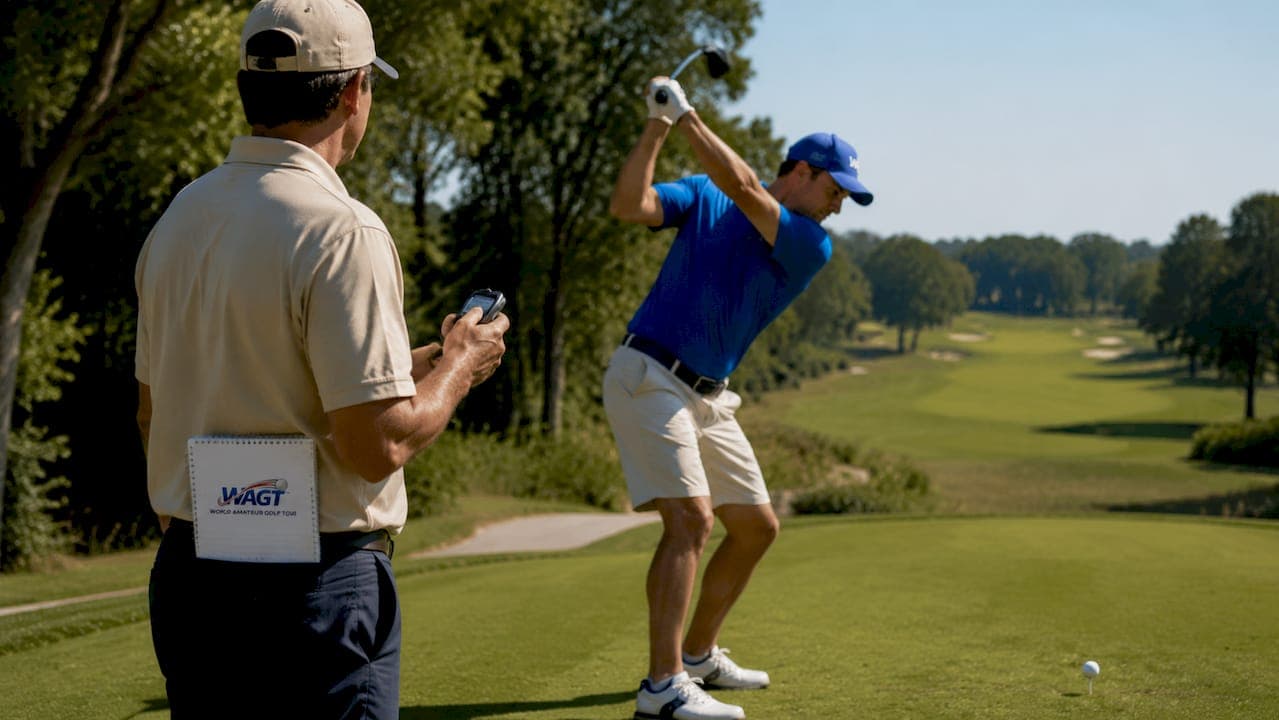
Golf event pace of play is defined as the time standard within which players must complete each hole and full round during a competitive event, set to keep competition fair, smooth, and enjoyable for everyone on the course. The USGA and PGA Tour both publish formal pace guidelines, and standard 18-hole rounds for a foursome target 4 hours to 4 hours 30 minutes, averaging 13–15 minutes per hole. Whether you are playing your first amateur event or chasing WAGR ranking points, understanding these standards directly affects your score, your penalties, and your overall performance.
What are the official pace of play rules in golf tournaments?
Pace of play rules are formal time standards enforced by tournament officials, not suggestions. The PGA Tour's policy gives each player 40 seconds per stroke, with a possible 10-second extension for the first player in a group to play. Violations escalate quickly: a first bad time earns a one-stroke penalty, a second bad time adds two strokes, and a third results in disqualification. That penalty structure is not theoretical. It has ended competitive rounds at professional and elite amateur events alike.
The concept of being "on the clock" is central to how pace enforcement actually works. Being "in position" means keeping up relative to the group ahead, not simply finishing within a total time target. A group can be on the clock even if their overall round time looks acceptable, simply because they have fallen behind the group in front. That distinction matters enormously in tournament play.
Here is what the official timing framework looks like in practice:
- 40-second stroke clock: Starts when it is your turn and conditions allow you to play.
- 10-second extension: Available to the first player in a group to play a shot from a new position.
- Warning system: Officials issue a warning before penalties begin, but repeated slow play bypasses warnings.
- Disqualification threshold: Three bad times in a single round triggers immediate disqualification.
- Round time targets: Foursomes target 4 hours to 4 hours 30 minutes; smaller groups have proportionally shorter targets.
Pro Tip: Familiarize yourself with golf event local rules before your first tee shot. Pace penalties are listed there, and knowing the threshold keeps you from being caught off guard mid-round.
How do pace expectations vary by group size, course, and event level?
Pace targets are not one-size-fits-all. The number of players in your group, the course setup, and the level of competition all shift what "on time" actually means. Smaller field events show median rounds closer to 3 hours 52 minutes, while 72-man fields average closer to 4 hours 46 minutes. That gap of nearly an hour shows how much group size and field density affect the golf tournament schedule.
Several factors push pace targets up or down on any given day:
- Group size: A twosome moves faster than a foursome by design. Tournament directors set different time pars for each configuration.
- Course difficulty: Tight fairways, deep rough, and challenging pin locations all add legitimate time. Justin Thomas has noted that rigid time pars fail to account for daily course difficulty variances.
- Weather conditions: Wind, rain, and extreme heat slow decision-making and physical movement across the board.
- Tee time intervals: Tournaments that space tee times 10–12 minutes apart reduce congestion and give groups room to breathe.
- Amateur vs. professional norms: Elite professional events finish faster because players are more decisive. Amateur events, especially at the junior level, often build in additional time to account for developing decision-making skills.
Pace is also a psychological issue. Dr. Lucius Riccio, a USGA-cited expert on pace as a social factor, argues that golfers care as much about waiting time as total round duration. A group that feels stuck behind a slow group experiences the round as longer, even if the clock says otherwise.
What is "Ready Golf" and how does it improve golf event timing?
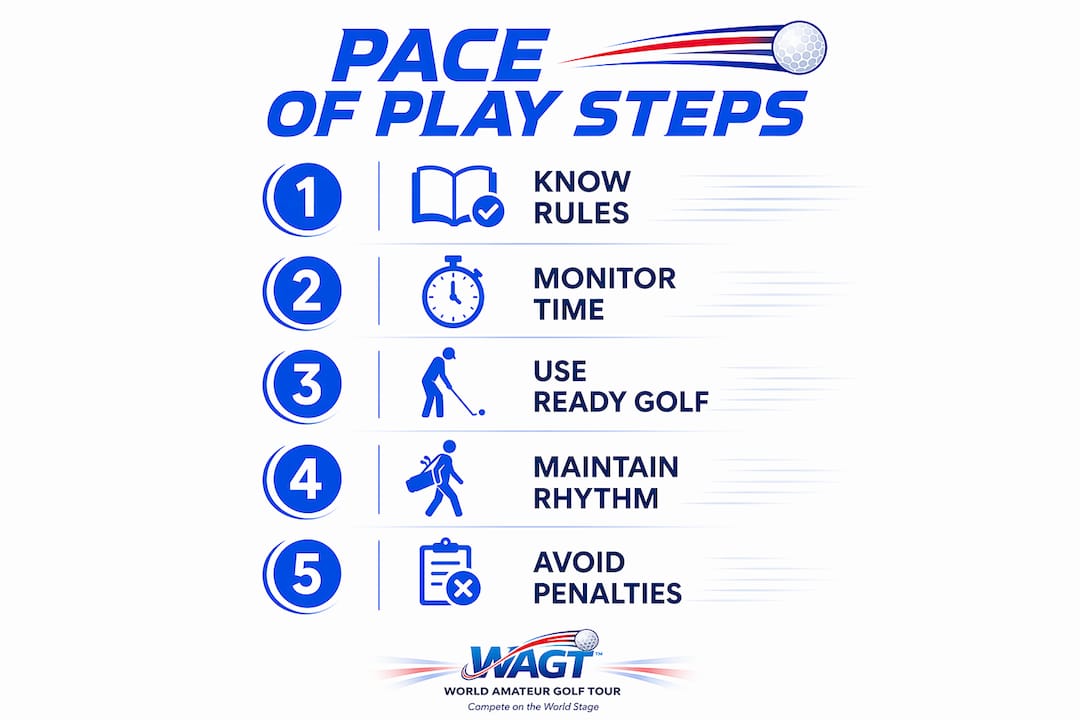
"Ready Golf" is the practice of playing your shot when you are ready and it is safe to do so, rather than strictly following the traditional farthest-from-the-hole order. Ready Golf is widely accepted in amateur and recreational tournaments and is actively encouraged by the USGA as a pace management tool. The shift sounds small, but it eliminates the dead time that accumulates when players stand idle waiting for a specific order to be observed.

Many competitive golfers resist Ready Golf because they fear it will disrupt their rhythm or feel disrespectful. Experts show the opposite is true. Ready Golf fosters better rhythm and often leads to improved scoring because players stay mentally engaged rather than cooling down between shots.
Practical Ready Golf behaviors that speed up golf event timing include:
- Think ahead: Decide your club and shot shape while walking to your ball, not after you arrive.
- Putt out when practical: If you are close to the hole and it does not interfere with others, finish the hole rather than marking and waiting.
- Play from the tee box promptly: If you are ready and the player with honors is not, tee off first with their agreement.
- Minimize social delays: Keep conversations short between shots. Save the post-round debrief for the clubhouse.
- Walk with purpose: Move directly to your ball. Avoid wandering or stopping unnecessarily.
Pro Tip: Before each round, agree with your group to play Ready Golf. A 30-second conversation on the first tee sets the tone for the entire round and prevents awkward hesitation later.
What strategies help you manage pace during competitive play?
Managing your personal pace in a competitive round comes down to off-ball efficiency. Off-ball delays, like indecision, slow walking, and unnecessary practice swings, account for more lost time than the actual swing itself. Fixing your pace rarely means rushing your shots. It means using the time between shots more productively.
Here are the most effective strategies for keeping pace without compromising your game:
- Calculate yardage while others play. Use your rangefinder or GPS app while your playing partner is hitting. By the time you reach your ball, your club selection is already made.
- Keep your pre-shot routine to 20–30 seconds. A consistent routine that stays within that window builds confidence and keeps you on the clock's right side.
- Position your bag or cart near the next tee. Strategic bag placement saves multiple minutes over 18 holes without changing a single swing.
- Limit practice swings to one or two. Three or four practice swings before every shot adds up to 15–20 minutes over a full round.
- Walk directly to your ball. Avoid the habit of walking to a partner's ball first, then backtracking to your own.
- Make decisions before you reach the green. Read your putt from the fairway as you approach. You have more time than you think if you use it while moving.
- Accept the first good read. Indecision on the green is one of the most common pace killers. Commit to your line and trust it.
Good amateur tournament preparation includes rehearsing these habits in practice rounds before competitive events. Players who build pace-conscious routines in low-stakes rounds carry them naturally into tournament conditions.
Key Takeaways
Golf event pace of play is a formal, enforced standard that affects every golfer's score, penalties, and competitive standing, and managing it well requires off-ball efficiency more than swing speed.
| Point | Details |
|---|---|
| Standard round target | A foursome should complete 18 holes in 4 hours to 4 hours 30 minutes. |
| Stroke time limit | Players get 40 seconds per shot; violations escalate from warnings to disqualification. |
| "In position" rule | Keeping up with the group ahead matters more than hitting an overall time target. |
| Ready Golf works | Playing when ready, not by strict order, improves rhythm and often improves scores. |
| Off-ball efficiency wins | Bag placement, early club selection, and decisive putting save the most time per round. |
Pace of play is about rhythm, not just the clock
Here is my honest view after years of watching competitive golfers struggle with pace: most slow play has nothing to do with how long a player takes to swing. It is everything to do with what they do between shots.
I have seen skilled junior golfers get put on the clock not because they deliberate over shots, but because they wander, chat, and arrive at their ball unprepared. The swing takes 1.5 seconds. The walk, the decision, the practice swings, and the hesitation take the other 13 minutes of that hole.
The counterintuitive truth is that playing faster often leads to better scores. When you stay mentally engaged, keep your routine tight, and commit to decisions, you play with more confidence. The golfers I have watched thrive in elite amateur events are not the ones who rush. They are the ones who are always ready.
Tougher course conditions do complicate pace enforcement, and that is a fair criticism of rigid time pars. But those conditions affect everyone equally. The players who adapt fastest are the ones who have already built efficient habits before the wind picks up or the pins get tucked.
Adopt Ready Golf not as a rule you follow, but as a mindset you own. Your playing partners will appreciate it. Your scorecard will reflect it.
— Gene
Worldamateurgolftour events and pace of play standards
Worldamateurgolftour runs its competitive events under clear pace of play guidelines aligned with USGA and industry standards. Every tournament on the calendar is professionally managed, with tee time intervals and round time targets built into the event structure from the start.

Playing in a well-run event makes pace management easier. When officials communicate expectations clearly and the field moves efficiently, you can focus on your game instead of watching the clock. Worldamateurgolftour events are designed to give junior, collegiate, and amateur golfers exactly that environment. WAGR-counting tournaments run on championship-caliber courses where pace policies are enforced fairly and consistently. If you are ready to compete in events that take both your game and your time seriously, explore the WAGT tournament calendar and find your next competitive round.
FAQ
What is a golf event pace of play?
Golf event pace of play is the time standard that defines how long players should take to complete each hole and full round in a competitive event. A standard 18-hole foursome targets 4 hours to 4 hours 30 minutes.
What happens if you play too slowly in a tournament?
Players who exceed the 40-second stroke limit receive escalating penalties: one stroke for a first violation, two strokes for a second, and disqualification for a third bad time in the same round.
What does "on the clock" mean in golf?
Being "on the clock" means officials are actively timing your group because you have fallen behind the group ahead. It does not always mean your total round time has exceeded the target.
How does Ready Golf speed up a round?
Ready Golf lets players hit when they are ready and it is safe, rather than waiting for strict turn order. It eliminates idle waiting time and keeps all players mentally engaged throughout the round.
How long should a pre-shot routine take in a tournament?
A competitive pre-shot routine should take 20–30 seconds. Routines that run longer consistently put players at risk of timing violations and slow the entire field.