

Treat a practice round as reconnaissance, not a warm-up round for your ego. Your job is to gather data, tee club choices, safe-miss zones, green reads, and pin tendencies, and convert it into a hole-by-hole game plan before competition starts. Bring a system for recording what you find, because none of it matters if you can't recall it under pressure two days later.
TL;DR:
- Proper pre-round reconnaissance involves detailed course scouting two to five days before play, focusing on hazards, green contours, and ideal target zones.
- Using multiple test shots with different clubs at each tee helps determine optimal landing areas and avoid trouble, especially on tight or dogleg holes.
- Approaching greens with targeted testing of speed, break, and bailout areas prevents guessing during competition and improves putting accuracy.
- The on-course notes should be concise, covering key distances, club choices, green conditions, and tendencies for quick reference under pressure.
- Respect tournament rules by limiting practice on the course during competition days, and optimize practice sessions with a focused, time-efficient plan.
Table of Contents
- Pre-Round Planning: What to Do Before You Arrive
- A Warm-Up Routine Built for Practice Rounds
- Tee Strategy: Testing Clubs and Landing Zones Hole by Hole
- Approach Shots and Short Game: Learning How the Course Plays
- Reading Greens: Speed, Breaks, and Pin Tendencies
- Building the Mental Game: Intensity Drills and Decision Rules
- Turning Notes Into a One-Page Game Plan
- Staying Within the Rules: Etiquette and Pace of Play
- Timing Your Practice Rounds Without Burning Out
- Your On-Course Checklist and Drills
- Applying This on the WAGR Stage
- Play Your Practice Round Strategy at a WAGR Event
- Where to Go for the Official Rules and Deeper Instruction
- Sources
Pre-Round Planning: What to Do Before You Arrive
The best practice rounds start the night before, not on the drive to the course. Pull up the course flyover on the tournament's website if one exists, and cross-reference it with Google Earth to spot fairway bunkers, water hazards, and green contours you can't judge from a cart path. Kellie Stenzel's approach to maximizing practice rounds centers on eliminating surprises before you ever hit a shot, and that groundwork is where it starts.
Timing matters more than most players realize. For single-day events, play your practice round the day before. For multi-day championships, aim for two to five days out so your body recovers and your notes stay fresh without going stale.
What to bring:
- A yardage book or blank notebook, plus your phone for photos of green complexes
- Extra balls for testing multiple clubs and lines on the same hole
- Small marking tape or dot stickers for flagging landing zones
- A printed or digital scorecard template with room for notes, not just scores
Arrive early enough to hit the practice green and range without rushing, but resist the urge to grind through fifty range balls before you tee off. You'll need that energy on the course, where the real answers live.
A Warm-Up Routine Built for Practice Rounds
Your warm-up should sharpen feel, not exhaust your swing before you've scouted a single hole. Start with mobility work and a few easy chips and putts to wake up your hands and hips. Progress through the range in stages rather than jumping straight to full-speed drives.
- Five minutes of dynamic stretching and short chips inside 20 yards
- Ten to fifteen minutes on the range, moving from wedges to mid-irons to driver
- A final stretch of five to seven full-speed swings with your driver to confirm tempo
- Two or three putts on the practice green to check speed before you walk to the first tee
Fifteen to twenty-five minutes total is plenty for a practice round. Save deep swing changes and mechanical fixes for the range at home, not the day you're trying to learn a golf course.
Pro Tip: Test grip pressure and ball flight in warm-up, but save distance and landing-zone testing for on-course shots. The range tells you how you're swinging; the course tells you how the ball actually behaves.
Tee Strategy: Testing Clubs and Landing Zones Hole by Hole
Every tee shot decision should answer one question: where does this ball need to land to give me the best angle into the green? That means walking or riding forward before you commit to a club, especially on holes with forced carries, doglegs, or fairway pinch points where trouble starts closer than it looks from the tee.
The two-ball method, recommended by practical practice-round guides, works well here: hit one shot with driver and a second with a safer club like a 3-wood or hybrid from the same tee. Compare where each ball finishes relative to bunkers, rough lines, and the ideal approach angle. On tighter holes, this single test often changes your tournament club choice entirely.
Use these methods to record what you find:
- Mark landing spots with tape or a dropped ball, then pace off the yardage to the nearest sprinkler head or GPS marker
- Pick a permanent visual target (a tree, a bunker edge, a distant building) rather than relying on memory for your line
- Note where the fairway actually narrows versus where it looks narrow from the tee box
- Identify the first real trouble spot in the hole, not just the obvious hazard
Simulate tournament pressure on a handful of key holes by playing only one ball and committing to a decision. On the rest, be exploratory. Test both options while you have the chance, because you won't get this luxury during the actual round.
Approach Shots and Short Game: Learning How the Course Plays
Approach testing tells you things a scorecard never will, like whether your 7 iron releases eight yards on these greens or checks up in three feet. Drop three or four balls into common miss areas, short, long, left, right, and hit recovery shots to see how they behave. This single habit separates players who guess during competition from players who already know.
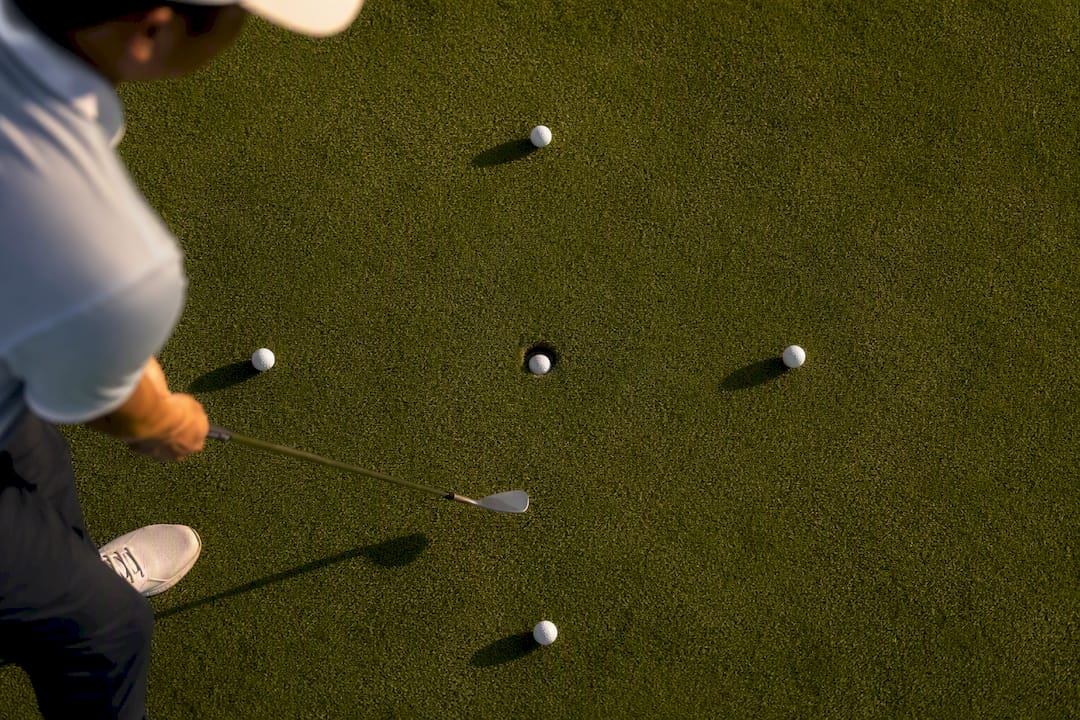
Chip and pitch from the spots where you're statistically likely to miss, not just the flat lies near the green. If the course has bunkers around several greens, and you have the time, hit a few sample shots from the sand to feel how it releases; tournament sand can run firmer or softer than your home course.
What to note during this work:
- How your wedges release versus check on the actual green firmness
- Which ball flight (high spinner vs. low runner) holds better into specific greens
- Where the realistic bailout areas sit for each approach shot
- How your particular ball model reacts off the course's turf, since firmness varies more than most players expect
Pro Tip: If you only have time to test one thing around the greens, test your 50 to 60 yard bunker shot. It's the shot most players skip in practice and most often botch in competition.
Reading Greens: Speed, Breaks, and Pin Tendencies
Green speed tells you almost everything about how aggressive to be on your approach shots and how hard to hit your putts. A simple roll test, rolling three or four putts from the same spot on a flat section, gives you a fast read on whether the greens are fast, medium, or slow relative to what you're used to.
- Roll a putt on a flat section to gauge base speed
- Roll a putt across a slope to see how much it breaks and whether it holds a line or releases
- Try a lag putt from 30 to 40 feet to feel distance control at tournament pace
- Practice a three-foot comeback putt so pressure putts feel familiar, not foreign
Map each green mentally, or on paper, into sections: front, back, and any obvious tier changes. Note where balls tend to funnel and where a pin is likely to sit based on the green's shape and past tournament setups. Some courses paint small dots or use flags to mark historical pin positions; ask the pro shop staff directly if you don't see them, since they often know exactly where pins have sat in past events at that venue.
Building the Mental Game: Intensity Drills and Decision Rules
Physical scouting only gets you halfway there. The gap between a casual practice round and tournament golf is decision-making under pressure, and you close that gap by rehearsing it now. The 3-hole intensity drill works exactly like it sounds: pick three holes, play them exactly as you would in competition, one ball, full pre-shot routine, real commitment to your club choice.
Set your safe misses before you need them. Decide now that a pulled drive on the 4th goes left of the fairway bunker, not into it, and commit to that plan before adrenaline is in the mix. Predetermined rules remove the split-second doubt that turns a manageable miss into a disaster.
- Rehearse your full pre-shot routine on at least six holes, not just the ones that feel important
- Practice a breathing or tempo cue you'll use before every tee shot in competition
- Play one bad hole exactly as planned, then move on, without scrapping your strategy over one poor swing
- Resist the pull to replay a hole for a better score; the lesson matters more than the number
Pro Tip: If a hole goes sideways during your practice round, finish it out and write down what happened. Reacting emotionally to one bad shot in practice is exactly the habit you're trying to break before it costs you in competition.
Turning Notes Into a One-Page Game Plan
None of this scouting matters if you can't retrieve it fast on tournament morning. Every hole needs a short entry covering six things: tee club, landing-zone yardage, approach club, bailout area, a green note, and a putt-speed note. Skip anything extra; a cluttered page is as useless as no notes at all.

A simple template, whether it's a yardage book, a phone note, or a scorecard with extra margin, keeps this consistent from hole to hole.
After the round, cross-check your notes against the flyover or Google Earth images you pulled beforehand. Anything that surprised you on course is exactly what deserves a second look before tournament day.
Staying Within the Rules: Etiquette and Pace of Play
Practicing on the competition course carries real restrictions once tournament week begins. Under USGA Rule 5, players in stroke play cannot practice on the course on the day of competition before their round, aside from putting or chipping near the first tee and any designated practice areas. A first breach carries the general penalty; a second gets you disqualified. Match play allows more flexibility, but always confirm the local rules posted for your specific event.
Practice-green etiquette matters just as much as rules compliance. Never cross another player's putting line, and keep your drills brief rather than monopolizing a section of the green for twenty minutes.
- Play multi-ball tests only when no group is waiting behind you
- Wave through faster groups rather than holding up the course for your testing
- Keep your pace close to normal round speed even while gathering data
- Save the deepest testing for holes and times when the course is quiet
Timing Your Practice Rounds Without Burning Out
One well-run practice round beats three exhausting ones. For single-day events, play the day before; for multi-day championships, get on the course two to five days out so your notes are current but your legs aren't dead by round one.
- Cap yourself at one full practice round for most events; add a short nine only if a specific hole still worries you
- Adjust your timing around travel; if you're flying in, build in a recovery day before you scout, not after
- If a full round isn't possible, walk the closing six holes and the practice green instead of skipping scouting altogether
- Schedule a short follow-up session, 30 to 40 minutes on the range and green, to lock in what you learned rather than relearning it cold on tournament morning
Rushing a bad practice round to check the box does less for you than a focused nine holes played with intent.
Your On-Course Checklist and Drills
Screenshot this before your next practice round and run through it in order.
- Warm-up: five minutes mobility and chips, ten to fifteen minutes range, two to three practice putts
- Two-ball test on at least four tee shots where club choice is unclear
- Drop-ball recovery test from your two most likely miss areas per hole
- Roll test on the first green you reach to establish base speed
- Bunker sample shot if sand is accessible and time allows
- Three-hole intensity drill treating shots as one-ball, tournament-committed
| Field to record after each hole | Why it matters |
|---|---|
| Tee club and target line | Removes doubt on tournament morning |
| Approach club and miss tendency | Confirms which club actually holds |
| Green speed impression | Sets your putting stroke expectations |
Keep moving between shots, wave through faster groups, and treat this list as a floor, not a script to follow rigidly on every single hole.
Applying This on the WAGR Stage
Reconnaissance separates confident competitors from players guessing their way around an unfamiliar course. At World Amateur Golf Tour events, players who scout properly walk to the first tee with a plan instead of hoping their swing holds up. The most common issue we see isn't a lack of talent; it's players skipping the practice round entirely or burning it on a scorecard instead of data.
Overloading on practice rounds close to an event date is a real pattern among competitive golfers, and it tends to leave players flat by the time the tournament actually starts. A single, well-run scouting session, paired with the follow-up drills covered above, consistently outperforms multiple exhausting rounds crammed into the same week.
— Gene
Play Your Practice Round Strategy at a WAGR Event
All the scouting in the world needs a stage worth scouting for. Worldamateurgolftour runs WAGR-counting events at courses selected for consistent conditions and professional administration, which means the notes you take in your practice round actually hold up on tournament day instead of getting undone by inconsistent green speeds or unpredictable setups.

Every event gives you a structured setting to apply the exact hole-by-hole plan you built: real pin placements, real green speeds, and a field of junior, collegiate, and amateur golfers testing their own game plans alongside you. Membership gets you into events that count toward your WAGR status, along with practice and tournament tracking tools that make it easier to log what you learn and carry it into the next event. Check the upcoming tournament schedule and register for an event where your practice round work can pay off on the scorecard that actually counts.
Where to Go for the Official Rules and Deeper Instruction
For the exact language on practice restrictions and penalties, read the USGA's Rule 5 provisions directly rather than relying on secondhand summaries. Kellie Stenzel's breakdown of practice-round priorities remains one of the sharpest instructional resources on scouting a course with purpose, and course-specific reconnaissance strategy guides fill in the logistical details covered here.
Sources
- USGA Rules — Rules of Golf (Rule 5 and practice restrictions)
- How to maximize golf practice rounds (Kellie Stenzel)
- How to play a practice round (Mighty Golfer)
- Golf practice round: preparation strategy to play your best (The Left Rough)