
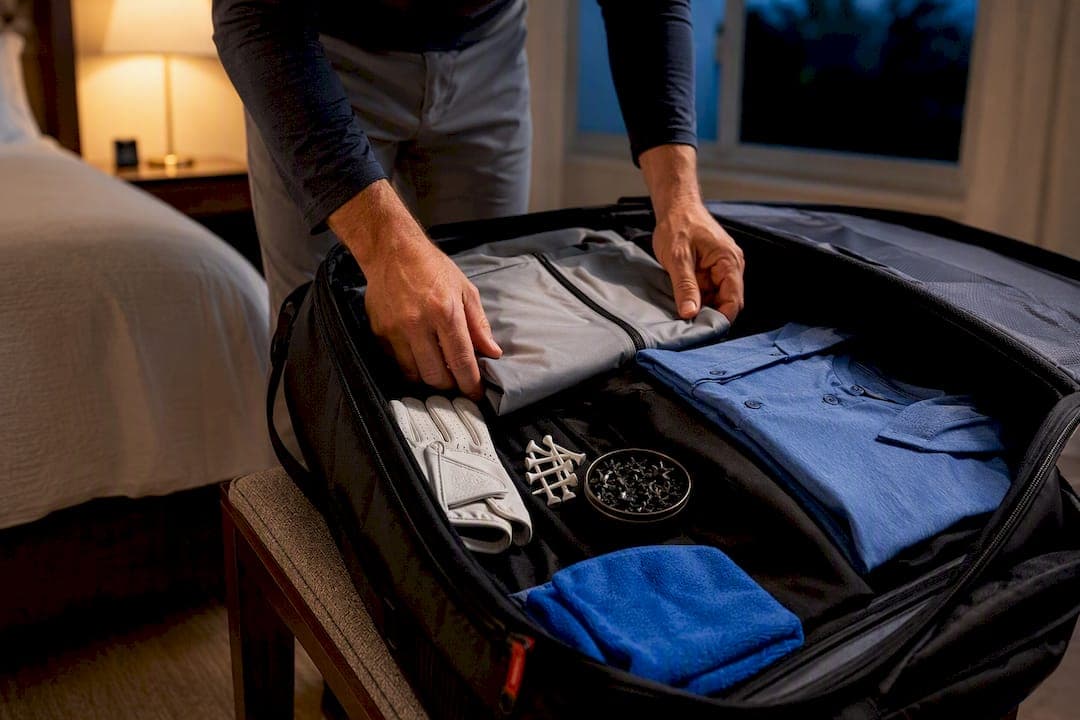
Every tournament weekend comes down to six categories: game gear with backups, hydration, first aid and sun protection, portable snacks, a sideline setup, and your travel and hotel plan. Miss one and you're improvising in a parking lot at 7 a.m. The single habit that fixes this for good is running a night-before checklist so nothing gets left on the kitchen counter.
TL;DR:
- Bringing duplicates for gear, uniforms, and shoes is essential to prevent last-minute failures and ensure smooth gameplay.
- Pack a comprehensive first-aid kit, sun protection, and hydration supplies, including electrolyte powders and water refills, to manage heat and minor injuries.
- Prepare well-balanced snacks, a cooler, and appropriate sideline comforts like shade canopies, folding chairs, and small fans for team support.
- Use a permanent tournament bin and a night-before checklist to streamline packing, assign specific roles, and avoid last-minute chaos.
- For travel and overnight stays, include chargers, extra towels, laundry supplies, and labeled plastic bags for wet gear to avoid overlooked essentials.
Table of Contents
- Player Essentials: Prioritized Game-Day Gear and Backups
- Health, Safety, and Injury Basics to Pack
- Food and Snacks That Travel Well on Tournament Days
- Sideline Comfort and Logistics: Shade, Seating, and a Compact Team Setup
- Travel and Hotel Logistics: What to Pack for Transit and Overnight Stays
- Sport-Specific Quick Lists: Compact Checklists for Common Youth Sports
- Packing System and Night-Before Routine
- Golf-Specific Packing and Pre-Round Reminders
- The One Habit That Saves Tournament Weekends
- Sources
Player Essentials: Prioritized Game-Day Gear and Backups
Nothing derails a tournament faster than a missing shin guard or a cracked bat you forgot to swap out. Build your tournament packing list around duplicates for anything that can fail, tear, or get left in the wrong bag.
Start with uniforms. Pack a primary set and a backup, plus extra socks and undershirts, since sweat and mud have a way of forcing a mid-day change. Shoes need the same treatment: bring game shoes and a backup pair suited to changing conditions, whether that means turf shoes for a rain delay or a second pair of cleats when metal spikes aren't allowed on certain fields.
Protective equipment goes in next: cups, mouthguards, knee pads, or helmets, all labeled with the player's name since gear bags look identical in a crowded dugout. Then cover your equipment backups:
- Extra ball or puck for warm-ups
- Spare laces, strings, or straps
- A small sewing kit for quick uniform fixes
- Backup batting gloves or grip tape
Set up three bags instead of one: a game bag kept ready by the door, a dirty-laundry bag for sweat-soaked gear between games, and a small "handy bag" stocked with tape, scissors, and safety pins for on-field repairs. The GMLB tournament teams packing checklist uses this same structure for youth baseball teams, and it works across almost any sport.
Health, Safety, and Injury Basics to Pack
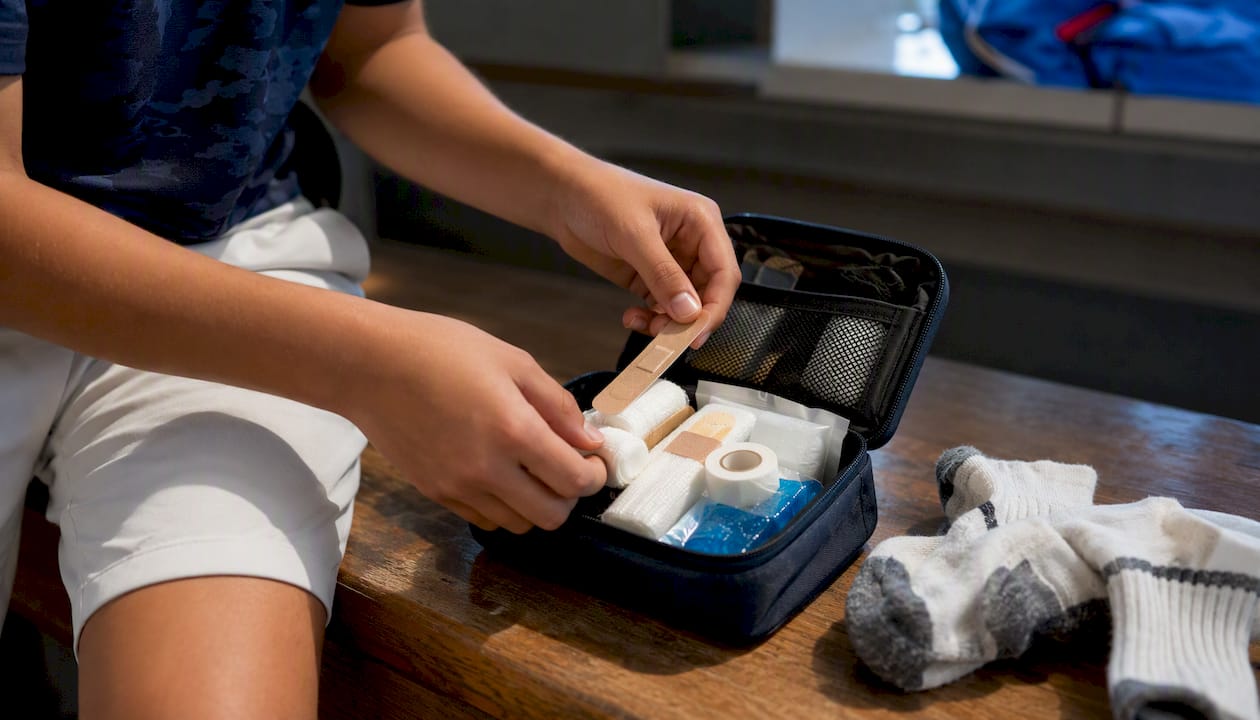
A first-aid kit belongs in every tournament bag, not just the coach's bag. Pack adhesive bandages, gauze, an instant cold pack, blister pads, athletic tape, antiseptic wipes, and any player-specific medication with dosage instructions attached.
Blisters are the most common minor injury of a tournament weekend. Apply moleskin or blister tape at the first sign of hot spots rather than waiting until a blister forms, and keep a spare pair of broken-in socks on hand for hot afternoons.
Heat is the bigger risk. The CDC notes that athletes face increased risk of heat-related illness during prolonged outdoor competition, which means shade breaks and hydration checks aren't optional extras. Sun protection guidance from the American College of Sports Medicine calls for SPF 30 or higher, reapplied roughly every two hours, plus covering clothing when the schedule allows.
Pro Tip: Set a phone reminder for sunscreen reapplication during long tournament days. Nobody remembers on their own between games three and four.
Hydration needs a real plan, not just a water bottle tossed in the bag:
- One refillable bottle per player, filled before every game
- Portable electrolyte powder packets or ready-to-drink options
- A cooler with extra water for between-game refills
USA Volleyball's hydration guidance recommends steady fluid intake through the day rather than large amounts right before competition, with electrolyte solutions considered for matches running long or hot.
Food and Snacks That Travel Well on Tournament Days
Concession-stand food gets expensive fast, and it rarely fuels a second or third game well. Pack snacks that combine carbohydrates and protein for steady energy, following the same balance sports nutrition guidance for young athletes recommends for pre- and between-game fueling.
Reliable options include:
- A sandwich or wrap with lean protein
- Fresh fruit that travels without bruising (apples, bananas, oranges)
- Yogurt cups, kept cold in a cooler
- Nuts, trail mix, or granola bars for quick energy
A small cooler with a couple of ice packs handles the perishables, and refilling it from a hotel breakfast buffet saves real money over a three-day tournament. Eat a fuller meal at least two hours before a game, then stick to lighter snacks in the 30 to 60 minutes before first pitch or kickoff. Avoid heavy, greasy food right before competition since it sits poorly during hard running. Between short-turnaround games, sip electrolyte drinks in small amounts rather than gulping a full bottle at once.
Sideline Comfort and Logistics: Shade, Seating, and a Compact Team Setup
Parents who show up prepared turn a hot bleacher into a base camp. A pop-up canopy sets up faster than a traditional umbrella and covers more people, which matters when three families are sharing one patch of shade for six hours.
Round out the sideline setup with:
- Folding chairs and a blanket for the grass
- A wagon to haul gear from the parking lot
- A "handy bag" with sunscreen, tape, scissors, and extra hair ties
- A battery pack and small fan for triple-digit afternoons
Pro Tip: Assign one parent per team to bring the shade canopy and another to bring the cooler each weekend. Splitting the load means nobody's car is packed to the ceiling by themselves.
Keep a printed schedule and some cash in the bag, and coordinate details through a shared group chat so nobody's asking "what field are we on" for the fifth time.
Travel and Hotel Logistics: What to Pack for Transit and Overnight Stays
Long car rides and hotel stays create their own packing needs that are easy to overlook until you're standing in a parking lot without a phone charger. Bring a travel pillow, chargers for every device, and something to keep younger siblings entertained on longer drives.
At the hotel, pack extra towels if the room only provides two, a travel-size laundry detergent packet for quick washes, and a gear deodorizer spray for equipment that never fully dries between games. A compact shoe dryer solves the recurring problem of soaked cleats, a fix experienced tournament parents consistently recommend for weekend trips.
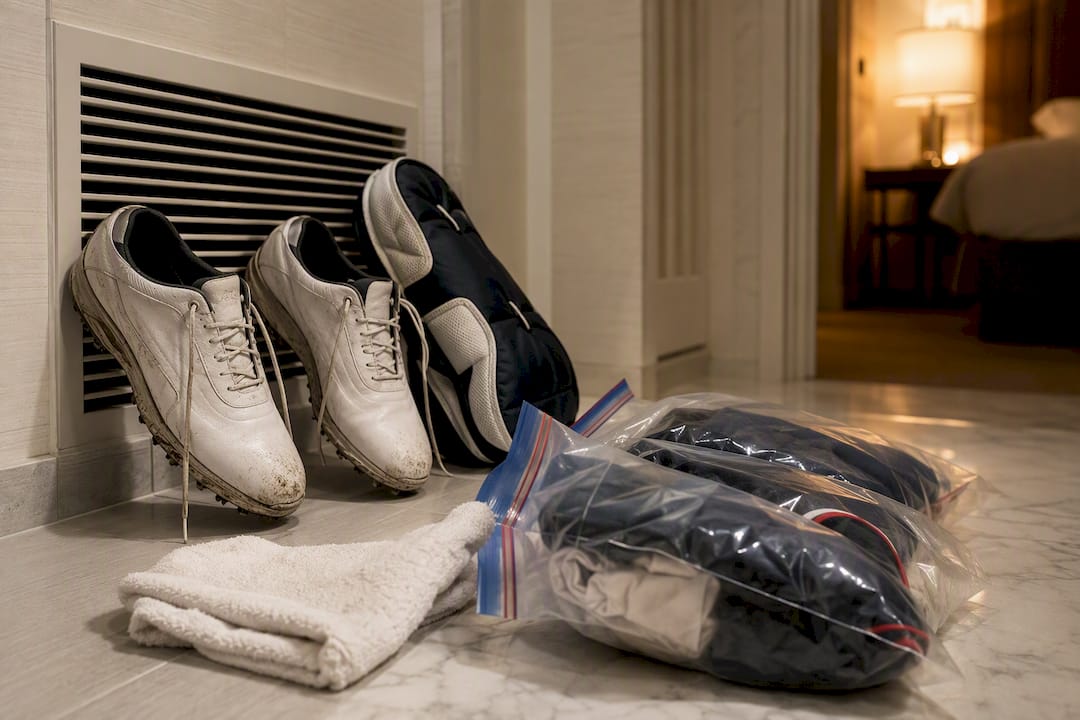
Handle wet gear with labeled plastic bags so soaked uniforms don't soak everything else in the duffel. Air out shoes and pads in the bathroom overnight rather than sealing them in a bag right after the last game. Finally, bring printed copies of eligibility documents and schedules; the Little League tournament checklist for coaches treats paperwork verification as a pre-travel requirement, not an afterthought, and a small cash reserve covers parking or last-minute fees that card readers can't handle.
Sport-Specific Quick Lists: Compact Checklists for Common Youth Sports
Every sport has its own non-negotiables. Use the general tournament essentials checklist above as your foundation, then layer in these sport-specific items.
Baseball and softball: Glove, batting helmet, cup, at least two pairs of pants, batting gloves, and cleats with metal and molded options depending on field rules.
Soccer: Cleats, shin guards, extra socks, a ball pump with a needle, and comfortable change shoes for after the match.
Volleyball: Court shoes with non-marking soles, knee pads, ankle tape or braces, and a warm-up layer for air-conditioned gyms between matches.
Lacrosse: Stick plus a backup, helmet, shoulder and arm pads, gloves, a throat guard, and spare mesh strings for quick restringing.
Hockey: Skates, skate guards for walking through lobbies, full pad set, a bag deodorizer, and extra socks since skates run damp fast.
Golf: Spare gloves, extra tees, rain gear, backup shoe spikes, and a rangefinder. Golf tournaments add a wrinkle the other sports don't: practice rounds. Review practice-round strategy before packing so you know what to bring for scouting a course versus competing on it.
Packing System and Night-Before Routine
A repeatable system beats a fresh scramble every weekend. Keep a permanently stocked "tournament bin" in the garage or closet with items you never rotate out, like the first-aid kit, handy bag, and sideline gear, so packing only means adding uniforms and food.
Run this night-before checklist before every trip:
- Confirm game gear and backups are in the bag
- Pack medications and the first-aid kit
- Charge all devices and pack chargers
- Pack snacks and fill water bottles
- Print or screenshot the schedule
- Set aside cash for parking and concessions
Do a five-minute walk-through at the door before you leave, checking each bag against your list. Print and laminate a one-page version of this tournament gear checklist, or save it as a phone note you can reuse every weekend without rebuilding it from scratch.
Golf-Specific Packing and Pre-Round Reminders
Golf tournament weekends demand their own precision. Pack at least two glove options for changing grip conditions, extra tees, full rain gear, backup shoe spikes, and an extra shirt or two since a four-hour round in the sun asks a lot of one outfit.
Practice rounds deserve real preparation. Arrive early, confirm yardages to key hazards, and walk through your pre-round warm-up before the group ahead of you tees off. The practice-round strategy guide breaks down how to turn a scouting round into a usable game plan rather than just another walk around the course.
Notes compiled by Gene, drawing on experience running WAGR events for junior and amateur golfers.
The One Habit That Saves Tournament Weekends
The families who never seem stressed on tournament mornings all do the same thing: they keep a tournament bin permanently packed and a handy bag stocked year-round. One team I know avoided a forfeit when a torn jersey seam got stitched courtside in four minutes flat, straight from that bag.
Assign roles ahead of time. One parent owns the cooler, another owns the canopy, and everyone shares the same printed checklist. Adopt this now, before the next event sneaks up on you.
— Gene
Sources
- CDC — Heat and athletes
- USA Volleyball — Hydrate for peak court performance
- Little League — Check and double-check: a tournament checklist for coaches
- GMLB — Tournament teams packing checklist (PDF)
- ACSM — Sun protection for sports