
Six habits separate a respected junior golfer from one who gets talked about for the wrong reasons: play ready golf, stay quiet and still when others hit, repair the course after every shot that touches it, follow the dress code, mark your ball correctly, and shout "Fore!" the instant a shot heads toward another player. Parents reinforce all six best by modeling calm, quiet composure themselves rather than coaching from the cart. Master those, and everything else in junior golf etiquette falls into place fast.
TL;DR:
- Juniors should fix pitch marks, replace divots, and rake bunkers promptly to maintain course condition and avoid disqualification penalties.
- Effective pace of play involves limiting practice swings, quick searches for lost balls, and shouting "Fore" immediately when a shot heads toward others.
- Proper equipment etiquette includes keeping bags off greens, selecting clubs quietly, and avoiding practice swings that damage the turf.
- Silence, stillness, and respectful distance are crucial for players and spectators to promote safety and sportsmanship during rounds.
- Honest scoring and admitting mistakes build character and prevent disqualification, reinforcing integrity as core principles of junior golf.
Table of Contents
- Junior Golf Etiquette Basics: Introductions, Dress, and Movement
- Pace of Play and Course Safety for Young Golfers
- Course Care: Pitch Marks, Divots, and Bunkers
- Parent and Spectator Conduct on the Junior Golf Course
- Tournament Rules: Dress Codes, Penalties, and Disqualification
- Teaching Etiquette: Drills by Age Group
- How World Amateur Golf Tour Events Set the Etiquette Standard
- Handling Clubs, Bags, and Equipment on the Course
- Phones, Electronics, and Staying Present on the Course
- Sportsmanship: Honesty in Scoring and Owning Mistakes
- A Coach's View From Inside the Ropes
- Sources
Junior Golf Etiquette Basics: Introductions, Dress, and Movement
Every round starts the same way: on the first tee, introduce yourself to your playing partners and shake hands. It sounds small, but tournament directors and coaches watch for it, and so do college recruiters keeping an eye on how prospects carry themselves. At the end of the round, shake hands again and thank your group, since that habit is one of the most consistently repeated pieces of advice from junior golf programs like First Tee.
Dress and movement matter just as much as manners. Here's the rundown parents should run through before leaving the house:
- Collared shirt, no denim, no athletic sweatpants; many junior events also ban metal spikes.
- Proper golf shoes or clean sneakers; hats face forward, not backward or sideways.
- Know which ball is yours before you tee off, and learn to keep your own scorecard accurately.
- Stand still, stay quiet, and keep your shadow off another player's putting line while they're hitting.
- Move briskly but silently between shots. No dragging clubs or slamming the cart trunk.
Shoe choice deserves a second look, since proper golf footwear protects greens and tee boxes that metal spikes or worn-out sneakers tear up fast.
Pace of Play and Course Safety for Young Golfers
"Ready golf" means you're doing your homework while someone else plays their shot, not standing around waiting for your turn to think. Limit practice swings to one or two, keep your club in hand before you reach the ball, and decide your next shot while walking up the fairway instead of after you arrive.
Three habits keep a junior round moving and safe:
- Search smart, not long. USGA pace-of-play guidance treats slow searches for lost balls as one of the top causes of penalties and disqualification in tournament play, so keep the hunt brisk and let the group play on if it's dragging.
- Shout "Fore!" immediately. Any shot heading toward another player, group, or cart demands an instant, loud warning, no hesitation.
- Stand where you can see and be seen. Never stand directly behind someone swinging, and never wander ahead into another group's landing zone.
Pro Tip: Time your group at home with a simple par-3 course drill: cap each hole at 90 seconds from arrival to swing. Kids internalize pace faster through a stopwatch than a lecture.
Slow play doesn't just annoy the group behind you. It's a documented disqualification risk, which is exactly why tournament pace-of-play habits are worth drilling long before the first tee time of the season.
Course Care: Pitch Marks, Divots, and Bunkers
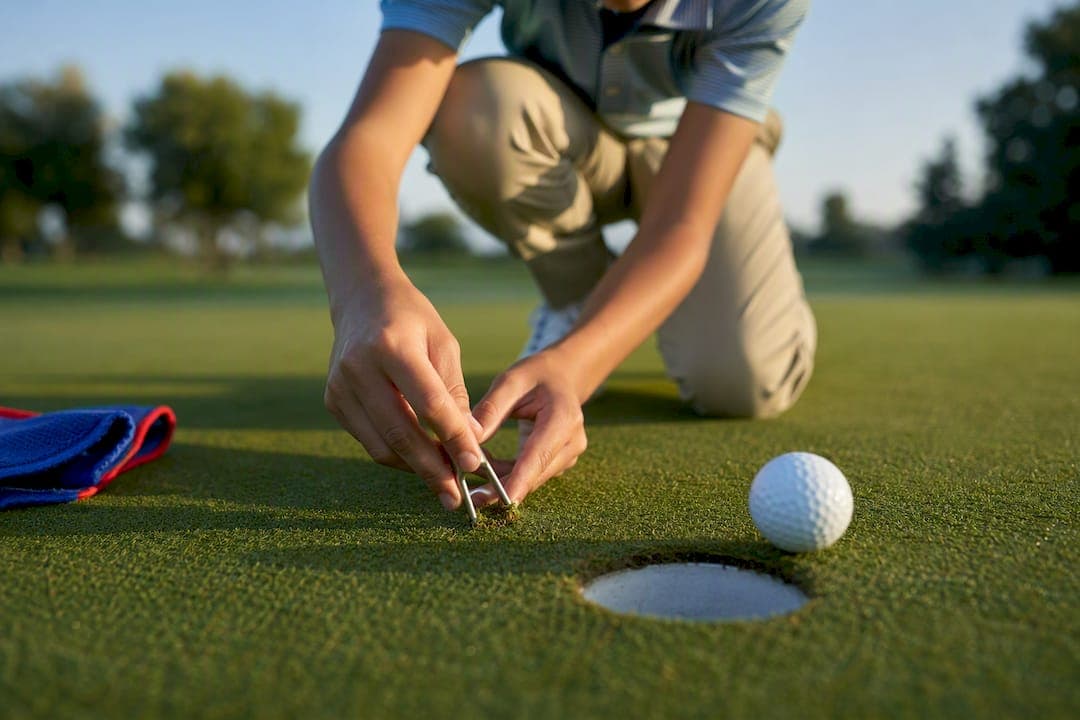
A ball mark left unfixed can scar a green for weeks, which is why juniors are expected to repair theirs the moment they walk onto the putting surface, not after everyone has putted out.
- Fix the pitch mark first. Insert a repair tool at the edge, twist gently inward from all sides, then tap flat with your putter. Never lift or pry the center.
- Replace your divot. Push the turf back into place, or use the seed mix bottle many courses leave on the cart if the divot is torn beyond saving.
- Rake the bunker on your way out, smoothing footprints and leaving the rake outside the sand, teeth down, near the edge closest to the next hole.
- Stay on cart paths near tees and greens, and never drive across soft turf just to save thirty seconds.
Junior tours frequently hand out sand tubes and divot tools at check-in specifically so players have no excuse not to fix what they disturb.
Pro Tip: Teach kids to fix two pitch marks every green, their own and one they didn't make. It's a small habit that superintendents notice, and it builds the instinct to look for damage instead of walking past it.
Parent and Spectator Conduct on the Junior Golf Course
Composure on the sideline matters as much as composure at the tee. Research into competitive youth golf has documented real harm from maladaptive parental behavior, including verbal pressure and negative body language during rounds, and it recommends structured parent-education programs as the fix rather than one-off reminders.
Emotional pressure, physical ill-treatment, and pressurizing behavior from parents during competitive rounds were identified as direct threats to young athletes' development and retention in the sport.
Spectator rules exist for a reason, and most junior codes spell them out clearly:
- Stay a respectful distance back, often 30 meters or more in codes like GolfWA's junior conduct guide.
- Stay quiet during a live shot, no whispered swing tips, no audible sighs.
- If you're caddying, limit talk to yardage and club selection, spoken quietly between shots.
- Watch for your own frustration signals, a raised voice or clenched jaw are early warnings worth catching yourself.
Tournament Rules: Dress Codes, Penalties, and Disqualification
Casual-round habits get stricter once a scorecard is on the line. Most U.S. junior events require a collared shirt, long pants or Bermuda shorts, and proper golf shoes; denim, athletic sweatpants, and plain t-shirts are almost universally banned. Metal spikes are frequently prohibited too, and hats are expected to sit forward.
Enforcement gets specific fast:
- Slow play triggers warnings, then stroke penalties, then disqualification if a group falls too far behind pace.
- Unsportsmanlike conduct, arguing with an official or a competitor, can end a round on the spot.
- An incorrectly signed scorecard is one of the fastest routes to disqualification in junior golf, which is why signing accurately matters more than most juniors realize until it costs them.
- Check local rules posted at registration before you tee off, out-of-bounds markers and drop zones vary by course.
If a ruling feels wrong, approach an official calmly and ask a question rather than a demand. Understanding how officials handle rulings before the round removes the guesswork when a real dispute comes up.
Teaching Etiquette: Drills by Age Group
Lectures don't stick. Short, repeated practice does, and coaching resources consistently find that kids absorb etiquette faster through play than through rules recited at them.
- Ages 6 to 9: Play "statue" during a partner's swing, freeze completely until the ball lands, then race to be first to spot it.
- Ages 10 to 13: Time a nine-hole round with a stopwatch, rewarding the fastest ready-golf pace with a small prize, not the lowest score.
- Ages 14 and up: Run mock tournament rounds where a parent plays "difficult spectator" and the junior practices ignoring distractions.
Pro Tip: Correct in the moment, quietly, and always frame it forward: "Next green, fix that mark before you walk off" lands better than "You forgot to fix your mark."
If a child's behavior turns disruptive, a calm, early break from competition resets the round faster than repeated warnings ever do.
How World Amateur Golf Tour Events Set the Etiquette Standard
WAGR-counting events run on a simple principle: the etiquette bar has to match the competition level. When juniors compete for World Amateur Golf Ranking points, they're playing alongside players who take pace, course care, and scorecard accuracy seriously, and that raises the standard for everyone in the group.
Worldamateurgolftour builds etiquette expectations directly into the event experience:
- Clear code-of-conduct guidance shared before match day, so players and parents know expectations going in.
- Live scoring and pace tracking that reward the habits this article covers.
- Player profiles and recruiting tools that give coaches visibility into how a junior competes, not just how they score.
Recruiters notice composure before they notice a scoring average. A junior who fixes pitch marks without being asked and keeps pace under pressure reads as coachable, and coachable gets remembered.
Handling Clubs, Bags, and Equipment on the Course
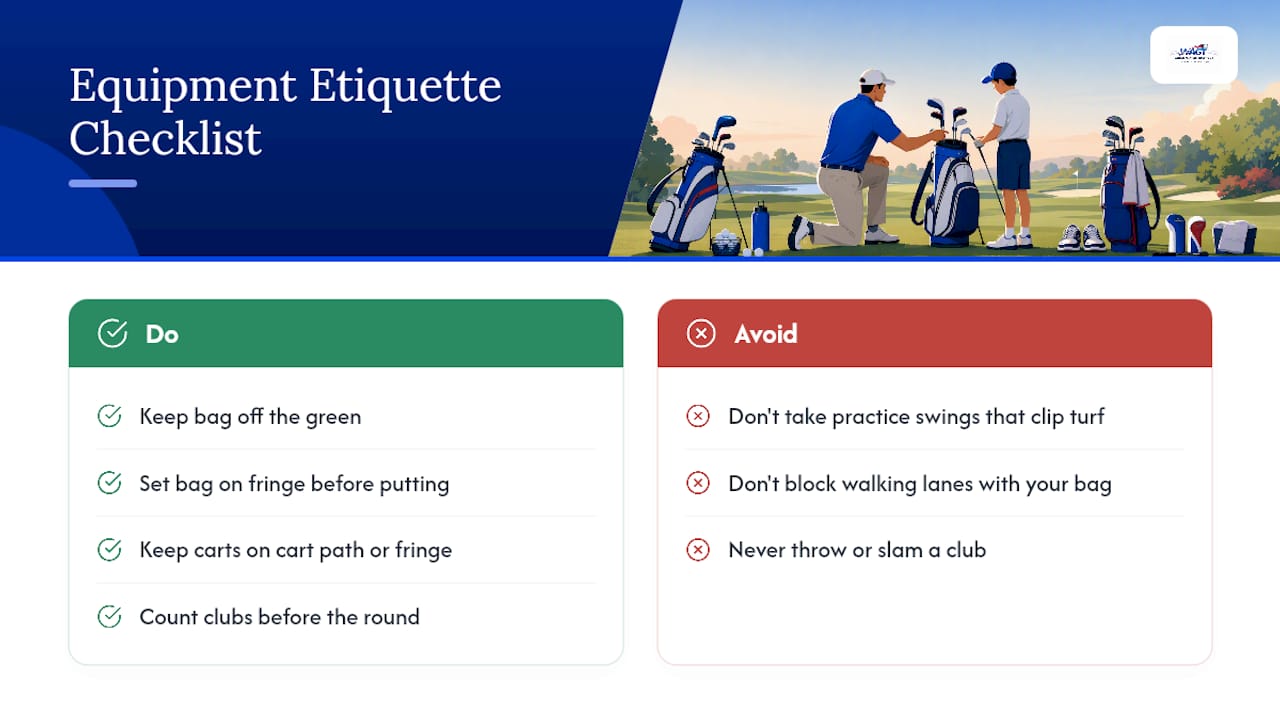
Equipment habits reveal a junior's respect for the game almost as fast as their behavior does. Keep your bag off the green entirely, set it on the fringe or apron before you walk up to putt, never on the putting surface itself. The same rule applies to pull carts and push carts, which belong on the cart path or fringe, well clear of the green and any bunker edges.
Club selection etiquette matters too. Pull the club you think you'll need while your partner is still finishing their shot, so you're not standing over the bag deciding once it's your turn. If you change your mind, that's fine, but do it quietly and quickly rather than making a show of swapping clubs back and forth.
Don't take practice swings that clip the turf near a tee box or green, divots from idle practice swings add up over a season and superintendents notice the pattern. If you're carrying your own bag, keep it balanced and out of other players' walking lanes, especially near narrow cart paths or bridges.
A few practical habits round out good equipment etiquette: wipe grips and grooves between holes rather than leaving mud to build up, count your clubs before the round to avoid the 14-club limit violation that catches even experienced juniors off guard, and never throw or slam a club after a bad shot. That last one isn't just etiquette, it's often an explicit disqualification risk in junior tournament codes, and it's the fastest way to lose a college coach's interest if they happen to be watching from the ropes.
Phones, Electronics, and Staying Present on the Course
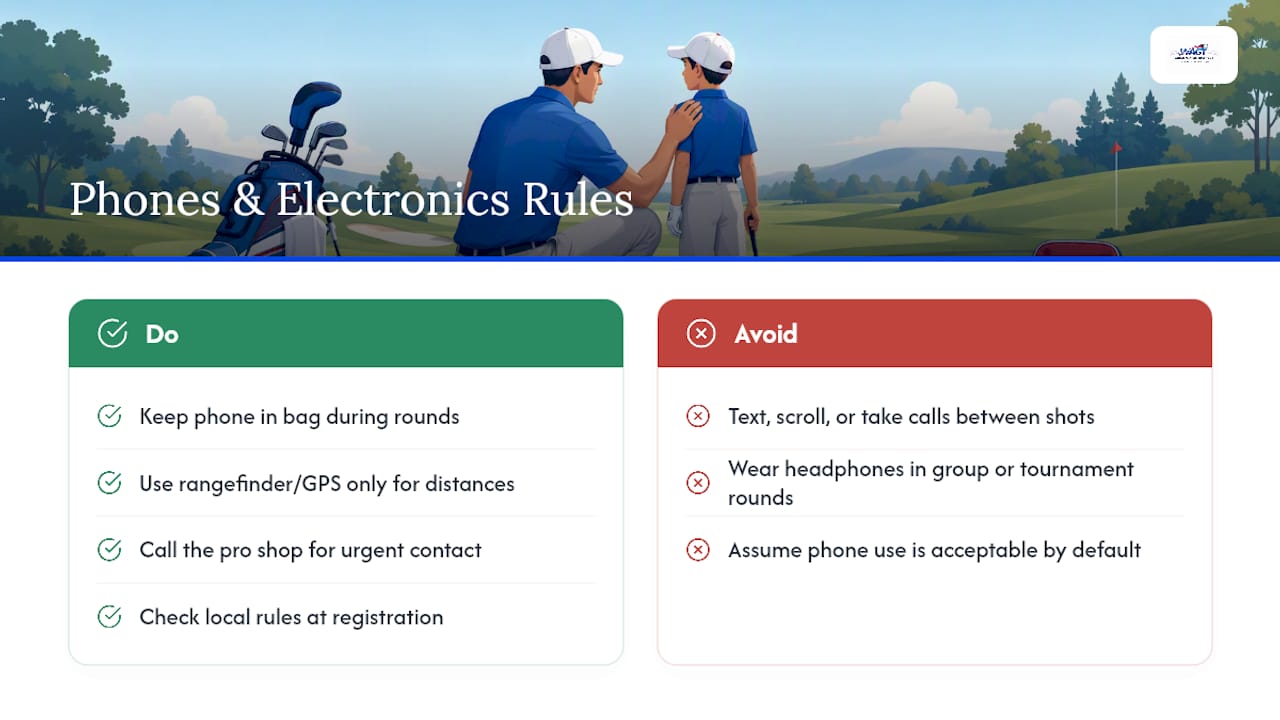
Cell phones belong in the bag, not the hand, for the vast majority of a junior round. If you're using a rangefinder or a GPS watch for distances, that's standard and accepted at nearly every level of junior golf, but texting, scrolling, or taking calls between shots reads as disrespectful to your group and slows everyone down.
If a parent needs to reach a junior during a round for a real reason, the expectation at most events is a call to the pro shop or tournament official, not a text mid round. Many junior tours explicitly restrict phone use during competitive rounds to emergency situations only, and some ban devices on the course entirely except for approved distance-measuring tools.
Music is its own gray area. Headphones during a casual practice round with friends might be fine on an empty course, but wearing them during any group or tournament round is almost never acceptable, since it cuts you off from hearing "Fore!" warnings and makes you harder to communicate with when pace or safety matters. If you're unsure what's allowed, checking the local rules sheet at registration answers it faster than guessing.
The bigger habit worth building early: treat the course as a phone-free zone by default. A junior who's scrolling between shots isn't watching the group ahead, isn't tracking their own pace, and isn't present for the parts of the game that actually teach patience and focus. Put the phone away before the first tee shot, and it stops being a temptation for the other seventeen holes.
Sportsmanship: Honesty in Scoring and Owning Mistakes
Scorecard integrity is the single most enforced sportsmanship principle in junior golf, and for good reason. An incorrectly signed card, even from an honest counting mistake, can trigger disqualification at events that take rules seriously. Teaching a junior to count every stroke honestly, including penalty strokes they'd rather forget, builds a habit that protects them long after the round ends.
Admitting a rule breach is harder than it sounds for a competitive kid, but it's the mark of a player officials and coaches remember well. If a junior accidentally moves their ball while addressing a putt, grounds a club in a bunker, or loses track of a stroke, the right move is to flag it themselves rather than hope nobody noticed. Tournament officials consistently say self-reported infractions carry far more goodwill than ones caught after the fact.
Good sportsmanship also shows up in smaller, quieter moments: acknowledging a good shot from an opponent, not celebrating loudly over someone else's bad break, and shaking hands at the end regardless of the result. None of that requires talent. It requires a junior who's been taught that how they compete matters as much as what they score, a lesson that pays off well beyond the course, in how sportsmanship builds character that lasts through college recruiting and beyond.
A Coach's View From Inside the Ropes
The best etiquette moment I've heard described from a junior event wasn't a perfect round, it was a 12 year old who bogeyed a hole, quietly told her playing partner "nice up and down," and moved on without a word about her own shot. That's the whole game in one gesture.
Parents can copy that instinct immediately: swap the verbal tip or the loud "great shot!" for a quiet thumbs up and nothing else. It reads as support without ever becoming a distraction.
If you want the fuller rulebook version, your event's printed code of conduct will spell out exactly what's expected before the first tee time.
— Gene
Sources
- USGA — Pace of play guidance
- Athletes’ perceptions of unsupportive parental behaviours in competitive female youth golf
- Golf etiquette for juniors — TheJuniorGolfer
- Parent's guide to golf — First Tee (example junior guidance)