
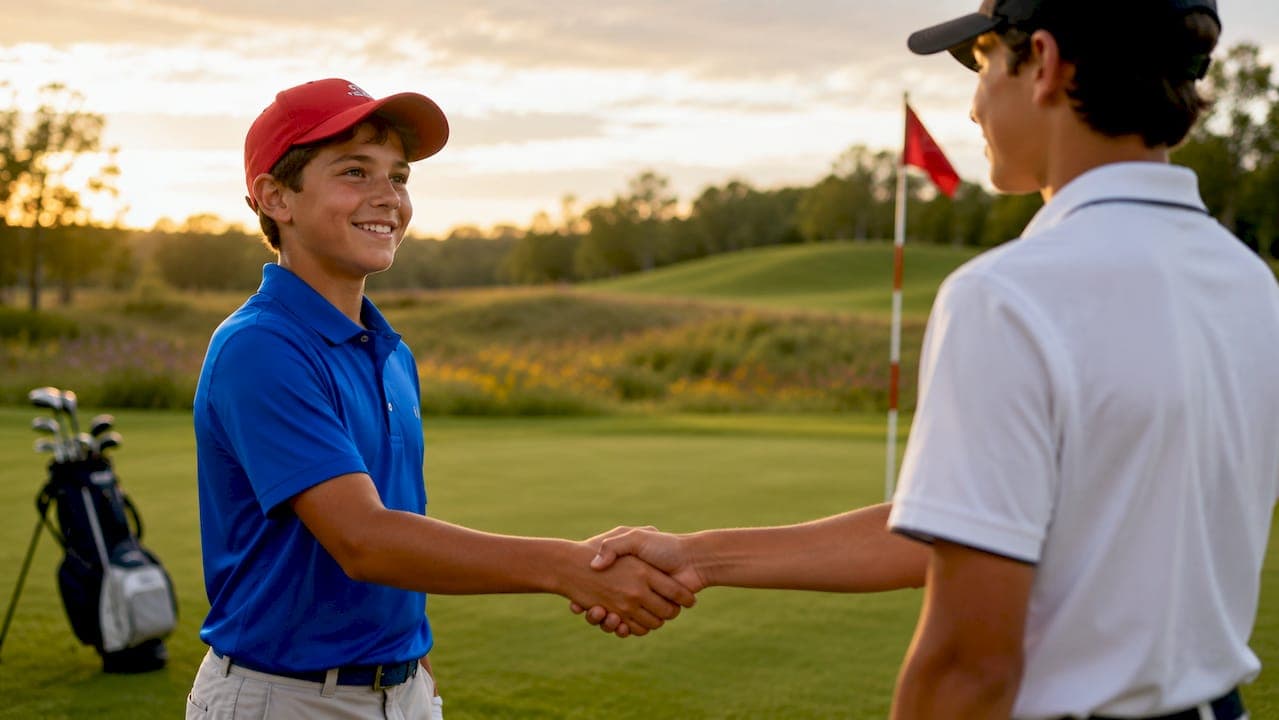
Sportsmanship in junior golf is defined as observing the rules of play and embracing both victory and defeat with grace. The role of sportsmanship in junior golf reaches far beyond etiquette. It shapes how young players handle pressure, treat opponents, and carry themselves long after they leave the course. Golf's self-policing nature, anchored by USGA Rule 1, makes it one of the few sports where integrity is built into the rules themselves. Coaches and parents who understand this have a direct path to developing not just better golfers, but better people.
What core values make sportsmanship essential in junior golf?
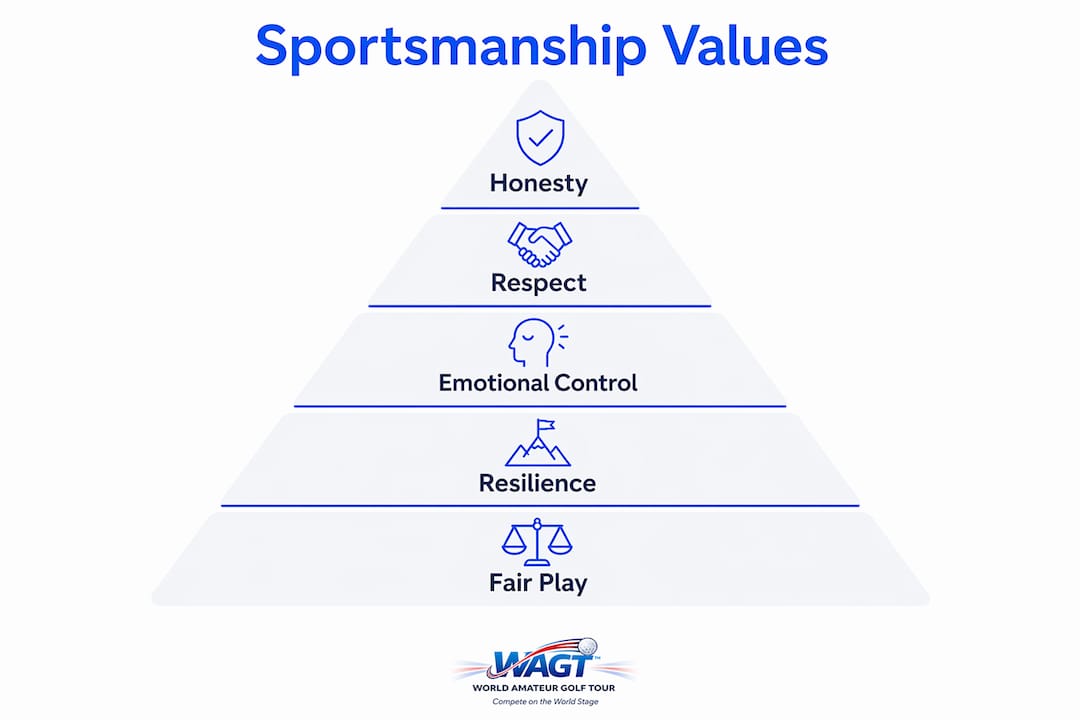
Sportsmanship in golf rests on four values: honesty, respect, emotional control, and resilience. Each one shows up in specific, observable behaviors on the course. Understanding what those behaviors look like makes it easier to teach and reinforce them.
Golf's honor system requires players to self-report penalties even when no one is watching. That single rule teaches accountability in a way no classroom exercise can match. A junior who calls a penalty on herself during a tournament round, even when it costs her a stroke, builds a habit of honesty that carries into every area of life.
| Value | Behavior on the course |
|---|---|
| Honesty | Calling a penalty on yourself without being asked |
| Respect | Staying quiet while opponents prepare and execute shots |
| Emotional control | Walking away calmly after a bad hole instead of reacting |
| Resilience | Refocusing and competing hard after a double bogey |
| Courtesy | Repairing divots and ball marks on every hole |
These behaviors are not abstract ideals. They are concrete actions that coaches can observe, praise, and correct in real time. Sportsmanship is defined partly through these small acts: repairing divots, remaining quiet during shots, and congratulating opponents after a round. Each act signals to a junior that the game is bigger than any single score.
Pro Tip: After each round, ask your junior golfer to name one moment where they showed respect or honesty on the course. This simple question shifts the post-round conversation from score to character.
How does sportsmanship affect junior golfers' development?
Sportsmanship practice directly improves the psychological health of young golfers. Structured golf training programs as short as 3 months produce measurable gains in emotional regulation, resilience, and patience compared to non-participants. That timeframe is shorter than most coaches expect. It means a single season of intentional sportsmanship coaching can leave a lasting mark.
Junior golf creates a unique environment for life skills development. Unlike team sports, golf places the individual alone with a decision, a club, and a conscience. There is no teammate to blame and no referee to make the call. That pressure, handled well, builds the kind of self-reliance that coaches in other sports spend years trying to create.
"Professional sportsmanship instruction equips juniors with behaviors to handle disappointment with dignity, preserving their love for golf long-term. Junior golfers often struggle with managing emotions after poor performance, and sportsmanship instruction provides the behavioral mechanisms to handle that disappointment without losing their connection to the game."
Coaches and parents are the most powerful influences on how juniors internalize these lessons. Adult role modeling shapes integrity and respect in young golfers more than any rulebook. A parent who applauds a competitor's great shot, or a coach who praises a junior for calling a penalty on herself, sends a message that sticks. The score matters less than the standard.
The benefits of sportsmanship for young golfers extend well past the course. Emotional regulation learned through golf transfers to school, relationships, and future workplaces. A junior who learns to walk off a bad hole with composure is practicing the same skill an adult needs after a difficult meeting. Golf teaches this earlier and more directly than most youth activities.
How do sportsmanship lessons in golf differ from a pure competition focus?
A competition-only focus produces short-term results and long-term problems. Juniors who are coached exclusively to win often develop a fragile relationship with the game. One bad round can feel catastrophic when score is the only measure of success. Sportsmanship-centered coaching gives juniors a second metric: how they competed, not just what they shot.
The difference shows up clearly in how juniors respond to harder right choices, like calling a penalty on themselves when it could cost them a match. A player trained only to win sees that choice as a loss. A player trained in junior golf ethics sees it as the only acceptable option. That shift in perspective is the real goal of sportsmanship instruction.
Sportsmanship-centered coaching looks different in practice:
- Coaches debrief rounds by asking "What did you do well as a competitor?" before asking about score.
- Scenario training puts juniors in ethical situations, such as an unplayable lie with no witness, and asks them to decide out loud.
- Recognition systems reward acts like congratulating an opponent or staying calm after a penalty, not just birdies and pars.
- Coaches explicitly connect etiquette behaviors, like raking bunkers, to the broader value of respect for the course and other players.
Pro Tip: Use role-playing scenarios in practice sessions. Describe a situation where a junior finds their ball in an ambiguous position and ask them to walk through the decision using the rules. This builds ethical decision-making as a reflex, not an afterthought.
The long-term benefit is a junior who loves golf for what it demands of them, not just for the trophies it offers. Post-round handshakes cement respect for opponents regardless of the outcome. That ritual, repeated across dozens of rounds, teaches juniors that their opponent deserved their best effort and their respect, win or lose.
What practical strategies can coaches use to build sportsmanship?
Embedding sportsmanship into junior golf culture requires deliberate, repeated action from coaches and parents. Good intentions are not enough. The following strategies produce consistent results when applied across a full season.
- Set expectations before the first round. Tell juniors exactly what sportsmanship looks like in your program: quiet during shots, prompt pace of play, honest scorekeeping, and respectful body language after every hole.
- Ask value-driven questions after every round. "Did you call every rule correctly?" and "How did you treat your playing partners today?" matter more than "What did you shoot?" This reframes what success looks like.
- Model the behavior yourself. Parents who show respect on the course and coaches who praise ethical choices shape junior behavior more than any lecture. Juniors watch adults constantly.
- Recognize sportsmanship publicly. Coaches who praise sportsmanship acts like repairing ball marks or congratulating opponents signal that ethical behavior carries the same weight as technical skill.
- Connect juniors to competitive environments that reinforce these values. Events that prioritize fair play and transparency give juniors the chance to practice sportsmanship under real pressure. Worldamateurgolftour runs age-appropriate competitions that balance serious competition with character-building standards.
- Teach the rules as a tool, not a burden. When juniors understand why a rule exists, they are more likely to follow it honestly. Walk through common scenarios during practice so the rules feel familiar before tournament day.
Understanding how golf event officials operate also helps juniors see that the rules are administered fairly and that their own integrity is part of a larger system of trust.
Key Takeaways
Sportsmanship in junior golf is the foundation of personal growth, ethical competition, and a lifelong relationship with the game.
| Point | Details |
|---|---|
| Sportsmanship is defined behavior | It includes repairing divots, staying quiet during shots, and calling penalties on yourself. |
| Short programs produce real results | Structured golf training as short as 3 months improves emotional regulation and resilience in juniors. |
| Adult modeling drives values | Parents and coaches who demonstrate respect shape junior integrity more than any rulebook. |
| Competition focus alone backfires | Juniors coached only to win develop a fragile relationship with the game and struggle after losses. |
| Recognition reinforces ethics | Praising sportsmanship acts publicly signals that character carries equal weight to technical skill. |
What I've learned watching juniors compete under pressure
Coaching junior golfers long enough teaches you one uncomfortable truth: the kids who struggle most with sportsmanship are rarely the ones with bad intentions. They are the ones whose adults have never made the expectations explicit. A junior who throws a club after a bad shot usually has no idea that behavior is unacceptable, because no one ever said so clearly and consistently.
The most effective thing I have seen coaches do is celebrate the hard right call, loudly and immediately. When a junior calls a penalty on herself during a match and her coach responds with genuine pride, that moment lands differently than any lecture. The junior learns that her integrity is more valuable than her scorecard. That lesson sticks.
Parents are harder to coach than juniors. The sideline behavior of adults shapes the emotional environment of every round. A parent who groans at a bad shot or questions a ruling teaches their junior that results matter more than process. The fix is simple: before the season starts, coaches should sit down with parents and set the same expectations they set for players.
Sportsmanship milestones deserve the same celebration as scoring milestones. When a junior completes a full round without a single complaint, or congratulates every playing partner at the end of a tough match, that is worth acknowledging. Build those moments into your program deliberately, and you will see the culture shift within a single season.
— Gene
Compete with integrity at Worldamateurgolftour
Worldamateurgolftour runs WAGR-counting events designed for junior, collegiate, and amateur golfers who take both their game and their character seriously.

Every event prioritizes fair play, transparent officiating, and a competitive environment where sportsmanship is expected, not optional. Juniors earn ranking points toward WAGR status while competing on championship-caliber courses alongside players who share the same standards. If you are ready to test your game in a setting that rewards both skill and integrity, register at Worldamateurgolftour and find your next event.
FAQ
What is sportsmanship in junior golf?
Sportsmanship in junior golf is defined as observing the rules of play and winning or losing with grace. It includes behaviors like repairing divots, staying quiet during opponents' shots, and calling penalties on yourself.
How does sportsmanship affect junior golfers long term?
Sportsmanship instruction builds emotional regulation, resilience, and honesty that transfer beyond golf into school and adult life. Structured programs as short as 3 months produce measurable psychological gains in young players.
What role do coaches play in teaching junior golf ethics?
Coaches shape junior ethics by praising sportsmanship acts publicly, asking value-driven questions after rounds, and modeling respectful behavior themselves. Recognition of ethical choices signals that character carries equal weight to technical performance.
Why is golf's honor system important for young players?
Golf's honor system, grounded in USGA Rule 1, requires players to self-report penalties even when no one is watching. That practice builds a habit of honesty and accountability that most other youth sports cannot replicate.
How can parents support sportsmanship development in junior golfers?
Parents support sportsmanship by modeling respect on and around the course and avoiding negative reactions to poor shots or rulings. Adult behavior sets the emotional standard that juniors follow during competition.