

Playing amateur events in college is the single most effective way for a golfer to build ranking points, attract scholarship offers, and prepare for professional competition. The term "amateur status" refers to a player's eligibility to compete without accepting prize money beyond actual expenses, a designation governed by the NCAA and the World Amateur Golf Ranking (WAGR) system. For college-bound athletes and their parents, understanding this pathway is not optional. It is the foundation of every serious golf career.
Worldamateurgolftour provides WAGR-counting tournaments designed specifically for junior, collegiate, and amateur golfers who want to compete at the highest level while protecting their eligibility. The real benefits of amateur competition go far beyond trophies. They shape careers.
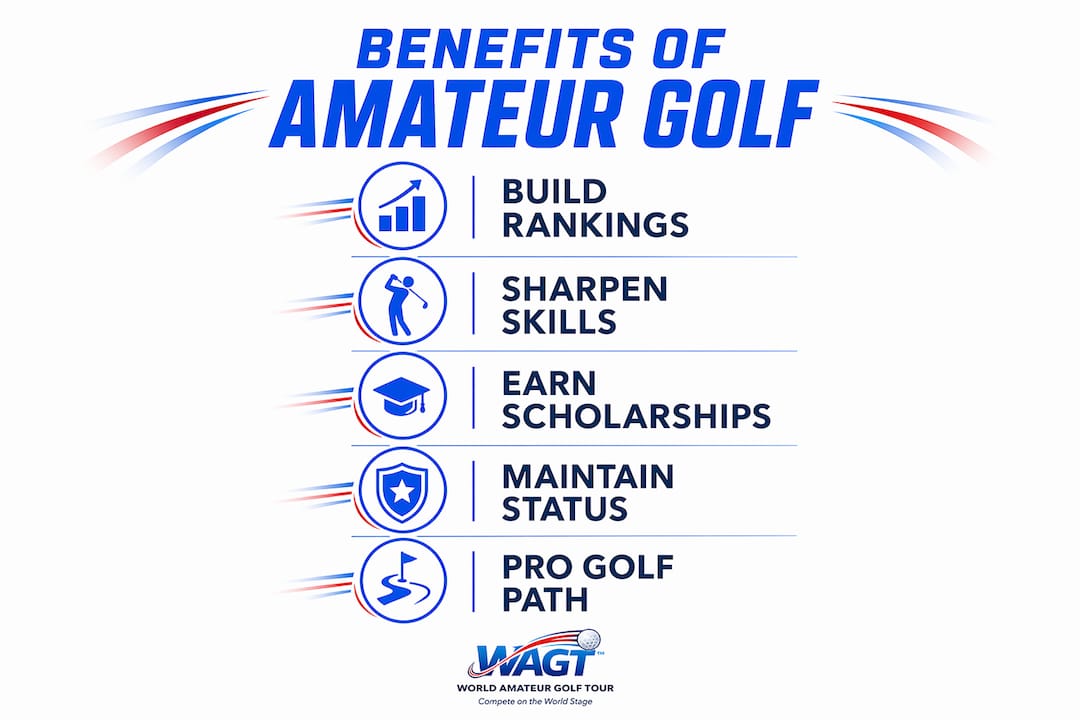
Why play amateur events in college: the core case
Amateur golf events give college athletes something practice rounds cannot: real competitive pressure with real consequences. Every tournament round tests shot-making, course management, and mental composure in ways that casual play never replicates. That combination of pressure and repetition is what builds a consistent, tournament-ready game.

College athletics, including golf, develops resilience, leadership, and time management that carry well beyond the sport itself. These are not soft benefits. Coaches, scouts, and recruiters look for athletes who have competed under pressure and performed. Amateur events create that record.
The WAGR system provides a standardized, region-neutral ranking metric. College coaches rely on WAGR rankings to compare recruits from different states, countries, and competitive circuits. A strong WAGR ranking from verified events carries more weight than a string of wins in unranked local tournaments.
How amateur events sharpen skills for college athletes
Structured competition produces skill gains that practice alone cannot. When you play in a 54-hole amateur event against elite peers, every part of your game gets tested: tee-to-green ball striking, short game under pressure, and decision-making on unfamiliar courses. The feedback is immediate and honest.
Organized sports participation links directly to measurable increases in self-esteem, life satisfaction, and reduced anxiety among young athletes. That mental health benefit is not incidental. A golfer who manages nerves well on the course performs more consistently across a full season.
Here is what regular amateur tournament play builds that practice cannot:
- Pressure management. Competing for a score that counts forces you to execute under stress, round after round.
- Exposure to elite opponents. You learn your actual competitive level by playing against the best in your age group, not just your home club.
- Tournament logistics experience. Pace of play, early tee times, travel, and unfamiliar conditions all become routine rather than distractions.
- Performance consistency. Repeated tournament cycles train you to produce your best game on demand, not just when conditions are perfect.
- Ranking advancement. WAGR-counting events convert strong performances into a measurable, portable credential that coaches and selectors trust.
Pro Tip: Target at least four to six WAGR-counting events per year during your college search window. That volume gives coaches a statistically meaningful sample of your performance, not just a single good week.
What scholarship opportunities come from competing in amateur golf?
The financial stakes of amateur golf competition are significant. NCAA college sports programs award approximately $4.1 billion annually in scholarships across Divisions I and II, with golf included as a meaningful contributor. That number reflects how seriously institutions invest in athletic talent. Your job is to make yourself visible to the coaches controlling that investment.
Amateur tournament results are the primary tool for that visibility. Here is how the scholarship pipeline works in practice:
- Build a WAGR ranking. Coaches at Division I programs specifically seek recruits with verified WAGR points. A ranking signals that you have competed in certified, professionally run events, not just local invitationals.
- Perform at named events. Wins or top-five finishes at recognized amateur tournaments appear in recruiting databases and get noticed. Coaches track results from events they know and trust.
- Maintain eligibility. Scholarship offers evaporate if you lose amateur status. Accepting prize money beyond actual expenses before understanding the rules is the fastest way to disqualify yourself from NCAA aid.
- Use results in recruiting conversations. When you contact a coach, your WAGR ranking and tournament record give them something concrete to evaluate. Generic outreach without competitive credentials rarely moves forward.
- Compete consistently through your junior and early college years. Coaches want to see a trajectory, not a single peak performance. Regular amateur competition builds that record over time.
WAGR status heavily influences recruiting decisions over unranked wins. That is the single most important thing parents and athletes need to understand when selecting which events to enter.
Why does maintaining amateur status matter so much?
Amateur status is the legal and regulatory foundation of your college golf eligibility. Lose it, and you lose access to NCAA competition, scholarship funding, and invitations to prestigious amateur championships. The rules are strict, and the consequences of non-compliance are immediate.
The NCAA's current prize money policy creates a clear dividing line:
- Before full-time college enrollment: Athletes may earn unlimited prize money from golf events without affecting future NCAA eligibility.
- After enrollment: Prize money is restricted to actual and necessary expenses only, as covered by the event sponsor. Accepting anything beyond that risks immediate eligibility loss.
- Verification responsibility: The burden of confirming that an event sponsor's prize structure complies with NCAA rules falls entirely on the athlete and their family. Ignorance is not a defense.
- Major championship access: Maintaining amateur status keeps you eligible for invitations to prestigious events like the U.S. Amateur and state amateur championships, which themselves serve as gateways to professional qualifying.
- Pro transition timing: Retaining amateur status through college gives you the option to turn professional on your own schedule, with a full competitive record behind you, rather than being forced into early decisions.
Pro Tip: Before accepting any prize money at an event, consult a sports attorney familiar with NCAA eligibility rules. The rules around losing amateur status are specific enough that a single misstep can cost you a full season of eligibility.
How do amateur events serve as a stepping stone to professional golf?
The data on college golf as a professional pipeline is clear. Around 65% of players making the cut at major championships like the Masters are former collegiate golfers. College golf is not a detour from professional ambition. It is the most reliable route toward it.
The 2026 U.S. Open illustrated this directly. Twenty amateurs qualified for the field, matching a 50-year record. That number reflects how elite amateur competition has become a genuine proving ground for professional readiness, not just a developmental phase to survive.
Skipping college to turn pro prematurely often leads to early career setbacks because players lack the week-in, week-out competitive experience that amateur events and collegiate golf provide. The mental toughness required on professional tours is built through repetition, not talent alone.
| Pathway stage | Key benefit | Primary metric |
|---|---|---|
| Junior amateur events | WAGR ranking development | WAGR points earned |
| College team competition | Consistent high-pressure play | Stroke average, team results |
| Elite amateur events | Pro-level field exposure | Finishes vs. ranked opponents |
| Amateur to pro transition | Full competitive record | Tour qualifying performance |
"Repeated and structured amateur competition builds the mental toughness and consistency demanded by professional tours." — Turn Professional or Go to College
The pathway from amateur golf to professional tours is well documented. Athletes who follow it with intention, selecting the right events and protecting their eligibility, arrive at the professional level prepared rather than overwhelmed.
Key Takeaways
Playing amateur events in college builds WAGR rankings, protects NCAA eligibility, and creates the competitive record that drives scholarship offers and professional opportunities.
| Point | Details |
|---|---|
| WAGR rankings drive recruiting | Coaches prioritize WAGR-ranked results over unranked local wins when evaluating recruits. |
| $4.1 billion in annual scholarships | NCAA scholarship funding is available to golfers who build verified competitive records through amateur events. |
| Prize money rules are strict | After college enrollment, athletes may only accept actual and necessary expenses from event sponsors. |
| 65% of major cut-makers played college golf | College athletics is the most reliable pipeline to professional golf, not a detour from it. |
| Amateur status opens major doors | Retaining amateur status keeps you eligible for prestigious championships and controls your pro transition timeline. |
The tournament selection mistake most families make
Most families focus on winning tournaments. Coaches focus on which tournaments you won. That distinction matters more than almost anything else in the recruiting process.
I have watched talented junior golfers spend entire summers dominating unranked events at their home state, then get overlooked by Division I coaches who had no way to verify their level. The WAGR system exists precisely to solve that problem. A ranking point earned at a certified event in Florida carries the same weight as one earned in Scotland. Local wins without WAGR certification carry almost none.
The other mistake I see consistently is treating amateur status as an afterthought. Parents assume the rules are simple. They are not. The 2026 NCAA prize money updates created new complexity around what athletes can accept before and after enrollment. One family I know nearly cost their son a full scholarship by accepting a small cash prize at a non-compliant event the summer before his freshman year. A quick call to a sports attorney would have prevented it entirely.
My honest advice: select four to six WAGR-counting events per year, protect your eligibility with the same seriousness you apply to your swing, and treat every amateur tournament as a job interview. Because for college coaches and professional scouts, it is exactly that.
— Gene
Worldamateurgolftour: compete where it counts
College-bound golfers need events that build real credentials, not just experience. Worldamateurgolftour runs WAGR-counting amateur tournaments in Florida and beyond, designed specifically for junior, collegiate, and amateur players who are serious about their development and their future.

Every Worldamateurgolftour event is professionally managed at championship-caliber courses, with transparent scoring and verified WAGR points that college coaches recognize. If you are building your recruiting profile or preparing for a professional transition, these are the events that move the needle. Check the 2026 summer event schedule and register for the tournaments that fit your timeline. Your ranking starts with the events you choose to enter.
FAQ
Why do college coaches prefer WAGR-ranked tournament results?
WAGR rankings provide a standardized, region-neutral metric that lets coaches compare recruits from different states and countries on equal footing. Local wins at unranked events offer no comparable benchmark.
Can college golfers accept prize money at amateur events?
After full-time college enrollment, NCAA rules restrict prize money to actual and necessary expenses covered by the event sponsor. Accepting anything beyond that amount risks immediate loss of eligibility.
How does amateur golf competition prepare players for professional tours?
Repeated high-pressure tournament play builds the mental toughness and performance consistency that professional tours demand. Skipping this stage by turning pro early frequently leads to early career setbacks.
What percentage of major championship players came through college golf?
Around 65% of players making the cut at major championships like the Masters are former collegiate golfers, confirming college golf as the primary pipeline to professional competition.
When should a junior golfer start competing in WAGR-counting events?
The earlier the better, but the critical window is the two to three years before college enrollment. That is when a WAGR ranking has the most direct impact on scholarship offers and recruiting conversations.