

A golf club world amateur tour partnership is the formal collaboration between a golf club and an amateur golf tour to host officially sanctioned tournaments that count toward the World Amateur Golf Ranking (WAGR). For club managers and event organizers, this arrangement transforms a local competition into an internationally recognized competitive pathway. WAGR ranks amateur golfers worldwide using results from thousands of counting events, enabling fair global comparison and stimulating player development. Worldamateurgolftour sits at the center of this opportunity, offering junior, collegiate, and amateur golfers access to WAGR-counting events at championship-caliber venues.
What does a golf club world amateur tour partnership require?
A successful partnership starts with operational readiness, not just a great golf course. Clubs must align their management systems, scheduling, and player registration workflows with World Amateur Golf Tour and WAGR standards before a single shot is fired.
Tournament management systems vs. GHIN
The most common mistake clubs make is assuming their existing GHIN handicap system covers tournament registration. It does not. Tournament profiles are separate from GHIN, and mixing up the two is a leading cause of entry errors. Players need a dedicated tournament system profile to register for WAGR-sanctioned events. Your club must communicate this clearly before registration opens.
Key tools and requirements at a glance
| Requirement | Details |
|---|---|
| Tournament registration system | Separate from GHIN; players must create dedicated profiles |
| WAGR event criteria alignment | Field strength, result reporting, and player identifier standards must be met |
| Tournament date coordination | Dates must align with World Amateur Golf Tour's published schedule |
| Format documentation | Round count, cut policy, and team vs. individual format published in advance |
| Venue standards | Championship-caliber course meeting tour and WAGR venue expectations |
Scheduling is a bigger lift than most clubs expect. USGA scheduling of the U.S. Amateur, which runs August 10–16, 2026 at Merion Golf Club, reflects the level of advance planning that sanctioned partnerships demand. You need confirmed dates, formats, and player logistics well ahead of time. Treat your planning timeline the same way a major governing body would.
- Confirm tournament dates with Worldamateurgolftour at least 90 days in advance
- Set up a dedicated tournament registration system separate from your GHIN database
- Create a player onboarding guide that explains the two-track data system
- Verify your course meets WAGR field strength and result reporting requirements
- Publish all format details publicly before registration opens
Pro Tip: Run a dry-run registration test with five to ten players before opening the field. This surfaces profile setup errors before they become event-day problems.
How do you structure and run a wagr-sanctioned tournament?
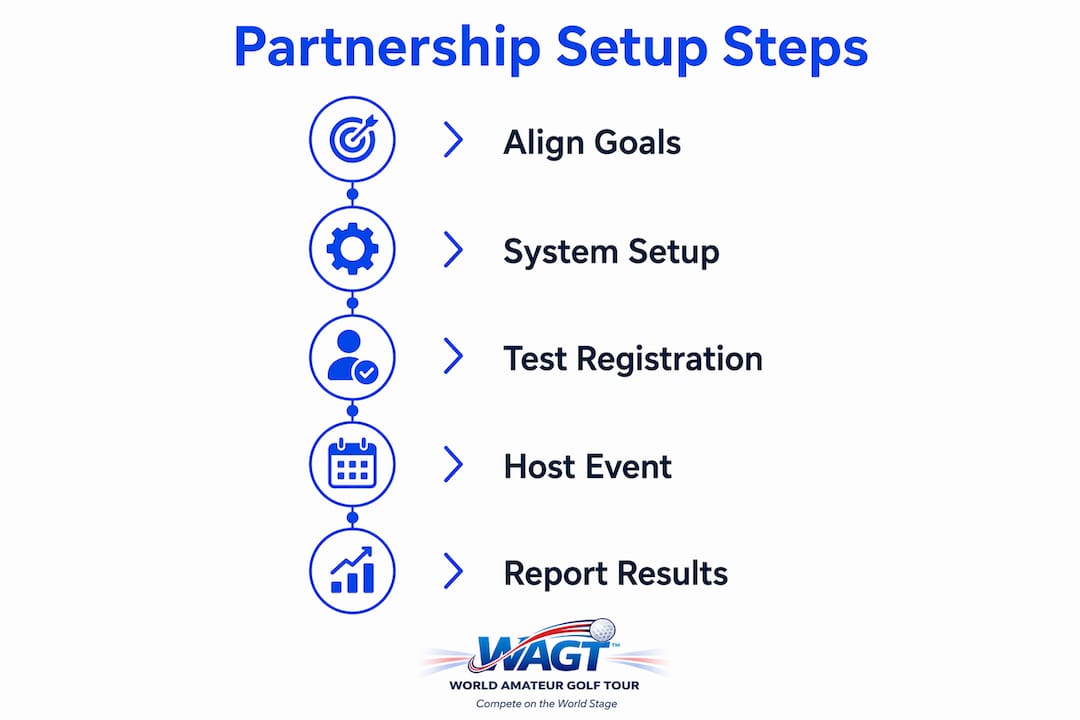
Execution is where most club partnerships succeed or fail. A well-structured event produces valid WAGR counting results and keeps players coming back. A poorly structured one produces disqualifications, withdrawals, and a damaged reputation.
Follow these steps to run a tournament that meets World Amateur Golf Tour and WAGR standards:
-
Announce the partnership publicly. Publish a formal announcement that names the tour, the venue, the format, and the eligibility criteria. The Amateur Players Tour's partnership with SWAG Golf Club is a strong model. Their 2026 nationwide team event series included format structure and access rationale in the launch announcement, which reduced player confusion from day one.
-
Define your format primitives upfront. Specify the number of rounds, whether the event is individual or team-based, the cut policy, and flighting structure. Publishing these details early improves player expectations and reduces late withdrawals. For team formats, clarify whether you are running 4-ball, scramble, or stroke play.
-
Configure the event for valid WAGR results. WAGR counting events require proper field strength, finishing position reporting, and correct player identifiers. These are not automatic. Your tournament software must be configured to capture and report this data in the format WAGR requires. Confirm this with Worldamateurgolftour before the event goes live.
-
Manage player onboarding with two data tracks. Collect handicap data through GHIN for eligibility verification. Collect tournament registration data through your dedicated tournament profile system. Keep these workflows separate and clearly labeled in all player communications.
-
Coordinate with Worldamateurgolftour on results submission. After the event, submit results through the approved channel within the required window. Late or incomplete submissions can disqualify the event from producing WAGR points, which damages player trust and your club's standing with the tour.
-
Debrief and document. After each event, record what worked and what did not. Track registration error rates, withdrawal reasons, and player feedback. This data makes your next event sharper.
Pro Tip: The biggest operational pitfall is treating WAGR compliance as a post-event task. Build your result reporting workflow into your pre-event checklist, not your post-event one.
You can also review the WAGR compliance guide published by Worldamateurgolftour for a detailed breakdown of event setup requirements.

What are the most common challenges in tour partnerships?
Even well-prepared clubs hit friction points. Knowing where problems typically appear lets you get ahead of them.
-
GHIN and tournament profile confusion. Players regularly attempt to register using their GHIN login. Operational clarity around registration systems is as important as course quality for successful event partnerships. Send a step-by-step profile setup guide with every registration communication.
-
Format misunderstandings. Players who misread the cut policy or team format rules withdraw at higher rates. Publish a one-page format summary on your event page and include it in the confirmation email.
-
Field strength shortfalls. WAGR counting requires a minimum field strength. If your field drops below that threshold, the event may not produce valid ranking points. Build a waitlist and set a registration deadline that gives you time to fill gaps.
-
Late result submissions. Missing the WAGR result reporting window is a critical error. Assign one staff member as the results officer and give them a hard deadline that is 24 hours before the actual WAGR cutoff.
-
Player identifier errors. Incorrect WAGR player IDs in your tournament software produce non-countable results even when everything else is correct. Verify player IDs during registration, not after the event.
-
Communication gaps with the tour. Clubs that treat Worldamateurgolftour as a one-time vendor rather than an ongoing partner miss critical updates on format changes and WAGR policy adjustments. Schedule regular check-ins with your tour contact throughout the season.
How do clubs benefit competitively and commercially from these partnerships?
The competitive and commercial upside of a golf club partnership with the World Amateur Golf Tour is substantial. WAGR's comprehensive rankings turn local tournaments into internationally recognized competitive pathways that attract ambitious amateur golfers. That is a direct upgrade to your club's competitive profile and event calendar.
Clubs that host WAGR-counting events attract a higher caliber of amateur player. Junior golfers targeting collegiate scholarships and professional pathways actively seek out WAGR events. This creates a self-reinforcing cycle: better players attract more competitive fields, which strengthens WAGR results, which attracts more players. Your club becomes a destination, not just a venue.
"Publishing clear format and eligibility parameters in partnership announcements is a strategic best practice that reduces operational friction and enhances player retention in amateur golf tours." — Worldamateurgolftour operational insight
Commercial benefits follow competitive prestige. Clubs hosting recognized amateur competitions gain exposure through tour media channels, social promotion, and player networks. Merchandise partners and sponsors are more willing to engage with events that carry WAGR certification. The SWAG Golf Club and APT partnership demonstrates this directly: their team event series blended competitive structure with a social atmosphere that attracted sponsors and participants beyond the existing APT membership.
Repeat participation is another measurable benefit. Players who earn WAGR points at your club have a concrete reason to return. They are building a ranking, and your venue is part of that story. That loyalty translates into membership inquiries, merchandise sales, and event revenue across multiple seasons.
For clubs exploring amateur tour membership benefits, the combination of WAGR prestige and player community growth makes this one of the strongest investments available in competitive amateur golf.
Key takeaways
A golf club world amateur tour partnership succeeds when clubs align WAGR compliance, player registration systems, and format transparency before the first event launches.
| Point | Details |
|---|---|
| Separate registration systems | GHIN handles handicaps; a dedicated tournament profile is required for WAGR event access. |
| Format transparency wins | Publishing round count, cut policy, and eligibility upfront reduces withdrawals and confusion. |
| WAGR compliance is pre-event work | Field strength, player IDs, and result reporting must be configured before the event, not after. |
| Competitive prestige drives growth | WAGR-counting events attract elite junior and amateur golfers who return season after season. |
| Communication is the partnership | Regular contact with Worldamateurgolftour prevents missed updates and policy errors. |
What i've learned running amateur golf partnerships
After watching dozens of clubs attempt to launch WAGR-sanctioned events, the pattern is clear. Clubs that focus exclusively on course setup and ignore the registration and reporting infrastructure fail at the operational level, not the golf level. The course is rarely the problem. The data is.
The clubs that get it right share one habit: they treat the player experience as the product. That means clear communication before registration opens, a frictionless onboarding process, and results submitted on time every time. Players remember how an event felt, not just how they scored.
There is also a strategic point that most guides miss. The format you choose signals what kind of community you are building. A 54-hole individual stroke play event attracts serious ranking-focused competitors. A 2-man team format like the SWAG Golf Club model attracts a broader, more social field. Neither is wrong. But you need to know which community you want before you announce the event.
The clubs I respect most are the ones that call Worldamateurgolftour early, ask hard questions about WAGR compliance, and build their operational checklist from the answers. That proactive posture separates the clubs that run one successful event from the ones that build a multi-year competitive program.
— Gene
How Worldamateurgolftour supports your club's partnership goals
Worldamateurgolftour is built specifically to give golf clubs and event organizers a clear, supported path to hosting WAGR-counting tournaments. The tour provides professionally run events at respected venues, with structured formats designed to produce valid ranking results for junior, collegiate, and amateur golfers.
If your club is ready to host sanctioned amateur competitions that count toward WAGR, Worldamateurgolftour makes the onboarding process direct and well-supported. From format guidance to result submission, the tour's infrastructure is designed to help your events succeed. Visit Worldamateurgolftour to explore partnership programs, review the 2026 event schedule, and connect with the team that runs one of the most competitive amateur circuits in the country.
FAQ
What is a golf club world amateur tour partnership?
A golf club World Amateur Tour partnership is a formal arrangement where a club hosts officially sanctioned tournaments that count toward the World Amateur Golf Ranking (WAGR), produced in partnership by The R&A and USGA since 2009.
Do players need a separate profile to enter WAGR events?
Yes. Tournament registration profiles are separate from GHIN handicap accounts, and using the wrong system is a leading cause of entry errors at WAGR-sanctioned events.
How do clubs ensure their events produce valid WAGR points?
Clubs must meet WAGR field strength requirements, report finishing positions correctly, and submit accurate player identifiers through the approved results channel within the required window.
What tournament formats work best for amateur tour partnerships?
Both individual stroke play and team formats like 4-ball or scramble are viable. The choice depends on the player community you want to attract, and format details must be published before registration opens.
How does hosting WAGR events benefit a golf club commercially?
Clubs gain exposure through tour media channels, attract higher-caliber players who return each season, and become more appealing to merchandise partners and event sponsors seeking recognized competitive venues.