
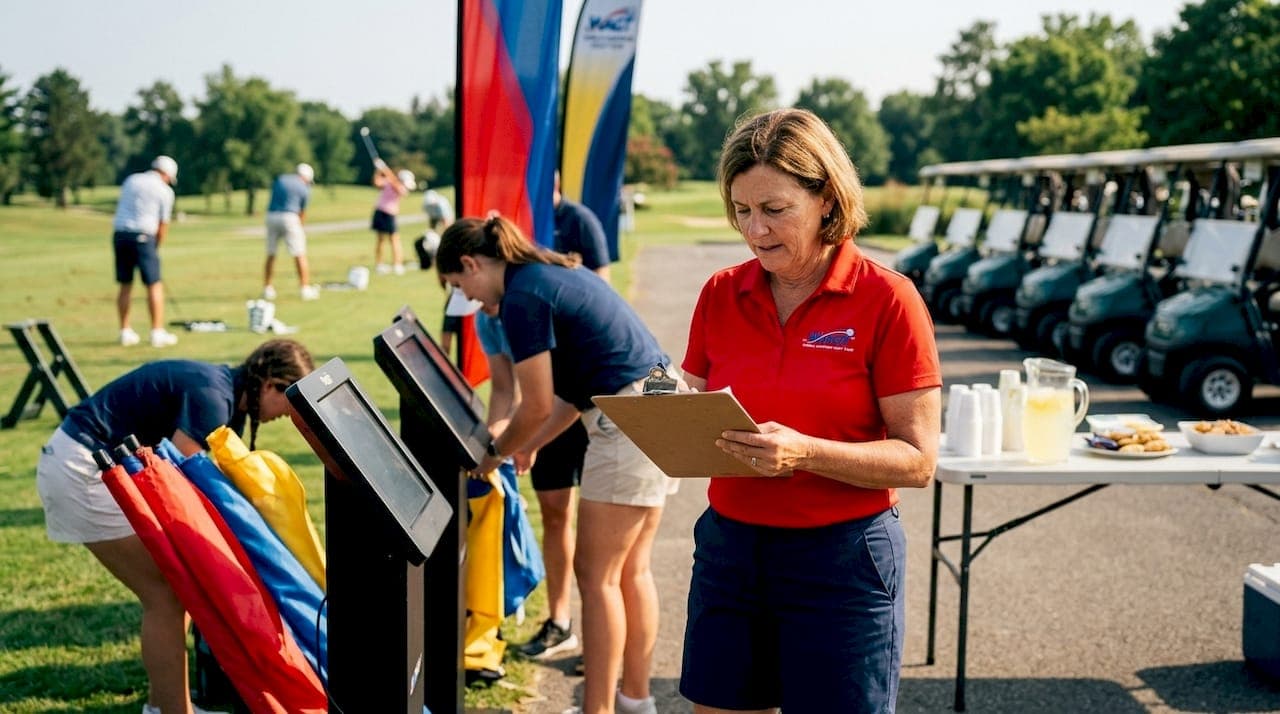
Professionally run golf events are defined by expert logistics, certified standards, and technology systems that transform a round of golf into a competitive, memorable experience. The benefits of professionally run golf events extend well beyond the course itself. They include stronger player satisfaction, measurable community impact, and the kind of operational efficiency that keeps participants coming back year after year. Organizations like Worldamateurgolftour demonstrate exactly what professional event management looks like at the amateur level, delivering WAGR-certified tournaments on championship-caliber courses that give junior and collegiate golfers a real pathway forward.
1. Benefits of professionally run golf events for player experience
Professional management changes how players experience a tournament from the first tee to the final scorecard. When logistics run smoothly, players focus on their game instead of waiting for information, chasing down scorecards, or standing in disorganized queues.
Live digital scoring and real-time leaderboards create competition awareness that keeps every player engaged throughout the round. Knowing where you stand after each hole raises the competitive intensity in a way that paper scoring simply cannot match. Platforms that centralize communication and scheduling reduce confusion and give players confidence that the event is well organized.

PGA professionals managing pace of play make a concrete difference in player enjoyment. Professional hosts actively manage transitions between holes, prevent bottlenecks, and set the tone for the entire field. That active management turns a potentially frustrating slow round into a fluid, enjoyable competition.
Key player experience improvements from professional management include:
- Real-time leaderboards that update after every hole
- Dedicated pace-of-play officials who prevent delays
- Pre-round player briefings that set clear expectations
- On-course entertainment stations that reduce perceived wait times and boost fundraising potential
- Digital notifications keeping players informed of schedule changes instantly
Pro Tip: Ask your event organizer whether live leaderboard access is available on a mobile app. Players who can check standings from their phones report significantly higher satisfaction with the overall event experience.
2. Economic impact of professionally managed golf tournaments
The economic benefits of professionally run tournaments are substantial, but they depend on deliberate planning. Economic benefits of golf tournaments do not happen automatically. They require organizers to align events with community needs, local vendors, and regional tourism infrastructure.
The Valero Texas Open is the clearest proof of what professional management can generate. The event produces an estimated $37 million in local economic impact and draws over 60,000 attendees. Roughly 42% of those attendees travel from outside the host city and spend an average of $502 per day. That spending flows directly into hotels, restaurants, and local businesses.
Professional events also drive charitable outcomes that casual tournaments rarely achieve. Morgan Stanley's Eagles for Impact program has generated nearly $2 million in donations and delivered more than 69,000 hours of youth mentorship programming. The program contributes $5,000 for every eagle recorded during tournaments. That model shows how competitive play and community giving can reinforce each other.
Community benefits from professionally organized golf events include:
- Direct spending from out-of-town attendees boosting local hospitality revenue
- Charitable fundraising tied to on-course performance metrics
- Youth development programs funded through tournament sponsorships
- Volunteer engagement that builds lasting community connections
- Media coverage that raises the host city's profile regionally and nationally
3. Sustainability advantages of professional golf event management
Sustainability has become a defining feature of elite golf event management. The best-run tournaments treat environmental responsibility as a competitive standard, not an optional add-on.
The WM Phoenix Open leads the industry on this front. The event maintains a near 100% waste diversion rate and has generated over $20 million in charitable contributions. It is recognized as one of the largest zero-waste sporting events in the world. The WM Phoenix Open Working For Tomorrow Fund℠ generated over $667,000 in 2026 alone, supporting greenhouse gas reduction and sustainable materials management projects across Arizona.
LIV Golf South Africa applied circular economy principles to achieve concrete results. The event diverted 85% of waste from landfill and saved over 3 million liters of water through specialized restroom facilities. Those numbers show that sustainability at golf events is measurable and achievable at scale.
| Sustainability Initiative | Outcome |
|---|---|
| WM Phoenix Open zero-waste program | Near 100% waste diversion rate |
| WM Working For Tomorrow Fund℠ | $667,000+ raised in 2026 |
| LIV Golf South Africa waste diversion | 85% of event waste diverted from landfill |
| LIV Golf South Africa water conservation | 3 million+ liters of water saved |
Sponsors and fans respond positively to visible green initiatives. Events that communicate their sustainability results attract partners who want to associate their brands with responsible practices. For amateur event organizers, adopting even a fraction of these practices builds credibility and community goodwill.
4. Technology-driven efficiency in professional golf events
Technology separates well-run golf events from forgettable ones. Advanced technology and strategic planning produce measurable outcomes for sponsors and improve participant retention. That is not a theory. It is the consistent finding across professionally managed tournaments at every level.
Centralized platforms replace the manual systems that slow down registration, communication, and scoring. When organizers use a single system to manage tee times, player notifications, and live results, errors drop and response times improve. Players receive accurate information faster, and organizers spend less time on administrative corrections.
Sponsor visibility increases significantly when technology is integrated properly. Digital leaderboards display sponsor branding in real time, reaching every player and spectator on the course. That exposure is far more valuable than a banner on a fence. Events that use technology achieve higher participant and sponsor satisfaction rates, which drives repeat participation and stronger sponsorship renewals.
Key technology tools that professional golf events use:
- Centralized scheduling and communication platforms
- Live digital scoring with mobile leaderboard access
- Automated player notifications for tee time changes or weather delays
- Sponsor branding integrated into digital scoring displays
- Post-event analytics reports for organizers and sponsors
Pro Tip: If you are organizing an amateur tournament, prioritize a platform that combines registration, scoring, and communication in one system. Splitting those functions across three separate tools creates gaps that frustrate players and sponsors alike.
5. Credibility and competitive integrity through professional standards
Professional event management establishes credibility that casual tournaments cannot replicate. Players take competition more seriously when they know the event follows recognized standards, uses certified officials, and applies consistent rules enforcement.
For junior and amateur golfers, this credibility carries real career weight. WAGR compliance requires events to meet specific field size, format, and scoring standards. Tournaments that meet those standards give players ranking points that college coaches and professional scouts actually recognize. That is a direct, measurable benefit that no informal event can offer.
Worldamateurgolftour builds its entire model around this principle. Every tournament on the tour is professionally managed, held at respected venues, and structured to count toward WAGR status. Junior golfers competing in these events are not just playing golf. They are building a verifiable competitive record.
Governing bodies play a central role in maintaining these standards. Understanding the role of governing bodies in amateur golf helps organizers and players alike understand why professional management is not optional for serious competition. It is the foundation that makes results meaningful.
6. Stronger sponsor relationships and long-term event growth
Sponsors invest in professionally run events because they deliver predictable, measurable returns. An event with clear branding opportunities, organized logistics, and strong attendance data gives sponsors the confidence to commit year after year.
Professional event management creates the conditions sponsors need. Accurate attendance figures, demographic data, and media coverage reports give sponsors proof of value. Without that data, renewal conversations become guesswork. With it, sponsors can justify their investment internally and often increase their commitment.
Long-term event growth depends on sponsor retention. A single well-run event builds the reputation that attracts new sponsors the following year. Organizers who invest in professional management from the start build a growth cycle that self-reinforces. Players return because the experience is excellent. Sponsors return because the results are documented. The event grows because both groups advocate for it.
For organizers exploring golf club revenue streams, professional event management is the single most effective way to convert a one-time tournament into a recurring revenue source.
7. Participant retention and community building
Players who have a great experience at a professionally run event come back. That retention is the clearest sign that professional management works. It also builds the kind of golf community that sustains a tour or club event series over many years.
Professional hosting turns a golf schedule into a shared experience. When players focus on competition and relationships rather than logistics, they form connections with other competitors, with the venue, and with the event itself. Those connections are what bring them back the following season.
Worldamateurgolftour understands this dynamic. The tour's focus on junior and collegiate golfers creates a community of serious competitors who share similar goals. Competing alongside peers who are equally committed to earning WAGR ranking points raises the standard for everyone. That competitive environment is itself a benefit that professional management makes possible.
Organizers who want to build lasting participant communities should study successful hosted golf tournaments and identify what those events do consistently well. The answer almost always comes back to professional management, clear communication, and a genuine commitment to player experience.
Key Takeaways
Professionally run golf events deliver superior player experiences, measurable economic impact, and long-term community value because expert management, technology, and standards-based operations work together.
| Point | Details |
|---|---|
| Player experience improves directly | Live scoring, pace management, and clear communication keep players engaged and satisfied. |
| Economic impact requires planning | Events like the Valero Texas Open show that $37 million impacts depend on deliberate community alignment. |
| Sustainability builds reputation | Zero-waste programs and water conservation initiatives attract sponsors and generate community goodwill. |
| Technology drives retention | Centralized platforms improve sponsor satisfaction and bring participants back to future events. |
| WAGR compliance adds career value | Professionally managed events that meet WAGR standards give junior golfers ranking points that matter. |
Why professional golf event management matters more than most organizers realize
Gene here. After years of watching amateur golf events succeed and fail, the pattern is clear: the gap between a forgettable tournament and one players talk about for months almost always comes down to logistics, not the course.
Most organizers focus on venue selection and prize structure. Those matter. But the events that build real communities are the ones where players never have to think about what comes next. The schedule runs on time. The scoring is accurate. The communication is clear. That invisible infrastructure is what professional management provides, and most players only notice it when it is missing.
The sustainability angle surprises people. Organizers often treat green initiatives as a nice-to-have. But the data from events like the WM Phoenix Open shows that sustainability programs generate real money and real community loyalty. That is a competitive advantage that amateur event organizers are leaving on the table.
The technology piece is where I see the most resistance. Organizers worry about cost and complexity. The reality is that a centralized platform pays for itself quickly in reduced administrative time and stronger sponsor renewals. The events that resist technology are the ones that plateau. The ones that adopt it grow.
For junior golfers specifically, the professional standards question is not optional. If you want your results to count toward a collegiate or professional pathway, you need events that meet WAGR requirements. That means professional management is not a luxury. It is the price of admission to serious competition.
— Gene
Worldamateurgolftour: where professional standards meet amateur competition
Worldamateurgolftour delivers exactly what serious junior and amateur golfers need: professionally managed tournaments that count toward WAGR ranking, held at championship-caliber venues across Florida and beyond.
Every event on the tour is built around the same principles covered in this article. Live scoring, certified officials, fair competition, and a genuine commitment to player development. If you are a junior golfer building your competitive record, or a parent looking for events that actually advance your player's pathway, Worldamateurgolftour is the right place to compete. Register for a tournament and experience the difference that professional event management makes from the first tee to the final leaderboard.
FAQ
What are the main benefits of professionally run golf events?
Professionally run golf events deliver better player experiences, stronger economic impact, and higher sponsor retention. Expert logistics, live scoring technology, and certified standards are the core drivers of those outcomes.
Why does professional management improve pace of play?
PGA professionals and trained officials actively manage transitions between holes and prevent bottlenecks. That active oversight keeps the round moving and prevents the delays that frustrate players most.
How do professionally managed events support junior golfers?
Events that meet WAGR standards give junior golfers ranking points recognized by college coaches and professional scouts. Worldamateurgolftour structures every tournament to meet those requirements, giving players a verifiable competitive record.
What is the economic impact of a professionally run golf tournament?
The Valero Texas Open generates an estimated $37 million in local economic impact, with 42% of attendees traveling from outside the host city and spending $502 per day on average. Deliberate planning and community alignment are what produce those results.
How does technology improve golf event management?
Centralized platforms that combine registration, scoring, and communication reduce administrative errors and improve both player and sponsor satisfaction. Events using integrated technology achieve higher retention rates among participants and sponsors.