
Governing bodies in golf are defined as the official organizations responsible for writing the Rules of Golf, setting equipment standards, and protecting the integrity of competitive play worldwide. The role of governing body golf events is to create a consistent, fair framework that every player, tournament committee, and organizer can rely on. The two primary bodies are the USGA, which governs golf in the United States and Mexico, and the R&A, which governs the rest of the world. Together, they produce a single unified rulebook. Understanding how these organizations work gives players and parents a clearer picture of why competitive golf looks and feels the same whether you are playing in Florida or Scotland.
What are the primary governing bodies and their jurisdictions?
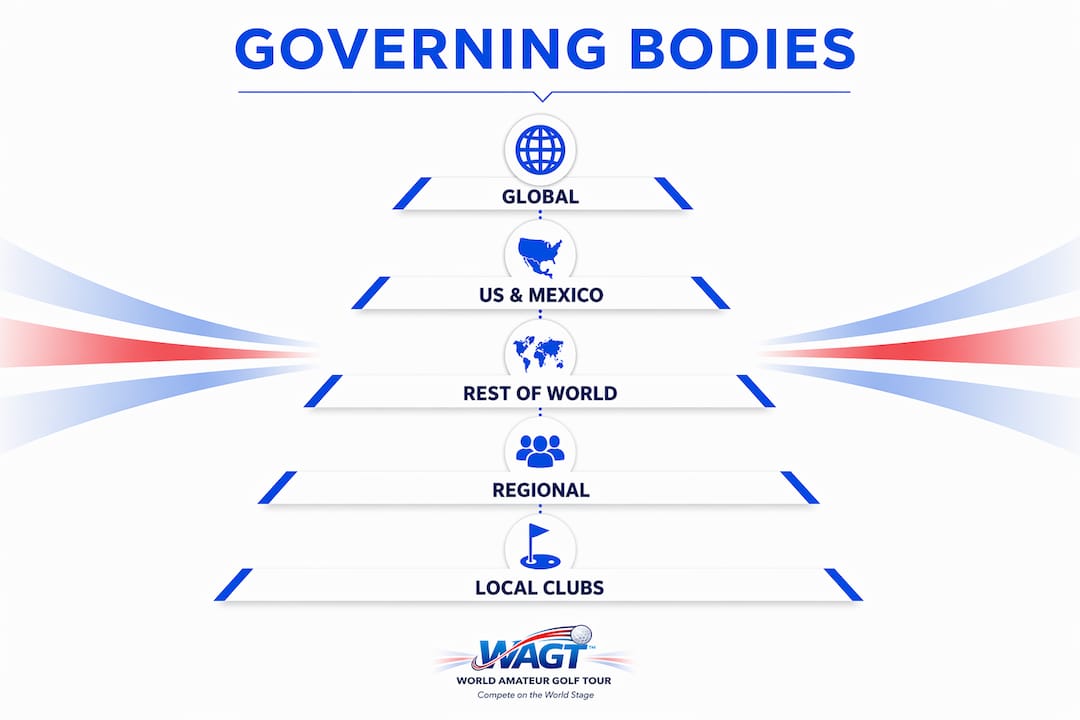
Two primary governing bodies maintain the unified Rules of Golf: the USGA for the U.S. and Mexico, and the R&A for the rest of the world. Since 1952, they have jointly issued a single set of rules, revising them every four years. That revision cycle gives the sport stability while still allowing the rules to evolve with technology and player feedback.
A third major organization, the International Golf Federation (IGF), operates at the global level but with a different focus. The IGF is the IOC-recognized global governing body for golf, managing the World Amateur Team Championships and representing 154 national federations across 126 countries. The IGF does not write the Rules of Golf. Its role centers on amateur team competition and maintaining golf's status as an Olympic sport.

| Organization | Jurisdiction | Primary Function |
|---|---|---|
| USGA | United States and Mexico | Rules of Golf, equipment standards, amateur championships |
| R&A | Rest of world | Rules of Golf, equipment standards, The Open Championship |
| IGF | Global | Olympic golf, World Amateur Team Championships |
Regional and national associations sit below these three bodies. Organizations like Golf Australia or the English Golf Union apply the USGA and R&A rules within their own territories and run domestic competitions. They do not create separate rules. They operate within the framework the USGA and R&A have established.
How do governing bodies influence golf event management?
The USGA and R&A influence golf event management primarily through two tools: the Rules of Golf and Model Local Rules. The Rules of Golf apply universally. Model Local Rules are optional additions that tournament committees can adopt to address specific course conditions or competition formats.
New Model Local Rules for 2026 provide committees with optional technical standards and relief rules, including special provisions for televised events, embedded ball relief, and club replacement procedures. A committee running a junior championship, for example, can adopt the embedded ball relief rule if the course conditions warrant it. That flexibility keeps the rules practical without undermining consistency.
The key distinction is this: governing bodies write the rules, but they do not run tournaments. Tournament committees decide which Model Local Rules to apply, how to handle pace of play, and how to manage the competition day to day. Governance sets the ceiling and the floor. Administration fills in everything in between.
Here is how governing body frameworks shape a typical tournament:
- Rules of Golf: The universal code every player and official must follow.
- Model Local Rules: Optional additions adopted by the committee for specific conditions.
- Equipment standards: Conforming club and ball lists that all players must meet.
- Handicap system: The World Handicap System, jointly managed by the USGA and R&A, ensures fair competition across skill levels.
- Referee training: Governing bodies certify officials who interpret and apply the rules on the course.
Pro Tip: Before any tournament, ask the committee which Model Local Rules are in effect. Knowing the local rules in advance prevents penalty strokes from avoidable mistakes.
Why is governance important for competition integrity?
Events citing USGA and R&A rules produce standardized, defensible competition outcomes rather than relying on local "house rules." That distinction matters enormously for player confidence. When you know every competitor is playing under the same code, the result reflects skill, not whoever wrote the local rulebook.
Equipment standards carry equal weight. Governing bodies maintain conforming lists for clubs and balls. Any equipment not on those lists is illegal in official competition. This prevents technology from creating an uneven playing field where wealthier players gain an unfair advantage through non-conforming gear.
"Governance is what separates a serious competition from a casual round. When the rules are clear, consistent, and enforced, players can trust the result. That trust is the foundation of competitive golf." — Golf Monthly
Governing bodies also protect the sport's long-term reputation. Arbitrary rules at local events erode trust over time. When players know a tournament operates under USGA and R&A standards, they arrive with confidence. Parents and coaches can evaluate results knowing the competition was legitimate. That credibility is what makes competing in amateur golf worth the investment of time and money.
How do governing bodies coordinate with other golf organizations?
Governing bodies focus on rules and standards, while professional tours and regional associations handle event operations and promotion. This decentralized structure is often misunderstood. The USGA and R&A do not run the PGA Tour, the LPGA, or any amateur tour. They set the rules those organizations must follow.
The coordination happens across several layers:
- Professional tours: Organizations like the PGA Tour adopt the Rules of Golf and work with the USGA and R&A on equipment standards, particularly when new technology challenges competitive balance.
- Regional associations: National bodies apply the unified rules within their territories, run domestic championships, and feed players into international competition.
- Youth and junior programs: Governing bodies support youth development through grassroots initiatives, ensuring the next generation learns the correct rules from the start.
- Amateur tours: Organizations like Worldamateurgolftour operate sanctioned amateur tournaments under the USGA and R&A framework, giving junior and collegiate players access to WAGR-counting events.
Governing bodies embody a dual responsibility model: enforcing rules and growing the game through inclusive programs. Those two goals reinforce each other. Consistent rules attract serious players. Accessible programs bring in new ones.
What are the current challenges for governing bodies in golf?
The biggest challenge facing governing bodies right now is equipment technology, specifically driving distance. Courses designed decades ago are being rendered obsolete by players hitting the ball farther than ever. The response has been direct intervention.
The USGA and R&A plan a golf ball distance rollback in 2030 to preserve course challenge and sport integrity. This decision reflects years of consultation with professional tours, equipment manufacturers, and player associations. It is one of the most significant equipment rule changes in decades.
Elite amateur competitions may adopt the new ball standards before they reach casual club play. That phased approach gives serious junior and collegiate players time to adjust their game before the change becomes universal. Parents and coaches should monitor these developments closely because they will affect equipment purchasing decisions and practice priorities.
Balancing innovation with tradition is not a new tension in golf. The governing bodies have navigated it before with groove regulations, anchored putting bans, and distance measurement device rules. Each change followed the same pattern: extended consultation, stakeholder feedback, and phased implementation. Check golf trends for 2026 to stay current on how these policies are evolving in real time.
Pro Tip: If your junior player competes at the elite amateur level, review the USGA and R&A conforming equipment lists every season. Equipment that was legal last year may not be legal this year.
Key Takeaways
Governing bodies set the rules and standards that make competitive golf fair, consistent, and credible at every level from junior tournaments to the Olympics.
| Point | Details |
|---|---|
| USGA and R&A write the rules | They have jointly issued a single unified Rules of Golf since 1952, revised every four years. |
| IGF governs amateur team events | The IGF manages the World Amateur Team Championships and golf's Olympic status across 154 national federations. |
| Model Local Rules are optional | Tournament committees choose which local rules to adopt; governance provides the framework, not the mandate. |
| Governance protects integrity | Events run under USGA and R&A rules produce defensible results that players and parents can trust. |
| Equipment changes are coming | The 2030 ball distance rollback will affect elite amateurs first, making early awareness critical for serious players. |
Why governance matters more than most players realize
Most players think about governing bodies only when a rule dispute comes up. That is the wrong frame. Governance shapes every competitive round you play, from the ball in your bag to the relief procedure your committee applies on a rainy day.
What I find most underappreciated is the distinction between governance and administration. Parents especially tend to conflate the two. They assume the USGA or R&A is somehow responsible for how a specific tournament is run. Those organizations write the rulebook. The tournament committee runs the show. When something goes wrong at an event, the answer is almost never "the governing body failed." It is usually "the committee did not apply the framework correctly."
The growing complexity of equipment rules makes this distinction even more important. The 2030 ball rollback is not a surprise. It has been telegraphed for years through consultation documents and stakeholder meetings. Players and families who pay attention to local rules and governance frameworks will adapt faster than those who ignore them until the change is mandatory.
My advice to any serious junior player or their parent: read the Rules of Golf once, cover to cover. Not to memorize every penalty. To understand the logic behind the framework. That understanding makes you a smarter competitor and a more confident one.
— Gene
Competitive amateur golf governed by recognized standards
Worldamateurgolftour runs WAGR-sanctioned tournaments that operate under USGA and R&A rules, giving junior, collegiate, and amateur players access to elite amateur events that count toward their World Amateur Golf Ranking. Every event is professionally managed at championship-caliber courses, so you compete in an environment that reflects the same standards you will encounter at the highest levels of the game.
If you are serious about building a competitive record that college programs and professional pathways recognize, the governance framework behind your events matters as much as your scorecard. Register for upcoming tournaments and compete where the rules, the ranking points, and the competition are all legitimate.
FAQ
What is the role of governing bodies in golf events?
Governing bodies like the USGA and R&A write the Rules of Golf and set equipment standards that all official tournaments must follow. They do not run tournaments directly; tournament committees apply those rules at the event level.
What is the difference between the USGA and the R&A?
The USGA governs golf in the United States and Mexico, while the R&A governs the rest of the world. Since 1952, both organizations have jointly issued a single unified set of Rules of Golf.
What does the IGF do in golf?
The International Golf Federation is the IOC-recognized global governing body for golf, managing the World Amateur Team Championships and representing 154 national federations across 126 countries. It does not write the Rules of Golf.
Are Model Local Rules mandatory at tournaments?
Model Local Rules are not mandatory. Tournament committees choose which optional rules to adopt based on course conditions and competition format, within the framework the USGA and R&A provide.
How will the 2030 ball distance rollback affect amateur players?
The USGA and R&A plan to implement a ball distance rollback in 2030 to preserve course challenge and competitive balance. Elite amateur competitions are expected to adopt the new standards before the change reaches recreational play.