

A golf entry fee structure is the tiered pricing system tournament organizers use to cover event costs, and it varies significantly based on competition level, venue prestige, and included services. If you are a golfer or a parent of a junior golfer planning tournament participation, understanding this structure is the single most important step toward accurate budgeting. Tournament entry fees are tiered by competition level, ranging from $50 at local charity events to more than $2,000 for professional qualifiers. Knowing what drives those numbers, and what the fee does and does not cover, puts you in control of your season planning from the start.
What is a golf entry fee structure, and what does it include?
A golf entry fee structure defines how tournament fees are organized and charged based on event level and the services bundled into participation. Green fees are commodity prices for course access, while tournament entry fees are bundled packages that also cover administration and competition oversight. That distinction matters because many golfers compare a tournament fee to a standard round of golf and feel confused by the gap. The 2026 national average green fee at a public, non-resort U.S. course sits at about $41 per round, with all-in costs reaching $70 to $130 when you add a cart and range balls. A tournament entry fee starts where that number ends and adds several layers on top.
Tournament entry packages typically include course access, cart usage, and range balls as a baseline. Beyond those basics, the fee also covers official staffing, scorekeeping systems, and course setup specific to competition conditions. What you get for your money depends heavily on the event tier, which is why reading the full fee breakdown before registering is non-negotiable.

What costs are covered, and what are usually excluded?
Tournament entry fees cover a defined set of services, but the list of exclusions is longer than most golfers expect. Knowing both sides of that ledger protects your budget.
Standard inclusions in most tournament entry fees:
- Course access for all competitive rounds
- Cart usage during official play
- Range balls for warm-up before rounds
- Administrative and registration processing
- Official scoring and rules oversight
- Lunch or a light meal on competition days (varies by event)
Common exclusions that add cost:
- Caddie gratuities, which can run $50 to $150 per round at higher-level events
- Food and beverages beyond any included meal
- Optional or mandatory practice rounds before the tournament starts
- Travel, lodging, and transportation to and from the venue
- Equipment purchases or upgrades made specifically for the event
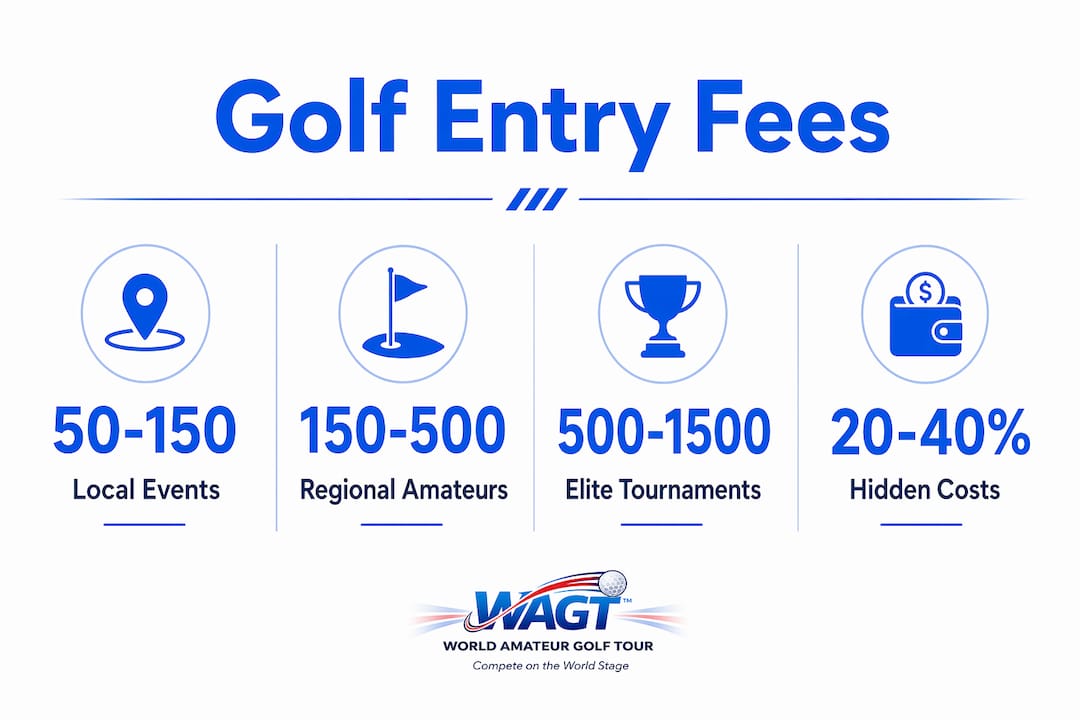
Exclusions can add 20–40% more to your total event-day spend beyond the entry fee itself. That percentage climbs fast when travel is involved. Understanding what a golf event player package actually contains helps you compare events on equal terms rather than just comparing headline prices.
Pro Tip: Before registering, email the tournament director and ask for a complete list of inclusions and exclusions. Most organizers will send a detailed breakdown that is not always visible on the registration page.
How do entry fees vary by tournament type?
The level and format of a tournament are the two biggest drivers of entry fee pricing. A local charity scramble and a WAGR-certified amateur championship are both "golf tournaments," but their fee structures have almost nothing in common.
Tournament entry fees are tiered by competition level, and the reasons behind each tier are specific. Higher fees at elite events reflect course rental premiums, prize fund contributions, certified officiating, and the cost of maintaining championship-caliber course conditions. Tournament organizers also structure fees to maintain event quality and a competitive player field, which means the fee itself signals the standard of the experience.
| Tournament Type | Typical Entry Fee Range | Key Fee Drivers |
|---|---|---|
| Local charity event | $50–$150 | Minimal staffing, basic course setup |
| Junior tour event | $75–$250 | Certified scoring, age-group divisions |
| Regional amateur championship | $150–$500 | USGA or state association oversight, course prep |
| Professional qualifier | $500–$2,000+ | Prize fund, elite venue rental, full officiating |
Tournament fees cover non-recoverable costs such as course rental premiums, official staffing, prize funds, and tournament-level course preparation. Those costs exist whether 40 players or 140 players show up, so organizers price fees to cover fixed expenses first. For junior golfers pursuing amateur golf tournament schedules, understanding this pricing logic helps families choose events that match both their competitive goals and their financial capacity.
Pro Tip: For junior golfers targeting WAGR ranking points, the $150–$500 regional amateur tier typically offers the best return on investment. You get certified competition, serious fields, and ranking credit at a fraction of the cost of professional qualifier events.
Prestigious events add one more layer of complexity. Highly prestigious tournaments require entrants to meet handicap or eligibility criteria beyond simply paying the entry fee. Financial readiness is only part of the equation. Your player must also qualify on merit before the fee even becomes relevant.
What hidden costs should golfers and parents plan for?
The entry fee is the starting point of your tournament budget, not the finish line. Experienced tournament families plan for a total cost that is substantially higher than the headline number.
-
Practice rounds. Most competitive players play the course at least once before the tournament begins. Practice rounds are almost never included in the entry fee and typically cost the standard green fee rate for that venue, which can range from $50 to $200 depending on the course.
-
Travel and lodging. Regional and national events require overnight stays. Hotel costs near championship-caliber venues often run $150 to $300 per night, and multi-day events mean multiple nights. Add fuel, flights, or rental car costs on top of that.
-
Meals beyond included food. Even when a tournament includes lunch, players and families need breakfast, dinner, and snacks across multiple days. Budget at least $50 to $75 per person per day for food beyond what the event provides.
-
Equipment and gear. Competitive play at higher-level events often exposes gaps in a player's equipment setup. New wedges, a fitted driver, or quality golf accessories for course play can add hundreds of dollars to the season's total cost.
-
Registration processing fees. Tournament entry fees may include hidden administrative or processing costs that do not appear until the final checkout screen on third-party registration platforms. Always click through to the payment confirmation page before budgeting.
Competitive junior and amateur golfers often budget 50–100% more than the entry fee to cover these related costs. That means a $200 entry fee realistically represents a $300 to $400 total commitment per event. Multiply that across a full season and the number becomes significant.
How does understanding fee structures help you plan smarter?
Knowing the full golf competition fee structure before you commit to a season schedule is the difference between a well-run campaign and a financially stressful one. Here is how to apply that knowledge practically.
- Read the full event details, not just the headline fee. Most tournament websites list inclusions, exclusions, and eligibility requirements in the event description. Spend ten minutes reading before registering.
- Build a per-event budget sheet. List the entry fee, estimated travel, lodging, meals, and practice round costs for each event. Total cost clarity prevents mid-season surprises.
- Avoid confusing entry fee with total cost. Parents often mistake the tournament entry fee as the total cost, omitting travel, practice rounds, and equipment from their planning. That mistake is the most common source of financial stress in junior golf families.
- Register early. Many events have limited fields and early registration deadlines. Late registration sometimes carries surcharges, and some events close before the deadline if the field fills.
- Prioritize events by return on investment. Not every tournament delivers equal competitive value. Focus your budget on events that match your player's current level and offer meaningful ranking or development outcomes.
- Contact organizers directly with questions. Transparent tournament directors will answer fee questions clearly. If an organizer is vague about what is included, that is useful information about the event's professionalism.
Proactive budgeting for all participation costs is the single habit that separates families who thrive in competitive junior golf from those who burn out financially. The golf club marketing and tournament checklist approach applies to players too: plan every line item before the season starts, not after the first invoice arrives.
Key Takeaways
A golf entry fee structure is a tiered pricing system covering fixed event costs, and total participation expenses routinely run 50–100% higher than the headline entry fee alone.
| Point | Details |
|---|---|
| Entry fees are tiered by level | Local events cost $50–$150; professional qualifiers exceed $500–$2,000. |
| Inclusions are limited | Course access, cart, and range balls are standard; caddies, meals, and travel are not. |
| Hidden costs are real | Processing fees, practice rounds, and lodging can add 20–40% or more to total spend. |
| Budget beyond the entry fee | Plan for 50–100% above the entry fee to cover all realistic participation costs. |
| Eligibility matters at elite events | Prestigious tournaments require handicap or qualification criteria beyond payment. |
What I've learned watching families navigate tournament fees
The most common mistake I see is treating the entry fee as the full cost of participation. A family budgets $150 for a regional junior event, then discovers they owe another $200 in hotel costs, $80 for a practice round, and $30 in processing fees they did not notice at checkout. The player arrives stressed because the parents are stressed, and that shows up on the scorecard.
The second mistake is choosing events based on prestige alone without checking whether the fee structure matches the family's financial reality for the season. A $500 professional qualifier is an exciting goal, but if it consumes the entire season's budget, your player misses six other events where they would have gotten more competitive rounds and more development value.
My honest advice: build a season budget before you register for a single event. List every event you want to enter, estimate the full cost of each using the 50–100% multiplier above the entry fee, and then prioritize. The families who do this consistently get more out of their seasons, both competitively and financially. Transparent communication with tournament organizers is not a sign of inexperience. It is a sign of serious preparation.
— Gene
Worldamateurgolftour: clear fees, serious competition
Worldamateurgolftour hosts WAGR-certified events with transparent fee structures designed so players and families know exactly what they are paying for before they register.

Every event on the Worldamateurgolftour schedule is run at a championship-caliber venue with full officiating, certified scoring, and a competitive field of junior and amateur golfers. The fee structure is straightforward: what you see at registration is what you pay, with inclusions clearly listed. For players building toward collegiate or professional golf, these are the events that count. Visit Worldamateurgolftour to review the current event calendar, entry fees, and eligibility requirements for the 2026 season.
FAQ
What is a golf entry fee structure?
A golf entry fee structure is the tiered pricing system tournament organizers use to cover fixed event costs, including course rental, staffing, and administration. Fees vary by competition level, from $50 at local charity events to more than $2,000 at professional qualifiers.
What does a tournament entry fee typically include?
Most tournament entry fees include course access, cart usage, and range balls. Caddie gratuities, food beyond a provided meal, practice rounds, and travel costs are almost always excluded.
How much should I budget beyond the entry fee?
Competitive junior and amateur golfers budget 50–100% more than the entry fee to cover travel, lodging, meals, and practice rounds. A $200 entry fee realistically represents a $300 to $400 total commitment.
Are there hidden fees in golf tournament registration?
Yes. Administrative or processing surcharges often appear at the final checkout step on third-party registration platforms and are not always listed on the event page. Always review the full payment screen before confirming registration.
Do elite tournaments require more than just paying the entry fee?
Prestigious tournaments require entrants to meet handicap or eligibility criteria before acceptance. Paying the fee is only one part of the qualification process at higher-level events.