

A golf open qualifier is a merit-based tournament where professionals and amateurs compete directly for entry into major championships like the U.S. Open or The Open Championship. Governed by bodies including the USGA and The R&A, these events give any eligible player a legitimate shot at the sport's biggest stages. Amateurs must carry a handicap index of 0.4 or lower to enter. That threshold is deliberately strict. It filters the field to players who already compete at a near-professional level, making every qualifier round genuinely elite.
What is a golf open qualifier and how is it structured?
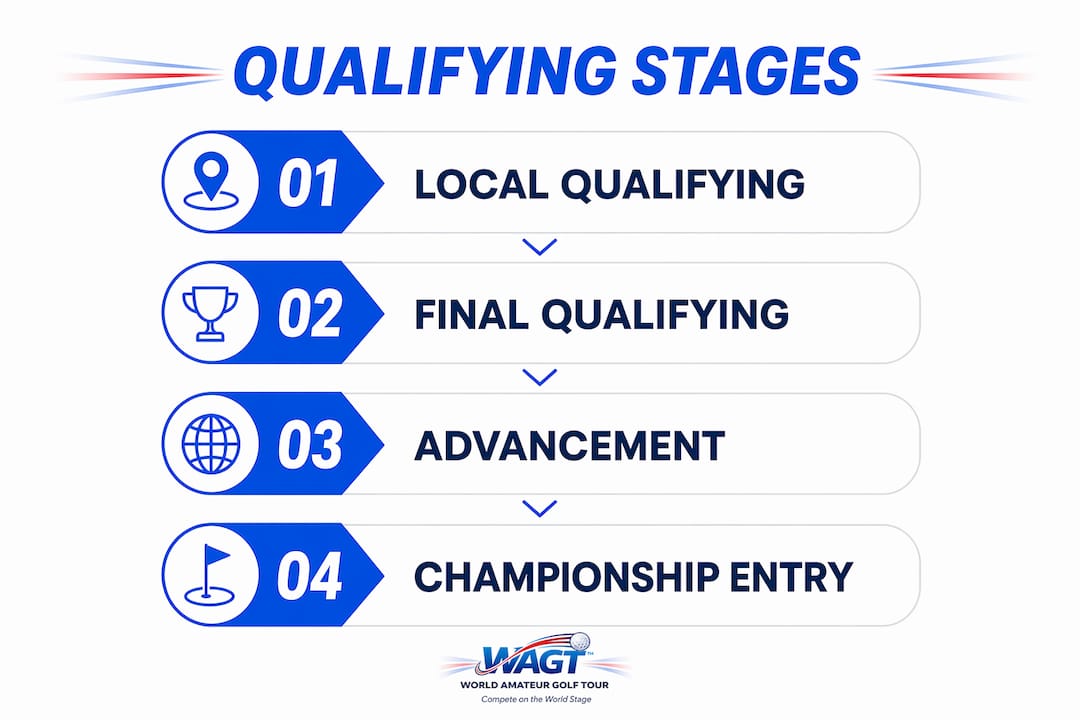
The golf open qualification process runs in stages, and each stage cuts the field sharply. Understanding the full structure before you enter is the difference between showing up prepared and showing up surprised.
Stage 1: Local qualifying
Local qualifying is an 18-hole, single-round event held simultaneously at dozens of sites around the world. For the 2026 U.S. Open, local qualifying ran at 109 sites across the country and internationally. Each site produces a small number of qualifiers who advance to the next round. The format is unforgiving. One bad stretch of holes can end your day before the back nine.

Stage 2: Final qualifying (Golf's Longest Day)
Final qualifying is a 36-hole event played in a single day. Players complete two full rounds without an overnight reset, which is why the golf community calls it "Golf's Longest Day." The 2026 U.S. Open used 13 final qualifying sites globally. The physical and mental load across 36 holes in one day separates serious competitors from everyone else.
The advancement rate at this stage tells you everything about the competition level. In 2024, only 73 of 937 players advanced from final qualifying to the U.S. Open field. That is roughly a 7.5% success rate. Every player on that final qualifying course is fighting for a handful of spots.
| Stage | Format | Sites (2026 U.S. Open) | Advancement |
|---|---|---|---|
| Local qualifying | 18 holes, one round | 109 sites | Low scorers per site |
| Final qualifying | 36 holes, one day | 13 sites globally | ~7.5% of field |
| Championship field | 72 holes, four days | Shinnecock Hills | 156 players total |
Pro Tip: If you advance from local qualifying, do not wait to practice 36-hole rounds. Your body and focus need specific conditioning for Golf's Longest Day well before you arrive at the final qualifying site.
Who is eligible to compete in golf open qualifiers?
Eligibility for golf open qualifying events is open to both professionals and amateurs, but the requirements are specific. Meeting them is your first real test.
- Handicap index: Amateurs must hold a handicap index of 0.4 or lower to enter U.S. Open qualifying. This is not a guideline. It is a hard cutoff enforced at registration.
- Professionals: Tour professionals and mini-tour players enter under the same merit system. No professional status alone guarantees a spot without meeting entry criteria.
- Exemptions: Certain players bypass local qualifying entirely. Past champions, top world-ranked players, and recent major winners receive direct exemptions into the championship field or into final qualifying. These exemption categories are defined by the USGA and The R&A each year.
- Amateur status: Amateurs must maintain their amateur status under USGA rules. Accepting prize money in other events can affect eligibility.
- Age: There is no minimum age requirement for U.S. Open qualifying, which is why junior golfers with elite handicap indexes can and do enter.
The most common misconception is that open qualifiers are only for professionals. They are not. The system is explicitly designed to let any eligible player compete on equal footing. A junior golfer with a scratch handicap faces the same qualifying format as a seasoned tour professional.
Pro Tip: Check the USGA's official entry portal each year. Entry windows open months before the championship, and missing the deadline disqualifies you regardless of your handicap.
What are the key challenges in golf open qualifying?
Golf open qualifying is not just physically demanding. The mental environment is unlike any regular amateur event you have played.
Local qualifying is often described as a "knife fight" by players who have been through it. Every competitor in your group is trying to shoot the same low number. A double bogey on the third hole does not just cost you two shots. It can cost you your entire round psychologically. Managing mistakes under pressure matters more than playing flawless golf.
"The players who advance from local qualifying are rarely the ones who played perfect golf. They are the ones who made a bogey, reset, and made birdie on the next hole. Resilience is the skill that separates qualifiers from the rest of the field."
Final qualifying adds a physical layer on top of the mental one. Sustaining concentration through 36 holes in a single day requires specific preparation. Most amateur players never practice two full rounds back to back. That gap shows up clearly by the 30th hole.
Site selection is a strategic lever that most players ignore. Qualifying venues fall into two categories. "Gatekeeper" sites defend par aggressively with tight fairways and punishing rough. "Scoring" sites offer birdie opportunities and reward aggressive play. Matching your site choice to your game can improve your odds meaningfully. A player who thrives on birdie runs should target scoring sites. A grinder who makes pars all day fits better at a gatekeeper venue.
- Practice two consecutive 18-hole rounds at least three times before final qualifying.
- Work specifically on mental performance under pressure to handle the knife-fight environment of local qualifying.
- Research historical scoring averages at each available qualifying site before you register.
- Build a pre-round routine that resets your focus after a bad hole, not just before the first tee.
Pro Tip: Travel to a less competitive qualifying site if the data supports it. Players regularly drive or fly to remote venues because the field is smaller and the course suits their game. That is not gaming the system. It is smart preparation.
How do U.S. Open and The Open Championship qualifying differ?
Both championships use open qualifying, but the structures are distinct. Knowing the differences helps you plan which path fits your profile.
U.S. Open qualification
The USGA runs one of the most structured qualifying systems in golf. For 2026, the U.S. Open field of 156 players will compete at Shinnecock Hills from june 18–21. Local qualifying used 110 sites, and final qualifying used 13 sites globally. Amateurs need a handicap index of 0.4 or lower. The process is linear: local qualifying feeds into final qualifying, which feeds into the championship.
The Open Championship qualification
The R&A takes a different approach. The Open Championship uses the Open Qualifying Series, which runs at select international tournaments throughout the year. Players who finish in qualifying positions at those events earn direct entry. Regional and final qualifying events run separately for players who do not earn spots through the series. Nearly 2,000 golfers competed at regional venues in 2025, with about 131 advancing to the next stage. Final qualifying is also a 36-hole, one-day event.
| Feature | U.S. Open | The Open Championship |
|---|---|---|
| Governing body | USGA | The R&A |
| Qualifying stages | Local, final | Open Qualifying Series, regional, final |
| Amateur handicap requirement | 0.4 or lower | Scratch or better |
| Final qualifying format | 36 holes, one day | 36 holes, one day |
| Regional competitors (recent) | Thousands across 110 sites | ~2,000 at regional venues |
Both championships share the same core principle. Performance on the day determines who advances. Past champions, club professionals, amateurs, and even players from non-traditional backgrounds have all earned spots through qualifying. The system rewards the score on the card, nothing else.
For players building toward either path, understanding the amateur-to-professional transition helps clarify where open qualifying fits in a longer competitive career.
Key Takeaways
A golf open qualifier is the most meritocratic entry system in professional golf, requiring amateurs to hold a handicap index of 0.4 or lower and advance through 18-hole local rounds and a grueling 36-hole final qualifying day.
| Point | Details |
|---|---|
| Handicap requirement | Amateurs must hold a handicap index of 0.4 or lower to enter U.S. Open qualifying. |
| Multi-stage structure | Qualifying runs from 18-hole local rounds to a 36-hole final qualifying day at 13 global sites. |
| Advancement rate | Only about 7.5% of players advance from final qualifying to the championship field. |
| Site selection matters | Choosing a qualifying venue that matches your playing style can improve your odds of advancing. |
| Mental game is decisive | Managing bad holes without losing focus is more important than playing perfect golf in local qualifying. |
Why open qualifying is the fairest test in golf
I have spent years watching amateur golfers prepare for qualifying events, and the pattern is consistent. Players who study the process and treat it like a campaign win more often than players who simply show up and swing. The meritocratic structure of open qualifying is genuinely rare in elite sport. You do not need a sponsor, a tour card, or a famous coach. You need a low handicap and a plan.
The mistake I see most often is treating local qualifying like a regular stroke play event. It is not. The field is compressed at the top. Everyone in your group can shoot 68. That changes how you manage risk on every shot. Playing for par on a tough hole is not conservative. It is correct.
My advice for junior and amateur players is direct: enter a qualifier before you think you are ready. The experience of competing under that pressure, at that level, teaches you things that practice rounds never will. Use season planning strategies to build your schedule around a qualifying attempt. Give yourself real preparation time, not two weeks. And work on your mental game specifically. The elite athlete mindset required for Golf's Longest Day is a trainable skill, not a personality trait.
The players who make it through qualifying are not always the most talented. They are the most prepared.
— Gene
Competitive amateur golf starts here
If you are serious about building the game that earns you a spot in open qualifying, you need competitive reps at events that count.

Worldamateurgolftour runs WAGR-certified tournaments designed specifically for junior, collegiate, and amateur players who want real competitive experience at championship-caliber courses. Every event counts toward your World Amateur Golf Ranking, which matters when exemption committees and college programs evaluate your record. Junior golfers looking to combine performance tracking with college recruiting can also explore GoD1Golf.com, an all-in-one platform for golf performance and Division I recruiting support. Start building your competitive resume at Worldamateurgolftour and put yourself on the path toward qualifying.
FAQ
What is a golf open qualifier?
A golf open qualifier is a competitive tournament where professionals and amateurs earn entry into major championships like the U.S. Open or The Open Championship based purely on their score. Amateurs must hold a handicap index of 0.4 or lower to enter.
How many stages does U.S. Open qualifying have?
U.S. Open qualifying has two stages: an 18-hole local qualifying round held at over 100 sites, followed by a 36-hole final qualifying day at 13 global sites.
What percentage of players advance from final qualifying?
Roughly 7.5% of players advance from final qualifying. In 2024, only 73 of 937 competitors earned spots in the U.S. Open field from this stage.
Can amateur golfers compete in golf open qualifiers?
Yes. Amateurs who hold a handicap index of 0.4 or lower can enter U.S. Open qualifying and compete under the same format as professionals.
How does The Open Championship qualifying differ from the U.S. Open?
The Open Championship uses the Open Qualifying Series at international events plus separate regional and final qualifying rounds. In 2025, nearly 2,000 golfers competed at regional venues, with about 131 advancing to the next stage.