

A golf recruiting profile is the packet of verified scoring, results, and academic information a coach uses to decide whether to keep watching you. Coaches check verifiable scoring average and graduation year before anything else, so your first move is building a scoring resume and publishing links a coach can click and trust. Everything else, video, personal statement, contact list, supports that one job.
TL;DR:
- Coaches prioritize verified scoring averages, tournament results, graduation year, and academic information, making verification sources essential for quick assessment.
- Playing in WAGR or AJGA events provides verifiable results that significantly strengthen recruiting prospects compared to unranked local tournaments.
- Building a focused schedule around ranked tournaments and updating results promptly is critical for visibility and credibility in the recruiting process.
- A concise, hyperlink-rich profile with tournament highlights, academic details, and a short game video makes it easier for coaches to evaluate prospects efficiently.
- Participation in WAGR-counting events through tours like World Amateur Golf Tour ensures coaches can instantly verify your results with a single click.
Table of Contents
- What Coaches Look For In A Golf Recruiting Profile
- Scoring Resume: Fields And Wording That Work
- Which Tournaments Actually Move Your Recruiting Case?
- Recruiting Timeline: What To Do Each Year And How Big Your School List Should Be
- How To Reach Out To College Golf Coaches
- Building A Highlight Video And Profile Page Coaches Trust
- Golf Scholarships: What To Realistically Expect By Division
- Sample Recruiting Profile Template You Can Copy
- How WAGR-Counting Events Strengthen Your Recruiting Case
- What Parents Get Wrong About Recruiting Profiles
- Get WAGR-Counting Results Coaches Can Verify In One Click
- Sources
- FAQ
What Coaches Look For In A Golf Recruiting Profile
Coaches don't discover talent by accident. They pull from verified sources: rankings like WAGR, AJGA standings, and the Junior Golf Scoreboard, then cross-check against completed recruiting questionnaires already sitting in their database. A coach scanning your profile makes a judgment in under 30 seconds, so the top of the page carries the weight.
What a scan actually looks for:
- Graduation year, matched instantly against roster needs
- Current scoring average across a real sample of rounds
- Verified tournament results with clickable sources, not typed claims
- An academic snapshot (GPA, test scores) so a program can tag eligibility fast
Miss any of these and a coach moves to the next name in the stack.
Scoring Resume: Fields And Wording That Work
Your scoring resume is the document coaches actually read. Every field should answer a specific question a coach is already asking.
- Name, graduation year, and home club or high school, listed at the top, no exceptions.
- Scoring average, calculated across your most recent competitive season, not cherry-picked rounds.
- Low round and the event where it happened, with a link to the official leaderboard.
- Top three to five finishes, each hyperlinked to a verified result page.
- GPA and standardized test scores, since academics affect both admission and scholarship math.
- Coach or instructor reference, name and contact, someone who will actually answer the phone.
Skip the flowery personal statement. A line like "Competed in 14 AJGA-affiliated events this season, averaging 73.4 across four rounds" tells a coach more than three sentences about your love of the game.
Pro Tip: List your scoring average by tee length or event tier if you play a mix of junior and adult-tee tournaments. A coach comparing two prospects wants the harder number, not the flattering one.
Which Tournaments Actually Move Your Recruiting Case?
Not every event helps you. Coaches trust results from WAGR-counting tournaments, AJGA events, and recognized state or national championships because those results run through independent verification, not self-reported scores. A strong week at an unranked local event does far less for your case than a mid-pack finish against a ranked field.
Build your schedule around visibility, not just wins:
- Play a mix of stronger fields (for credible scoring averages) and winnable events (for finishes that stand out on paper)
- Confirm every event reports to Junior Golf Scoreboard or an equivalent verified results platform
- Link your WAGR profile directly in your resume and outreach emails
- Update your online results within days of each event, not months later
A recruit with a public, current, verifiable results trail gets checked out faster than one whose best evidence is a printed scorecard.
Recruiting Timeline: What To Do Each Year And How Big Your School List Should Be
Recruiting timing matters as much as talent. NCAA Division I contact rules shift around June 15 after sophomore year, when coaches can begin direct communication, so your profile needs to be finished before that date, not after.
- Freshman and sophomore year: build your profile, start playing ranked events, complete questionnaires for programs on your radar.
- Before June 15 (rising junior year): have a polished scoring resume, video, and a target list of 40 to 50 schools ready.
- Junior year: send outreach, respond to coach interest, attend camps and unofficial visits.
- Senior year: narrow to official visits and finalize decisions with your top programs.
A list of 40 to 50 schools split across reach, match, and safety programs keeps your options open instead of betting everything on three dream schools that may never call back.
How To Reach Out To College Golf Coaches
Coaches read outreach emails the same way they scan a resume: fast, and looking for proof, not personality. Keep your email to two or three sentences: graduation year, current scoring average, your next event, and a link to your profile or highlight video.
Before you email anyone, complete that program's recruiting questionnaire. It's often the only way a coach can legally engage with you before contact windows open, and skipping it can make you invisible no matter how good your scores are.
- Send one personalized email per coach, referencing something specific about the program
- Follow up once every three to four weeks, not every few days
- Never send a generic mass email; coaches recognize the template instantly and delete it
Pro Tip: Attach your scoring resume as a link, not an image or attachment. A link a coach can click from their phone gets opened. A PDF attachment often gets ignored.
Building A Highlight Video And Profile Page Coaches Trust
Your video should run 60 to 90 seconds and show tournament shots, not a montage of range swings. Coaches want to see how you play under pressure, not how clean your setup looks on a practice tee.
- Film tournament rounds, including recovery shots and short game under real conditions.
- Host the video somewhere fast-loading and set to public or unlisted, never locked behind a login request.
- Place the link at the top of your profile page and in the first line of every outreach email.
- Build a public profile page with your scoring resume, recent results, academic snapshot, and contact information all on one screen, no scrolling required to find the essentials.
A profile a coach can fully review in one screen beats a beautifully designed page they have to dig through.
Golf Scholarships: What To Realistically Expect By Division
Scholarship structure varies sharply by division, and understanding it early prevents disappointment later.
- Division I programs work with a shared scholarship pool split across a small roster, meaning most offers are partial, not full rides.
- Division II and NAIA programs often distribute scholarship money similarly, spread thin across the team rather than concentrated on one or two players.
- Division III schools don't offer athletic scholarships at all, but strong academics can unlock significant need-based or merit aid.
Roster sizes in college golf run small, usually eight to twelve players, so full scholarships are rare and partial awards are the norm. Strong grades and test scores widen your options considerably, especially at D3 programs where academic aid often outweighs anything athletics could offer.
Sample Recruiting Profile Template You Can Copy
Use this structure directly. Fill in your own numbers and links before sending anything to a coach.
| Field | What To Include |
|---|---|
| Name and grad year | Full name, high school class year |
| Scoring average | Most recent competitive season, rounds counted |
| Top results | Three to five finishes, each hyperlinked |
| Academic snapshot | GPA, test scores if available |
| Video link | 60 to 90 second highlight, hosted publicly |
| Coach reference | Name, role, phone or email |
Example one: "Class of 2027. Scoring average 72.8 across 16 competitive rounds this season. Runner-up, [State Junior Championship], top-10 finish at [WAGR-counting event]. GPA 3.8."
Example two: "Class of 2028. Average 74.1, four AJGA-affiliated starts. Low round 69 at [tournament name]. Instructor reference available on request."
- Check every hyperlink loads correctly before sending your profile anywhere
- Confirm your scoring average matches the number listed on any linked results page
How WAGR-Counting Events Strengthen Your Recruiting Case
WAGR-counting events give coaches a ranking they already trust, which cuts down the guesswork in evaluating your scoring. Using a membership that produces verified, clickable results reduces the friction between a coach seeing your name and confirming your numbers with one click.
- WAGR-counting tournaments feed directly into a ranking system coaches already check
- Player profile tools built around event entries generate the exact links a scoring resume needs
- Live scoring during an event means your results are verifiable before the tournament even finishes
- Membership-based event history gives you a running, dated record instead of scattered results across different sites
Pulling those results straight into your scoring resume saves you from manually tracking down leaderboard links after every event.
What Parents Get Wrong About Recruiting Profiles
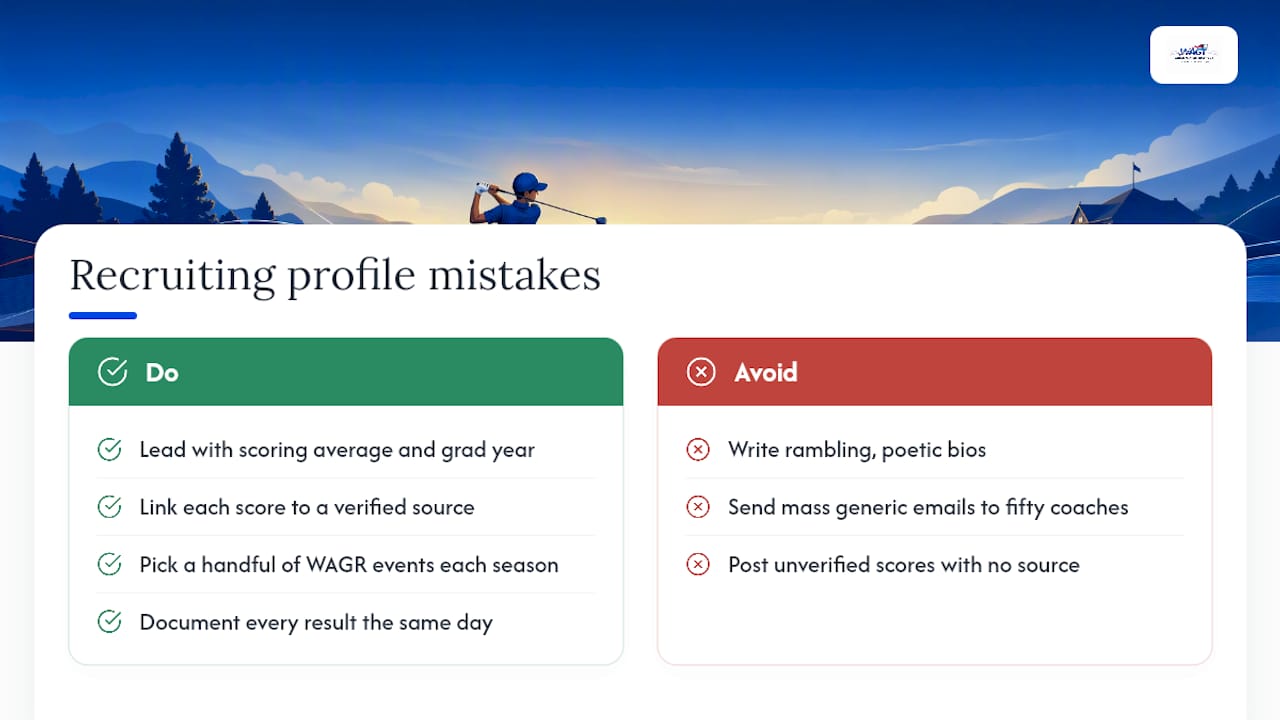
Three mistakes show up constantly. First, bios that ramble about passion for the game instead of leading with scoring average and graduation year, coaches skip the poetry. Second, unverified scores with no linked source, which reads as unreliable rather than modest. Third, mass emails to fifty coaches with the same generic message, which get deleted as fast as they arrive.
The highest-return move is picking a handful of WAGR-counting events each season and documenting every result the same day it posts. A recruit with three months of clean, linked, verified scoring beats one with a longer résumé full of gaps.
— Gene
Get WAGR-Counting Results Coaches Can Verify In One Click
A recruiting profile is only as strong as the results behind it, and that's exactly where Worldamateurgolftour fits into your plan. Instead of chasing scattered local events with no ranking value, a 2026 Annual Membership puts you into 54-hole, WAGR-counting tournaments at championship-caliber South Florida venues, without the travel demands of a national circuit.
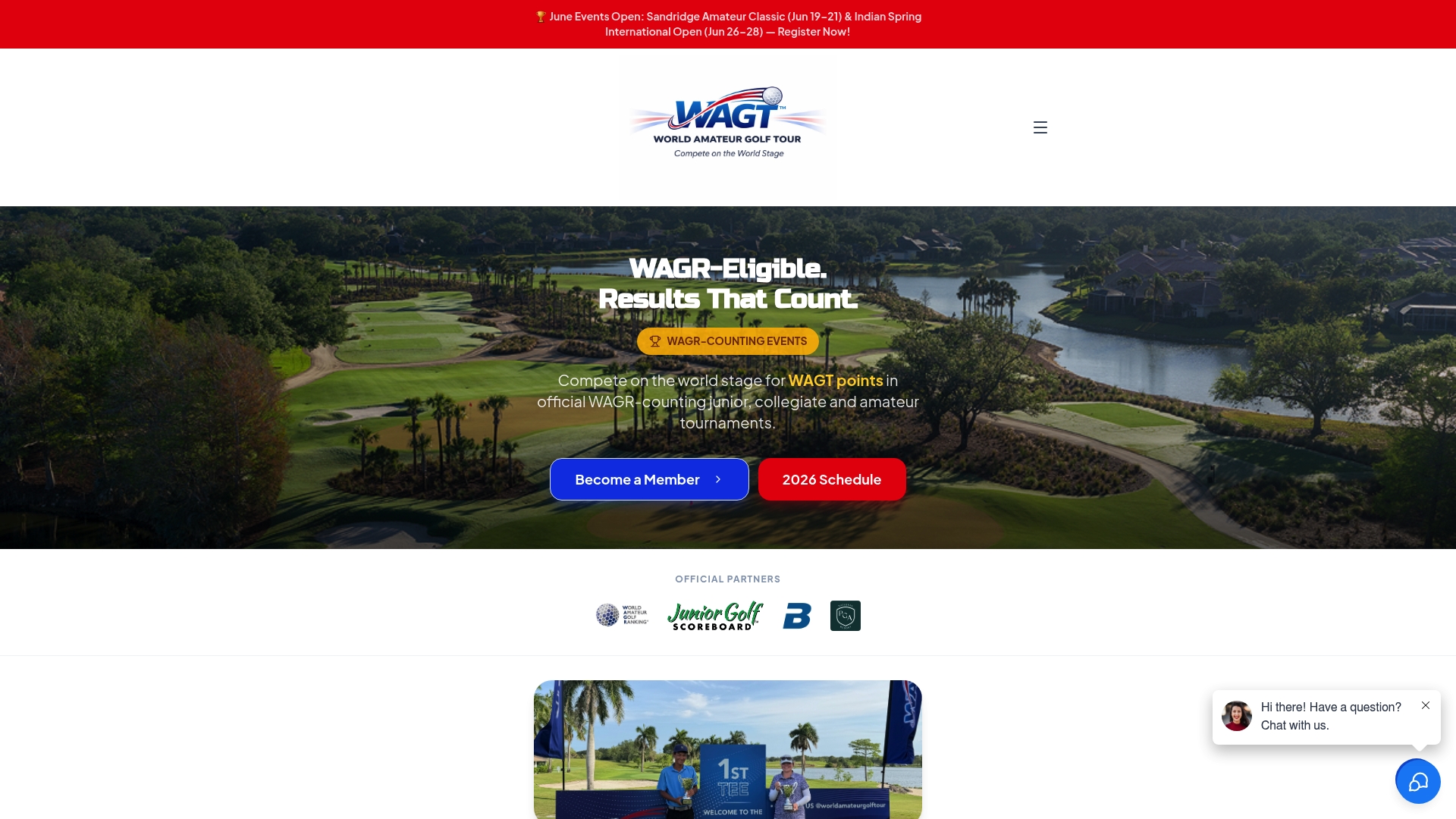
Every round you play through tournaments from this tour generates live scoring and verified results you can drop straight into your scoring resume. Coaches don't have to take your word for a 72.8 average, they click the link and see it themselves. That's the difference between a resume that gets a second look and one that gets skipped.
Ready to build a results history coaches can trust? Check current membership details and upcoming event dates and get your next tournament on the calendar.
Sources
- How to get recruited for college golf | Athlos College Coaching
- How college coaches actually find recruits | Tessaira
FAQ
What Handicap Do You Need To Play D1 Golf?
There's no fixed handicap cutoff, but most D1-caliber recruits carry scoring averages across verified competitive rounds that coaches check carefully, which typically means a handicap near scratch or better.
How Do I Create A Sports Recruiting Profile?
Start with a scoring resume covering graduation year, scoring average, and hyperlinked tournament results, then build a public profile page and complete every target program's recruiting questionnaire.
How Do I Get Recruited For College Golf?
Play WAGR-counting or AJGA-affiliated events, keep your results public and verifiable, complete program questionnaires before contact windows open, and send short, evidence-first outreach emails to coaches.
What Is The Ideal Height For A Golfer?
There's no ideal height for competitive golf; coaches evaluate scoring average, ball-striking consistency, and tournament results over physical stature.
Does World Amateur Golf Tour Membership Help With Recruiting?
Yes. Membership provides entry into WAGR-counting events with live scoring, giving you the verified, clickable results coaches look for in a scoring resume. Current pricing is available on the World Amateur Golf Tour site.