

A repeatable pre-shot routine built on a think-behind, rehearse, execute loop sharpens your focus and cuts down on bad decisions before you ever take the club back. The fastest version: stand behind the ball, pick one small target, take one practice swing that matches the shot you see, then walk in and go. Budget 5 to 10 seconds for that micro version, or 15 to 25 seconds for the full routine below.
TL;DR:
- The typical pre-shot routine takes 15 to 25 seconds, with pros often completing it in about 3 seconds once settled over the ball.
- Consistent decision-making, visualization, rehearsal, and trigger steps are crucial for reducing hesitation and improving shot execution.
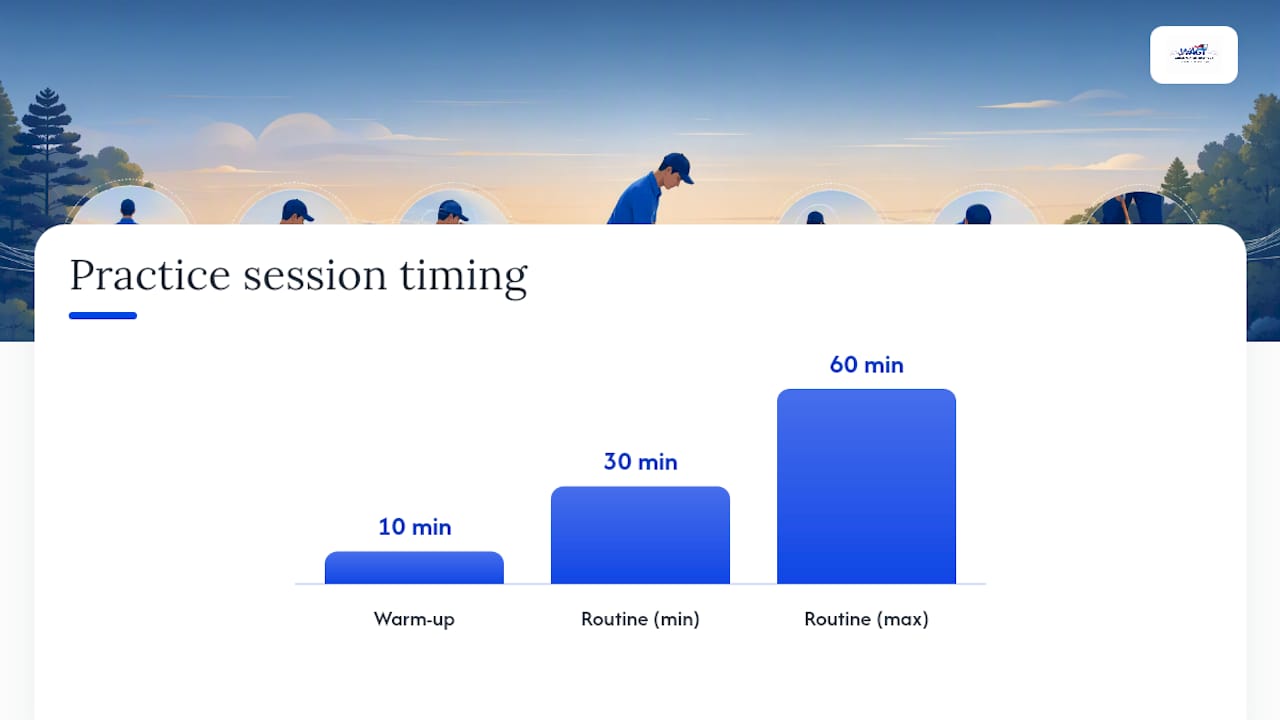
- Practicing the entire routine deliberately for 30 to 60 minutes, including pressure simulation and recording timings, enhances automatic execution.
- The research-backed STOP S.L.O.W. GO model supports a structured six-step process that is highly endorsed by coaches and proven useful across skill levels.
- Personalizing minor routine adjustments for different shots and practicing under pressure on real courses ensures better performance consistency.
Table of Contents
- What is a golf pre-shot routine, step by step?
- How should putting and short-game routines differ?
- How long should a pre-shot routine take?
- How do you practice a pre-shot routine until it's automatic?
- What does the research say about pre-shot routines?
- Why personalizing your routine still matters
- Ready to test your routine under real pressure?
- Sources
What is a golf pre-shot routine, step by step?
A golf pre-shot routine is the sequence of mental and physical actions you run through before every shot, from club selection to your first move into the ball. The best ones follow the same shape every time: decide, see it, feel it, align it, go.
Here is the full sequence coaches teach:
- Decide behind the ball. Pick your target, confirm the club, and note the wind and hazards while you're still standing 6 to 8 feet behind the ball. This is your "think box," and it should be the only place you make decisions.
- Visualize the shot. See the entire flight, the landing, and the roll. Then narrow your focus to a small intermediary spot 1 to 3 feet ahead of the ball on your target line, an approach Golf Monthly recommends because aiming at something close is far easier than aiming at a flag 150 yards away.
- Rehearse with a practice swing. Take one or two practice swings, still behind the ball, that match the tempo and trajectory you just pictured. Top-100 instructors teach this location deliberately: rehearsing in the same spot you visualized helps your brain carry that feeling into the real swing.
- Walk in and align. Approach from the side, set the clubface to your intermediary spot first, then build your stance around it. A light waggle loosens your grip pressure and confirms alignment.
- Trigger and go. Use a small physical cue, a forward press, a slight knee flex, one deep breath, and start your swing within about 3 seconds of settling in. Hesitation here is where good routines fall apart.
Pro Tip: Pick a trigger you can't overthink, like exhaling fully or pressing your lead knee toward the target. A physical cue bypasses the analytical brain that causes hesitation over the ball.
Each step has a job. The decision phase protects you from indecision later. The visualization phase gives your swing a target instead of a fear. The rehearsal phase builds feel. The trigger phase gets you moving before doubt creeps in.
How should putting and short-game routines differ?
Full swings and short shots share the same psychological structure, just compressed. You still separate thinking from doing, but the physical steps shrink.
- Putting: Read the line and pace from behind the ball, take one or two practice strokes in that same spot, take one final look at the target, then putt within about 3 seconds of stepping in.
- Chips and pitches: Rehearse the stroke behind the ball with the landing spot in mind, take a short alignment step in, and use the same go trigger you use on full shots.
- Scaling the routine: The think box and performance zone stay separate no matter the shot length. Shorter shots just need less rehearsal time, not less structure.
Keeping the same "think box" separation on a 3-foot putt as on a driver off the tee is what prevents second-guessing on the shots that matter most for your score.
How long should a pre-shot routine take?
Tour pros generally run 15 to 25 seconds from the moment they step behind the ball to impact, and most take no longer than about 3 seconds once they've settled over the ball. That window matters because slow play penalties aside, standing over the ball too long almost always signals your brain is still deciding instead of executing.
The most common breakdowns, and how to fix them:
- Standing over the ball too long. Set a personal rule: if you're not ready within 3 seconds of settling in, step away and restart the entire routine from behind the ball.
- Inconsistent routine length. Time yourself on the range so your routine takes the same number of seconds on every shot, pressure or not.
- Too many practice swings. One or two is enough. More than that usually means you're rehearsing indecision, not a swing.
- Re-planning over the ball. All decisions belong in the think box. If doubt shows up once you've walked in, walk back and start over rather than trying to fix your plan mid-stance.
Statistic Callout: A Delphi study surveying NCAA Division I coaches found 72.73% overall consensus that a structured pre-shot model improves performance, with five of its six steps earning at least 90% agreement on usefulness.
How do you practice a pre-shot routine until it's automatic?
Ingraining a routine takes deliberate repetition, not just good intentions on the range. Treat it as a skill with its own practice block, not something you'll figure out mid-round.
Try this template:
- Warm up for 10 minutes, then commit to 30 to 60 minutes of routine-driven reps where every single shot, even easy pitches, gets the full sequence.
- Log and check your timing. Use a stopwatch, film yourself, or have a partner flag when you skip a step or rush the trigger. MyGolfSpy's testing on routine consistency found that filming and partner checks reliably surface breakdowns players don't notice themselves.
- Add pressure on purpose. Play a points game against yourself, or start a mental countdown before each shot, to simulate the tension you'll feel on the course.
- Transfer it to practice holes. Run the exact range routine on-course before tournament week, timing each shot so the sequence becomes automatic rather than something you consciously build.
Pro Tip: Practicing at home has real value here too. Drill-based indoor practice lets you rehearse the decision and trigger phases of your routine even without range access, which keeps the sequence sharp between range sessions.
A practice log that tracks routine adherence alongside your shot results will show you, over weeks, whether your timing holds up when the round actually matters.
What does the research say about pre-shot routines?
The STOP S.L.O.W. GO model gives the routine above its research backing. Developed from a literature review and refined through a two-round Delphi process with college coaches, it breaks the routine into six steps: Stop, Strategy, Look, Outline, Waggle, Go.
- Stop and Strategy map to the decision phase: pause behind the ball and commit to a plan.
- Look and Outline map to visualization and alignment: see the shot, then set up to it.
- Waggle and Go map to the trigger: loosen up, then commit without delay.
The validation study found near-universal coach agreement on five of the six steps, which lines up with what instructors at outlets like Golf, Golf Monthly, and Golf Digest have taught independently for years. When research and coaching consensus converge this tightly, the routine is worth building into your practice.
Why personalizing your routine still matters
Juniors get the most out of pre-round yardage work and course planning, since their misses often trace back to poor decisions, not poor swings. Club players usually benefit more from tightening tempo and timing, since their routines tend to speed up under pressure. Small adjustments, one fewer practice swing, a shorter waggle, keep the structure intact while fitting your game. If you're building toward tournament golf, a development pathway built around consistent practice habits pays off far past this season.
— Gene
Ready to test your routine under real pressure?
Range reps only tell you so much. Your routine really gets tested when a shot counts toward a score that follows you, and that is exactly what World Amateur Golf Tour events are built to provide. Every WAGR-counting tournament puts your think-behind, rehearse, execute sequence in front of real stakes, real leaderboards, and live scoring that shows you exactly how your timing holds up hole to hole.

Membership gets you structured, professionally run events at respected venues, plus player development tools and tracking that show whether your routine is actually holding up under pressure or just working in practice. If you're a junior, collegiate, or amateur golfer looking to find out, check World Amateur Golf Tour's tournament schedule and get your routine on the tee where it counts.
Sources
- The development and validation of the STOP S.L.O.W. GO pre-shot routine model for golf – a Delphi study
- Follow these steps to perfect the pre-shot routine: Top 100 Teacher
- How To Build A Pre-Shot Routine That Actually Works | MyGolfSpy
- Pre-Shot Routine In Golf: PGA Pro's Ultimate 4 Step Plan | Golf Monthly