
Send one focused email from the player's own address, with a subject line that names the graduation year and a scoring stat, then follow up in two to four weeks with new results. The two fastest ways to find a real coach email: the school's official athletics staff directory and the conference's program page, cross-checked against the Golf Coaches Association of America if you have any doubt.
TL;DR:
- Most coach emails are publicly available on official school or conference websites, not through paid databases, which are often outdated.
- The first contact email should include your graduation year, key stats, and links to verified results, especially WAGR-counting tournament finishes.
- NCAA rules restrict personalized responses from Division I coaches until June 15 after your sophomore year, so follow-up timing should reflect this schedule.
- Follow up with new, meaningful updates such as recent tournament results or improved rankings instead of repeated generic messages.
- Using a verified player profile with live scoring links increases credibility, making it easier for coaches to evaluate your potential quickly.
Table of Contents
- Where to Find Verified Contact Information for College Golf Coaches
- What Should Your First Email to a Coach Say?
- When Can College Golf Coaches Actually Reply to You?
- How Often Should You Follow Up With a Golf Coach?
- Should You Call, DM, or Use Recruiting Camps to Reach Coaches?
- How WAGT Results Strengthen Your Coach Outreach
- A Few Honest Notes on Getting Noticed
- Let WAGT Make Your Outreach Easier to Verify
- Sources
- FAQ
Where to Find Verified Contact Information for College Golf Coaches
Every legitimate coach email lives on an official athletics domain. If you're reaching out to Florida State, for example, Head Coach Trey Jones has a listed email and office number right on the staff roster page on seminoles.com. That's the model. No middleman, no gatekeeper, just the school's own site.
When you're building your contact list, work through this priority order:
- Official athletics staff directory — search "[school name] men's golf coaches" or "[school name] women's golf staff" and look for a
.eduor team domain email, never a personal Gmail or Yahoo address. - Conference websites — the ACC, Big Ten, SEC, and similar conference sites often maintain coach directories that double-check a school's own listing.
- NCAA program pages and coach associations — the Golf Coaches Association of America lists many Division I, II, and III coaches and is a solid cross-reference when a school's site is outdated.
Paid recruiting databases exist, and some are legitimate. Treat them as a last resort, though. Most simply repackage the same public directory information you can pull yourself in ten minutes, and outdated entries are common enough that recruiting guides routinely warn against relying on them alone.
What Should Your First Email to a Coach Say?
Coaches triage dozens of emails a week, sometimes a day during peak recruiting season. A clean subject line gets you sorted into the right pile instead of deleted on sight. Use this formula:
Prospective Student-Athlete — [Your Name] — Class of [Year] — [State] — [Key Stat]
Example: "Prospective Student-Athlete — Maria Chen — Class of 2027 — Ohio — 2 Under Scoring Average." Coaches sort emails by graduation year first, so leading with that number is not optional if you want to be read.
Your opening line should do three things in one sentence: state your name, your class year, and why you're interested in that specific program. Skip the generic "I am a junior golfer interested in your school" opener. Name something real about the program, its coach, or its region.
From there, list your essential stats in a short block coaches can scan in five seconds, tailoring your tournament results to recognized golf tournament formats for clarity:
- GPA and standardized test scores (if applicable to that school's admissions timeline)
- GHIN handicap and current scoring average
- Most recent tournament results, with the tournament name and finish
- Intended major
- Links to your player profile and a recruiting video
An email built this way gives a coach everything they need to evaluate you fast instead of forcing a follow-up just to get basic facts. Attach a one-page resume as a PDF, never a Word document that might not open correctly on the coach's end, and keep video links to a single, current highlight reel rather than a folder of raw footage.
Pro Tip: Send the email from your own address, not a parent's. Coaches are recruiting the player, and a message signed by mom or dad, however well-intentioned, reads as a yellow flag before they've even scanned your stats.
When Can College Golf Coaches Actually Reply to You?
Silence from a coach doesn't always mean disinterest. NCAA rules restrict when Division I coaches can personally respond or initiate contact, and those restrictions ease up on a fixed calendar.
- Division I coaches can begin personally replying and initiating contact on June 15 after your sophomore year.
- Official campus visits open on August 1 before your junior year.
- Before June 15, a coach may still read your email, but a personalized reply, a phone call, or an official offer is often off the table by rule, not by choice.
That distinction matters when you're deciding whether to follow up. If you emailed in January of your sophomore year and heard nothing by March, the coach is likely still just complying with the calendar. Mark June 15 on your own calendar and plan your first serious follow-up push around it. Campus visits should get scheduled once August 1 opens, giving you the summer to line up which programs are worth the trip.
How Often Should You Follow Up With a Golf Coach?
Persistence works, but only when it's backed by something new. Emails that add a fresh result move the needle; emails that just repeat "checking in" tend to get ignored.
- Initial email — sent once, complete with stats and links, timed around a program's contact window.
- Two to four week follow-up — only if you have something new: a tournament finish, a jump in your ranking, or a fresh highlight video.
- Six to eight week check-in — a brief note if you haven't heard back, restating interest and any updated results since your last message.
If a coach hasn't responded after two solid updates, pause. Don't send a third identical email hoping for a different outcome. A short line like "Wanted to share my finish at [event name] this weekend, still very interested in [program]" does more work than a generic nudge, because it gives the coach a reason to open the email in the first place.
Should You Call, DM, or Use Recruiting Camps to Reach Coaches?
A short phone call has its place, but only after you've already made email contact and only during a period when the coach is permitted to engage. If you reach voicemail, keep it to two lines: your name, class year, and a callback number, plus a note that you emailed the same day.
Social media can work in your favor if you use it professionally. A short, respectful comment or follow on a program's account is fine; sliding into DMs with your full pitch is not. Save the substance for email.
- Camps and showcases vary wildly in legitimacy. Ask whether actual coaches from your target schools will be attending before you pay for one.
- Watch for red flags in any contact list: addresses that aren't on a school's official domain, aggressive sales language promising "guaranteed exposure," or a database that hasn't been updated in more than a year.
Pro Tip: If a recruiting service can't tell you when its coach data was last verified, assume it's stale and check the school's own athletics site before you send a single email.
How WAGT Results Strengthen Your Coach Outreach
Coaches trust what they can verify in thirty seconds. A single link to a WAGR-counting tournament result does more for your credibility than three paragraphs describing how well you played. One authoritative, verifiable link beats a pile of anecdotal claims every time a coach is scanning a crowded inbox.
When you email a coach, include:
- A direct link to your World Amateur Golf Tour player profile, showing verified scores and finishes.
- One or two recent WAGT event results, named specifically rather than described vaguely.
- A live scoring link if the event is current, so a coach can check in real time rather than take your word for it.
Pair that with a coach-ready recruiting video and a concise player profile page, and your email gives a coach everything needed to move you from "maybe" to "worth a closer look" without a single follow-up question.
A Few Honest Notes on Getting Noticed
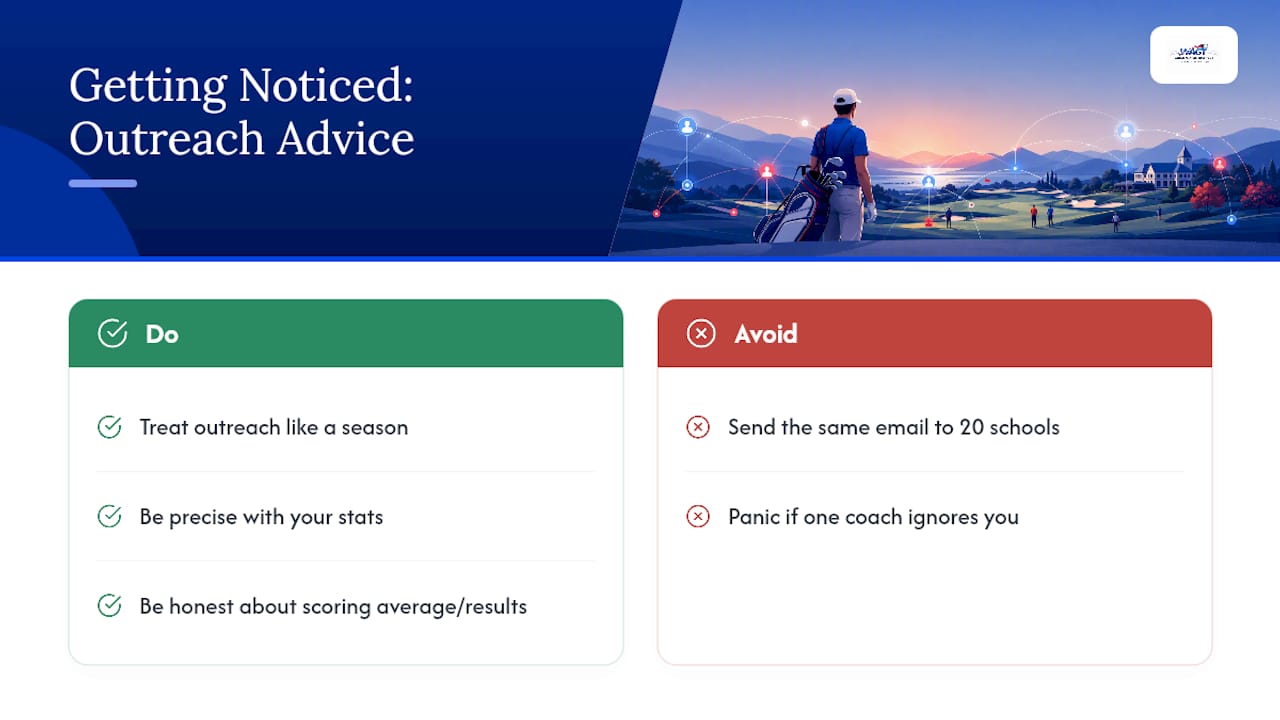
The families who see results treat outreach like a season, not a single event. One coach ignoring your first email in October often just means the calendar hasn't opened yet, not that your game isn't good enough.
Three things worth holding onto: be precise with your stats, be honest about your scoring average and results, and never send the exact same email to twenty schools with just the name swapped. Coaches notice the copy-paste version faster than you'd think.
— Gene
Let WAGT Make Your Outreach Easier to Verify
Every email you send is stronger with a link a coach can trust, and that's exactly what a 2026 Annual Membership with World Amateur Golf Tour gives you: a player profile built around real, WAGR-counting results from professionally run 54-hole events at championship-level venues in South Florida, without the travel grind of chasing points across the country.
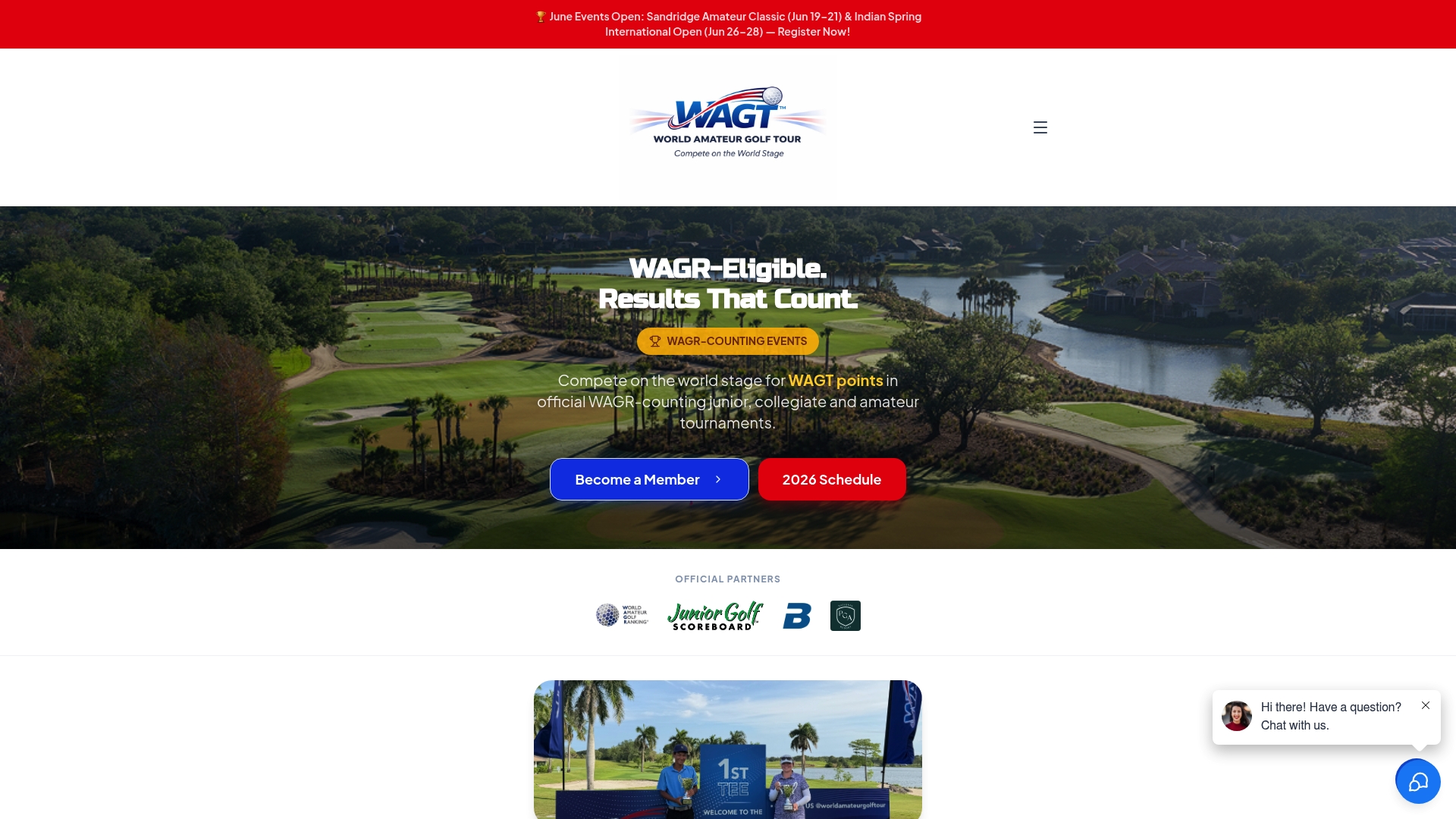
Instead of asking a coach to take your scoring average on faith, you point them to a live profile with verified finishes from the WAGT Ascension Series and other sanctioned events. That's a different conversation than an unranked local tournament result buried in a text message. Check the current event schedule and get your profile set up at Worldamateurgolftour before your next round of coach emails goes out.
Sources
Keep these close while you build your contact list and draft your first message:
- College Golf Coach Email Templates (Free) | Tessaira
- Trey Jones - Head Coach and Director of Golf - Florida State University
FAQ
How Do I Connect With College Golf Coaches?
Send a short email from your own address with a clear subject line naming your graduation year and a key stat, then include your GPA, handicap, scoring average, and links to your profile or video. Find the coach's real email on the school's official athletics staff directory rather than a paid list.
How Much Does a Division I College Golf Coach Make?
Salaries vary widely by school, conference, and program budget, and no single national figure applies across Division I programs. Focus your research on public salary databases for specific state universities if a particular coach's compensation matters to your decision.
What Is the Best Way to Contact College Coaches?
Email remains the most reliable first move, since it lets a coach review your stats and links on their own schedule. A complete email with your name, class year, and key results gets read faster than a phone call or social media message.
How Do I Get College Golf Coaches to Notice Me?
Lead with a specific subject line, keep your first email to one tight paragraph, and link to verifiable results rather than describing your game in general terms. A profile showing WAGR-counting tournament finishes gives a coach something concrete to check, which matters more than volume of outreach.
What Does a World Amateur Golf Tour Membership Cost?
Current membership pricing for the 2026 Annual Membership is listed on the World Amateur Golf Tour website. Check the site directly for up-to-date details on events and registration.