

Club-hosted golf tournaments deliver real, measurable value: they generate local economic activity, fund charitable causes, build social cohesion, and create ranked competitive pathways for junior and amateur players through WAGR-counting events. Golf contributes more than $102 billion annually to the U.S. economy, and the PGA TOUR alone has channeled over $4 billion in charitable giving to local communities. For junior golfers, every well-run club event is also a potential ranking opportunity through the World Amateur Golf Ranking (WAGR) system.
Top community benefits at a glance:
- Local businesses see direct revenue spikes during tournament weeks
- Charitable fundraising reaches causes that matter to residents
- Junior programs gain visibility, funding, and new participants
Immediate benefits for junior and amateur golfers:
- Access to WAGR-counting competition at championship-caliber venues
- Exposure to college recruiters and a documented performance record
Table of Contents
- 1. How club-hosted events power the local economy and community
- 2. Why WAGR-counting tournaments matter for junior golfers
- 3. Why hosting tournaments is good business for your club
- 4. Best practices for clubs that want to maximize community value
- 5. Operational and legal considerations every club must address
- 6. Measuring impact: KPIs and what real events show
- 7. How junior and amateur golfers can use club events to advance
- Key Takeaways
- Why community-first hosting is the smartest long-term play
- Useful sources and further reading
1. How club-hosted events power the local economy and community
The economic ripple from a single well-organized tournament extends far beyond the 18th green. Visitor spending on hotels, restaurants, and retail creates a multiplier effect that benefits businesses with no direct connection to golf. Dublin, Ohio, is the clearest American example: since the Memorial Tournament established itself there, the city grew from no hotels to more than 20, and the region now draws millions of visitors annually tied to golf-related activity.
Charitable giving is equally concrete. PGA TOUR events have collectively raised substantial funds for local nonprofits, funding everything from children's hospitals to youth sports programs. That model scales down: a mid-size club event with a charity component can raise meaningful funds for a local school or food bank while generating goodwill that outlasts the tournament week.
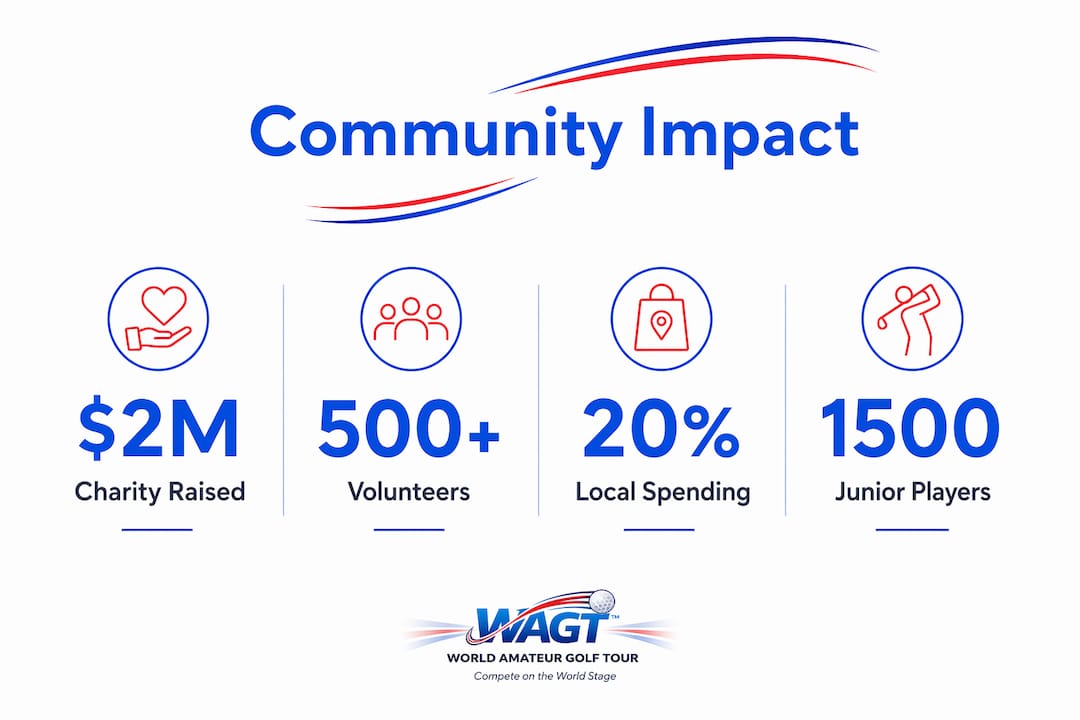
Social cohesion is harder to quantify but just as real. Tournaments bring together residents who might never otherwise interact, and legacy programs, like the youth coaching initiative that followed the Open Championship at Portrush, can engage hundreds of young players for years after the event itself.
Community benefits summary:
- Hotel and restaurant revenue increases during event weeks
- Charitable funds distributed to local nonprofits
- Junior golf programs seeded by tournament legacy initiatives
- Public support for course infrastructure and municipal investment
2. Why WAGR-counting tournaments matter for junior golfers
For a junior or amateur golfer serious about college recruitment or a professional pathway, the type of event you enter matters as much as how you play. WAGR-counting tournaments feed your results directly into the World Amateur Golf Ranking, the global standard used by college coaches, national federations, and professional tour qualifying bodies to evaluate amateur talent.
Worldamateurgolftour runs professionally run WAGR events at respected venues across the United States, giving junior and collegiate players access to championship-caliber conditions, certified officiating, and a competitive field that actually moves your ranking. That combination, quality course, legitimate field, and WAGR certification, is what separates a ranking-building event from a casual club day.
Pro Tip: Before registering for any event, verify its WAGR status on the official WAGR website. A tournament without that designation will not move your ranking, regardless of the field size or course quality.
Direct player benefits from club-hosted WAGR events:
- Ranking points that improve your WAGR position and college visibility
- Tournament-quality conditions that test your full game, tee to green
- Scorecards and results that form a documented performance record
- Exposure to coaches and scouts who attend competitive amateur fields
| Player Goal | How Club-Hosted WAGR Events Help | Measurement |
|---|---|---|
| Improve WAGR ranking | Earn points from certified competitive rounds | WAGR position change |
| College recruitment | Build a verifiable results record | Coach outreach rate |
| Skill development | Compete under real tournament conditions | Scoring average trend |
| Sponsorship readiness | Demonstrate consistent performance | Sponsorship criteria met |
3. Why hosting tournaments is good business for your club
Clubs that host competitive events diversify their revenue beyond green fees and memberships. Food and beverage sales, sponsorship packages, and facility rentals during a tournament week can represent a meaningful share of annual income. Clubs that expand programming beyond golf, adding festivals, fundraising events, and school partnerships, consistently see higher membership retention and more stable finances.

Community engagement also strengthens a club's relationship with local government. Clubs with track records of charitable events and youth programs are better positioned when they need zoning approvals, capital grants, or municipal support for course upgrades.
Pro Tip: Schedule your signature tournament during a traditionally slow revenue window, early spring or late fall, to convert off-peak capacity into a high-visibility event that fills tee times and the clubhouse simultaneously.
Club-level benefits:
- Revenue from sponsorship, F&B, and entry fees
- Membership retention through community identity and pride
- Stronger relationships with city officials and chambers of commerce
- Volunteer engagement that builds a loyal, year-round supporter base
For a detailed breakdown of revenue models, the golf club revenue guide covers the full spectrum of event-driven income streams.
4. Best practices for clubs that want to maximize community value
A tournament that delivers genuine community benefit requires planning that starts well before the first tee time. The clubs that do this best treat the event as a community festival with golf at its center, not a golf event with a charity check attached.
- Engage stakeholders early. Contact the city, chamber of commerce, local schools, and neighboring residents at least 12 months out. Early alignment prevents permit delays and builds the coalition you need for long-term support.
- Build a program mix. Pair the competitive field with a youth clinic, a charity auction, and at least one activity that draws non-golfers. A broader audience means broader community impact.
- Structure your charity partnership transparently. Choose a local nonprofit, agree on a fundraising target, and publish results after the event. Transparency builds trust and makes future sponsorship easier to secure.
- Use a marketing checklist. A structured tournament marketing checklist keeps media outreach, social posts, and sponsor communications on schedule.
- Plan for accessibility. Ramps, golf carts for mobility needs, and simplified participation options make events genuinely inclusive and expand your audience.
Pro Tip: Embed an in-school coaching session or a junior clinic into the tournament week itself. Proactive integration of educational programs into event schedules turns a one-week tournament into a year-round community asset.
5. Operational and legal considerations every club must address
Running a tournament that delivers community benefits without unexpected liabilities requires attention to a short list of non-negotiable operational items.
Permits and approvals:
- Engage municipal authorities at least 9–12 months before the event date
- Confirm zoning, noise, and crowd-management requirements early
- Secure parking and traffic management plans before promoting the event publicly
Insurance and liability:
- General liability coverage is standard; event cancellation and participant accident coverage are worth budgeting for
- Consult your club's insurer about spectator liability if the event is open to the public
Staffing:
- Identify core volunteer roles (scoring, marshaling, registration) and credential them in advance
- Budget for at least one paid event coordinator to manage day-of logistics
Resident and traffic impact:
- Send written communication to neighboring residents at least 60 days out
- Offer dedicated parking passes and a community access window to reduce friction
Typical cost factors to plan for: permit fees, insurance premiums, course setup and signage, volunteer coordination, F&B staffing, and post-event cleanup.
6. Measuring impact: KPIs and what real events show
Measuring community impact is what separates a well-run tournament from a great one. Without data, you cannot improve, report to sponsors, or make the case to municipal partners for future support.
| KPI | How to Measure | Target (Mid-Size Club Event) |
|---|---|---|
| Funds raised for charity | Donation receipts and auction totals | Defined pre-event with nonprofit partner |
| Attendance | Ticket scans and registration count | Track year-over-year growth |
| Hotel room nights | Partner with local hotels for block data | Establish baseline at first event |
| Membership change | Compare post-event membership numbers | Positive net change |
| Junior program sign-ups | Registration forms at youth clinic | Track per event |
| Media impressions | Press clippings and social reach | Set target with media strategy |
The Memorial Tournament's impact on Dublin, Ohio, shows what sustained hosting looks like at scale: a city transformed by golf tourism, with more than 20 hotels and millions of annual visitors tied to the event ecosystem. The 153rd Open Championship at Portrush produced 278,000 attendees across Championship week and directly seeded a schools golf program that engaged 278 children through in-school coaching and mini championships. Both examples confirm that the long-term community return on a well-run tournament far exceeds the cost of a single event week.
7. How junior and amateur golfers can use club events to advance
Finding the right events and using them strategically is a skill in itself. Here is a step-by-step approach that serious junior and amateur players should follow.
- Find events. Check Worldamateurgolftour event listings for WAGR-counting tournaments near you. Club websites and state golf association calendars are secondary sources.
- Verify WAGR status. Confirm the event appears on the official WAGR tournament list before registering. Do not assume.
- Register early. Fields at quality events fill quickly. Early registration also gives you time to scout the course and prepare a game plan.
- Prepare specifically. Build a practice plan around the course's demands. Review why playing amateur tournaments consistently accelerates development.
- Compete with purpose. Play every round as if a coach is watching, because at WAGR events, one often is.
- Follow up after the event. Record your result, update your WAGR profile, and send a brief, professional note to any college coaches you want to reach.
Pro Tip: If you are balancing school and tournament schedules, a structured student tournament guide can help you plan your competitive calendar without sacrificing academic performance.
Post-event checklist:
- Confirm your result is recorded in the WAGR system
- Update your player profile with the new result
- Note scoring trends and areas to address before the next event
- Contact college coaches with your updated ranking and results
Key Takeaways
Club-hosted golf tournaments create measurable community value while opening direct competitive pathways for junior and amateur golfers through WAGR-counting events.
| Point | Details |
|---|---|
| Economic and charitable impact | Tournaments drive local spending and charitable giving; PGA TOUR events have raised over $4 billion for communities. |
| WAGR events advance your ranking | Competing in WAGR-counting events builds the ranking record college coaches and tour qualifiers use to evaluate you. |
| Clubs benefit too | Hosting events diversifies revenue, strengthens municipal relationships, and improves membership retention. |
| Measure what matters | Track funds raised, attendance, hotel nights, and junior sign-ups to prove impact and secure future sponsorship. |
| Start with Worldamateurgolftour | WAGR-certified events at respected U.S. venues give junior players the competitive environment they need to advance. |
Why community-first hosting is the smartest long-term play
The conventional wisdom treats tournament hosting as a revenue exercise. That framing is too narrow. The clubs and events that generate the most durable community benefit, and the strongest long-term membership numbers, are the ones that treat every tournament as a community investment first and a revenue event second.
What the evidence from Dublin, Portrush, and dozens of club-level programs shows is that the return compounds. A youth clinic attached to this year's event seeds next year's junior membership. A charity partnership this season builds the municipal relationship that unlocks a course upgrade two years from now. The PGA TOUR's over $4 billion in charitable giving did not happen in a single season; it is the result of clubs and tours consistently choosing community value alongside competitive excellence.
For junior and amateur golfers, the message is equally direct: the events that build your ranking and your reputation are the same events that strengthen the communities hosting them. Choosing WAGR-counting tournaments run by organizations like Worldamateurgolftour means you are competing in environments where the standards are high, the results are legitimate, and the community around you is invested in the sport's future. That is the kind of competition that actually moves careers forward.
Useful sources and further reading
- PGA TOUR Impact: Source for the $4 billion charitable giving total cited throughout this article.
- Keiser College of Golf: Community Engagement in Golf Course Operations: Supports economic impact claims, club benefits, and best-practice programming guidance.
- Memorial Tournament's impact on Dublin, Ohio: Source for the Dublin hotel growth and visitor figures used in the economic impact and KPI sections.
- 153rd Open Championship Update, Causeway Coast and Glens Council: Source for Portrush attendance (278,000) and youth program outputs (278 children, in-school coaching, mini championships).
- Greener.golf: Economic Impact: Supports the municipal course revenue stabilizer argument used in the operational section.
- Worldamateurgolftour event listings: Primary resource for finding and registering for WAGR-counting amateur events in the United States.
- Golf Club Revenue Streams: Hosting Events That Pay: Detailed breakdown of event-driven revenue models for club operators.
- Golf Event Media Coverage: What Organizers Must Know: Practical guide to measuring media impressions and managing tournament communications.